About 86 results
 55:31
55:31Kartik Talwar, Simona Pop
The Invisible Labor of Creating Community | Simona Pop and Kartik Talwar at Pragma Lisbon 2026
ETHGlobalSep 9, 2026
In a live HUMAN Protocol podcast recording, host Simona Pop interviews ETHGlobal Co-Founder and CEO Kartik Talwar about the invisible work behind a durable developer community. Talwar reflects on ETHGlobal’s history, its early Ethereum Foundation support, and the standards learned from organizing events at global scale. Community quality, he explains, depends on thousands of decisions that participants rarely see: reviewing every applicant, helping teams find the right environment, gathering feedback at high volume, and creating clear pathways from a first hackathon to a serious company. Pop asks how ETHGlobal defines quality when event size, application volume, and the surrounding market continue to change. Talwar describes maintaining a consistent bar by reviewing applicants individually and creating an environment where builders can compare themselves with exceptional peers. The conversation follows projects and people from early experiments through products that shaped the Ethereum ecosystem, showing how trusted communities compound over time. Talwar discusses staying close to builders, recognizing what “good” looks like, surviving uncertainty, and expanding without abandoning careful curation. He also considers open source, software-driven business infrastructure, and the falling cost of building every layer of a business, which creates new demands for developer platforms and community operators. The central lesson is that community is not an audience metric: it is ongoing operational labor that helps talented people meet, test ideas, learn faster, and continue building through changing market cycles. They also discuss the difficult years between visible successes. ETHGlobal benefited from early timing and Ethereum Foundation support, but endurance required careful curation, staying close to builders, and continuing to serve developers through difficult market cycles. 00:00 Introduction and Live HUMAN Podcast 01:43 Kartik Talwar’s Academic Background 03:57 From University to Open Source Software 04:45 Learning Startups at SV Angel 06:40 Learning What Great Founders Look Like 08:44 Why the Hackathon Format Matters 10:51 Giving Builders Access to New Technology 11:47 Hack the North and Practical Education 13:32 Feedback Loops for Developer Platforms 14:25 Measuring Time to First Project 15:30 Hackathon Feedback Improves Products 17:22 Giving Builders More of Thirty-Six Hours 18:20 When Local Nodes Took Hours to Sync 19:27 From Better Tooling to Better Products 20:46 CryptoKitties and the First NFTs 22:09 Gitcoin Founders Meet at a Hackathon 22:53 A MetaMask Bug Fixed in the Room 23:19 How 1inch Emerged From Hackathons 26:38 Building Through Every Bear Market 28:03 Reviewing Every ETHGlobal Applicant 29:17 Helping Builders Find Their Peers 29:38 Playing the Seven-Year Community Game 30:38 Showing Real Work During Bear Markets 33:05 Reviewing Every Project and Trend 35:00 Early Ethereum Foundation Support 37:20 Scaling Events After COVID 40:33 The Clash Between Ideals and Reality 42:05 Open Source and Community Compounding 42:36 Supporting Every Layer of a Business 45:01 The Opportunity in Crypto Infrastructure 46:18 Faster Experiments and Product Feedback 48:28 Patterns Across Hundreds of Companies 49:36 Open Source as a Community Model 50:01 Why Closed Ecosystems Backfire 51:42 Competing in the Same Room 53:04 Short-Term KPIs Create Silos 53:53 Long-Term Foundations Versus Easy Wins 55:01 Final Thanks and Podcast Sign-Off _ _ _ _ _ _ _ _ _ _ _ _ _ _ _ _ _ _ _ _ 🇵🇹 *Pragma Lisbon 2026* Pragma Lisbon 2026 was held on June 25th at the Carlos Lopes Pavillion in Lisbon, Portugal and was an in-person summit for builders and leaders in the web3 ecosystem. Watch the full Pragma Lisbon 2026 YouTube Playlist here: https://www.youtube.com/playlist?list=PLMxB4xW8JYdk ETHGlobal's Pragma series takes place in cities around the world, and is designed to be a different kind of event. Pragma is a one-stage conference with founders-only on stage, bringing together a small group of curated attendees and speakers to discuss the future of web3 and reflect on the past. _ _ _ _ _ _ _ _ _ _ _ _ _ _ _ _ _ _ _ _ ✅ Follow Simona Pop X: https://x.com/Sim_Pop ✅ Follow Human Protocol X: http://x.com/_humanprotocol ✅ Follow Kartik Talwar X: https://x.com/TheRealKartik ✅ Follow ETHGlobal X: https://x.com/ETHGlobal Warpcast: https://warpcast.com/ethglobal Website: https://ethglobal.com YouTube: https://www.youtube.com/@UCfF9ZO8Ug4xk_AJd4aeT5HA _ _ _ _ _ _ _ _ _ _ _ _ _ _ _ _ _ _ _ _ Are you interested in Ethereum development and entrepreneurship? 👉 Sign up for the next ETHGlobal event: https://ethglobal.com/events 🎁 Get exclusive access and perks with ETHGlobal Plus! https://ethglobal.com/plus 📣 Want us to throw an event in your city? Tell us where! https://ethglobal.com/city
 37:02
37:02Kartik Talwar
Welcome & Opening Ceremonies I Kartik Talwar
ETHGlobalAug 9, 2026
In this welcome and opening ceremony, Kartik Talwar, co-founder of ETHGlobal, opens ETHGlobal New York 2026, stressing that this is not a conference but a hackathon whose mission is to onboard thousands of developers into the web3 ecosystem. He explains what makes ETHGlobal events different: a focus on builders, a place to learn and grow, and the belief that showing beats telling, so on Sunday everyone demos what they built. He traces ETHGlobal's history from a small 2017 hackathon (where NFTs were invented) through global expansion across six continents, noting that counting the recent ETHConf, they have run over 331 events in eight and a half years, hosted 165,000 people from 156 countries, produced 18,000+ hackathon projects, and seen projects raise over $500 million. This weekend brings almost 700 attendees (close to 500 hackers, 30% new to web3), plus supporting staff, 17 mentors, 20 recorded workshops, zero talks, over $200,000 in prizes, and 16 sponsors. Kartik walks through key logistics and rule changes. Hacking begins immediately, teams can have up to five members, and submissions are due Sunday at 9am. On AI, he encourages using tools like Cursor, Claude Code, and Codex but warns from thousands of data points not to use AI to generate or validate your idea (crypto bias is real), to keep a human in the loop, to reference-check SDK integrations, to commit plan files, and to always know what your codebase does. He introduces the new continuity track, letting hackers build from scratch, extend an open source project, or ship a feature into existing or private code, as long as new work stays open source and traceable via the GitHub API, with track-specific prizes. He covers venue security, Wi-Fi etiquette, the website as source of truth, Discord support, four spotlight teams (Aquazero, CodeQuil, Pompalo, Railbridge), and judging: partner-prize demos plus an add-on finalist track for the top 10 teams (up to seven scratch, three continuity) requiring an auditable open source repo, a live deployed site, and a video demo, with finalist perks including ETHGlobal Plus, $1,000 per member, travel, and developer credits. He closes by bringing on partners Tanner from 1inch (Aqua self-custodial AMMs), Gotham from Google Cloud Web3 (ERC-8004 data track), and Greg from ENS (naming as universal pointers), before telling everyone to get hacking. 00:00 Introduction 00:40 What Makes ETHGlobal Events Different 01:03 The History From 2017 to Today 01:49 Expanding Across Six Continents 02:18 The Numbers: 331 Events and Counting 02:44 18,000 Projects and $500 Million Raised 03:47 Mentors, Workshops, and Sponsors 04:27 Thanking the Sponsors 05:01 Logistics: Hacking Begins Now 05:19 The New Rules: Teams and Timing 05:37 Guidance on Using AI to Build 06:12 Explaining Your Contribution vs Delegation 07:11 Why Not to Use AI to Generate Ideas 07:38 Why Not to Use AI to Value Your Idea 08:33 Why Not to Blindly Delegate SDK Integrations 08:56 Always Know What Your Codebase Does 09:43 Introducing the Continuity Track 10:49 The Three Paths You Can Take 11:28 How Extending Open Source Works 12:43 Adding Features to Your Own Project 13:27 Adding a Module to Private Code 14:58 Why Prizes Are Track Specific 15:44 Venue Security and Wristbands 16:39 Wi-Fi 7 and Why Not to Use Hotspots 17:52 The Website and Discord Support 18:53 Food, Activities, and Swag 19:26 The Four Spotlight Teams 20:13 Judging and the Prize Structure 21:03 The Partner Prize Track 21:22 The Finalist Track for the Top 10 21:45 Finalist Perks and Requirements 23:45 Splitting Finalists Across Tracks 24:14 Submission Logistics and Timing 25:54 Why a Better Submission Wins 26:57 Where to Get Help From Mentors 27:40 Code of Conduct and IP Ownership 28:51 Tanner From 1inch on Aqua 31:00 Gotham From Google Cloud on ERC-8004 33:19 Greg From ENS on Naming 35:41 Summarizing the Prizes 36:23 Final Advice and Let's Get Hacking _ _ _ _ _ _ _ _ _ _ _ _ _ _ _ _ _ _ _ _ *ETHGlobal New York 2026* This workshop is specifically for ETHGlobal New York 2026, a 3-day hackathon held June 12-14 at the Metropolitan Pavilion, bringing together the most skilled web3 developers, designers and product builders from all around the globe for a weekend-long adventure to advance the Ethereum ecosystem! Watch the full ETHGlobal New York 2026 playlist here: https://www.youtube.com/playlist?list=PLXzKMXK2aHh7MZ8T-ict6YshkFDw9WJCu _ _ _ _ _ _ _ _ _ _ _ _ _ _ _ _ _ _ _ _ ✅ *Follow ETHGlobal* X: https://x.com/ETHGlobal Website: https://ethglobal.com YouTube: https://www.youtube.com/c/ETHGlobal _ _ _ _ _ _ _ _ _ _ _ _ _ _ _ _ _ _ _ _ _Are you interested in Ethereum development and entrepreneurship?_ 👉 Sign up for the next ETHGlobal event: https://ethglobal.com/events 🎁 Get exclusive access and perks with ETHGlobal Plus! https://ethglobal.com/plus 📣 Want us to throw an event in your city? Tell us where! https://ethglobal.com/city _ _ _ _ _ _ _ _ _ _ _ _ _ _ _ _ _ _ _ _
 35:09
35:09Kartik Talwar
Welcome & Opening Ceremonies | Kartik Talwar
ETHGlobalAug 9, 2026
In this welcome and opening ceremony, Kartik Talwar, co-founder of ETHGlobal, opens ETHGlobal Lisbon 2026, stressing that this is not a conference but a hackathon whose mission is to onboard thousands of developers into the web3 ecosystem. He explains what makes ETHGlobal events different: a focus on builders trying out ideas, learning new skills and protocols, and the belief that showing beats telling, so on Sunday everyone demos what they built to judges, partners, and each other. He traces ETHGlobal's history from the first 2017 event in Waterloo through global expansion across six continents, notes the 2026 events in Cannes and last month's New York, and welcomes everyone back to Lisbon for the second time. This weekend brings over 518 attendees (380 hackers, 26% coming from web2), from 116 cities, 47 countries, and six continents, plus 43 partners, 16 technical mentors, eight workshops, zero talks, and $100,000 in prizes across eight partners: 1inch, 0G, Hedera, Sui, The Graph, Uniswap Foundation, World, and ENS. Kartik walks through key logistics and rule changes. Hacking has begun, teams can have up to five members, and submissions are due Sunday at 9am. He encourages using LLMs and AI coding tools like Codex and Claude Code but recommends committing plan markdown files and frequent descriptive commits so work is traceable, sharing SDK feedback with partners, and avoiding four AI pitfalls (do not use AI-generated ideas, get real human feedback, do not just delegate, and always understand your own code). He introduces the continuity track, letting hackers extend a past project, fix an open source bug, or ship an open source module into private code, with track-specific prizes. He covers venue security, Wi-Fi etiquette, Discord support, food, a tile-painting activity, swag, and four spotlight teams. On judging, he explains the partner track (apply to up to three of the eight partners) versus the finalist track (top 10 teams demoing live on stage) with an auditable repo, live deployment, and video demo required, and finalist perks like ETHGlobal Plus, $1,000 cash, flight credits, and AWS credits. He brings on Matt from 1inch, who shares that 1inch began at a 2019 hackathon and has since done over $800 billion in volume, and introduces the $7,000 in bounties for building Aqua apps, a liquidity provision method that keeps tokens in the LP's wallet. 00:00 Introduction 00:11 Welcome: This Is a Hackathon, Not a Conference 00:37 What Makes ETHGlobal Events Different 00:54 Why Showing Beats Telling 01:18 The History From 2017 to Today 02:25 Back in Lisbon for the Second Time 02:31 Who Is Here This Weekend 03:05 Partners, Mentors, and Workshops 03:27 $100,000 in Prizes and the Eight Partners 04:28 The Hackathon Has Begun 05:07 Team Rules and Submission Timing 05:42 Using LLMs and AI Coding Tools 06:25 Committing Plan Files and Sharing Feedback 07:24 The Four AI Pitfalls to Avoid 07:47 Why Not to Use AI-Generated Ideas 08:23 Why to Get Real Human Feedback 08:42 Why Not to Just Delegate 09:33 Introducing the Continuity Track 09:55 How to Continue a Past Project 10:55 Extending Open Source and Private Projects 12:08 How to Select Your Track 12:59 Venue Security and Badges 14:05 Wi-Fi Etiquette and No Hotspots 15:00 The Website and Discord 16:29 Venue Layout and Pragma 17:02 Food and Activities 17:53 Swag and Giveaways 18:40 The Four Spotlight Teams 19:54 Judging and Prizes: The Two Tracks 20:19 The Partner Track 20:57 The Finalist Track 21:55 Why Become a Finalist 22:32 The Requirements to Be a Finalist 23:50 Demoing Live to Judges 24:47 The Finalist Demo Format 25:09 Why Not to Record Your Video Last Minute 26:28 How First-Come Judging Works 27:32 The Mentors Who Can Help 28:29 Rules, Respect, and IP Ownership 29:42 Bringing On Matt From 1inch 30:55 Introducing the Aqua Protocol 32:00 The 1inch Bounties 33:39 Recapping the Prizes and Closing _ _ _ _ _ _ _ _ _ _ _ _ _ _ _ _ _ _ _ _ 🇵🇹 *ETHGlobal Lisbon 2026* This workshop is specifically for ETHGlobal Lisbon 2026, a 3-day hackathon held July 24-26 at the Carlos Lopes Pavillion, bringing together the most skilled web3 developers, designers and product builders from all around the globe for a weekend-long adventure to advance the Ethereum ecosystem! Watch the full ETHGlobal Lisbon 2026 playlist here: https://www.youtube.com/playlist?list=PLWgAODGnD_is _ _ _ _ _ _ _ _ _ _ _ _ _ _ _ _ _ _ _ _ ✅ *Follow ETHGlobal* X: https://x.com/ETHGlobal Website: https://ethglobal.com YouTube: https://www.youtube.com/c/ETHGlobal _ _ _ _ _ _ _ _ _ _ _ _ _ _ _ _ _ _ _ _ _Are you interested in Ethereum development and entrepreneurship?_ 👉 Sign up for the next ETHGlobal event: https://ethglobal.com/events 🎁 Get exclusive access and perks with ETHGlobal Plus! https://ethglobal.com/plus 📣 Want us to throw an event in your city? Tell us where! https://ethglobal.com/city _ _ _ _ _ _ _ _ _ _ _ _ _ _ _ _ _ _ _ _
 17:56
17:56The Clarity Act: What It Means for Developers | Lindsay Fraser (Blockchain Association) at ETHConf
ETHGlobalJul 9, 2026
In this talk, Lindsay Fraser, who leads policy at the Blockchain Association, explains what the Clarity Act means for developers. The Blockchain Association is a nonprofit that advocates for the digital asset industry in Washington DC with over 100 member companies. She notes the timeliness: the day before, the association brought over 30 member companies to DC and met with 52 different Senate offices amid active negotiations. The Clarity Act is the current name for market structure legislation moving through the US Senate, the result of years of bipartisan effort dating back to 2020. At a high level it does three things: establishes token classification, trading, and market rules (fixing the impossibility of building in the US without clear rules during the Gary Gensler era at the SEC); sets registration requirements and consumer protections for intermediaries across the SEC and CFTC; and defines developer rules and protections outlining what software builders are and are not regulated for, the crux of the current debate. Lindsay explains why clarity matters: for years developers lacked answers to whether publishing code, operating a front-end, or participating in governance are regulated activities, and regulation by enforcement drove developers offshore. She walks through the process: the House passed it last June with 294 votes including 78 Democrats, the Senate Agriculture Committee advanced its portion 12 to 11 on party lines, and the Senate Banking Committee recently voted its portion out with a bipartisan outcome, with the two bills now to be combined and reach 60 votes to bypass the filibuster before November midterms complicate things. She details three developer protections: Section 601 clarifies the 1933 and 1934 Acts so non-custodial developers are not intermediaries needing to register as exchanges, brokers, or dealers; Section 207 does the same under the Commodity Exchange Act for the CFTC; and Section 604, the Blockchain Regulatory Certainty Act (BRCA), shields non-custodial developers from Bank Secrecy Act obligations and prosecution under Section 1960 for unlicensed money transmission. She frames the BRCA as a codification of 2019 FinCEN guidance, counters law enforcement opposition as a mischaracterization (noting titles 2 and 3 strengthen prosecutors), and cites a letter from 160 officials plus 60+ CEOs, closing that developer protections must remain intact. 00:00 Introduction 00:11 Who the Blockchain Association Is 00:40 Meeting 52 Senate Offices in One Day 01:24 What the Clarity Act Aims to Do 01:50 The Three Buckets of the Bill 01:57 Token Classification and the Gensler Era 02:22 Requirements for Intermediaries 02:44 Developer Rules and Protections 03:09 Why Clarity Matters for Developers 03:34 The Unanswered Questions Builders Face 03:56 How Regulation Drove Developers Offshore 04:22 Drawing a Line Between Software and Intermediaries 04:51 Where We Are in the Process 05:13 The Overwhelming House Vote 05:35 The Senate Agriculture Committee Vote 05:58 The Bipartisan Senate Banking Vote 06:19 Combining the Bills and the 60-Vote Threshold 06:45 Why the Midterms Add Urgency 07:06 The Three Core Developer Protections 07:24 Section 601 and the 1933 and 1934 Acts 07:46 Protecting Non-Custodial Developers 08:36 Section 207 and the Commodity Exchange Act 08:50 The Key Line of Custody and Control 09:10 Section 604: The Blockchain Regulatory Certainty Act 09:41 The Threat of Section 1960 Prosecution 10:28 The Cost of Investigations on Founders 10:59 Why the BRCA Must Not Be Watered Down 11:22 A Codification of 2019 FinCEN Guidance 11:57 The Bipartisan History of the BRCA 12:53 The Opposition From Law Enforcement Groups 13:22 Why the Opposition Mischaracterizes the BRCA 13:52 How Titles 2 and 3 Strengthen Prosecutors 14:38 The Letter From 160 Law Enforcement Officials 15:50 The Industry Letter From 60 CEOs 16:16 Why Developer Protections Must Be a Priority 16:49 A Call to Share Developer Stories 17:48 Closing _ _ _ _ _ _ _ _ _ _ _ _ _ _ _ _ _ _ _ _ *ETHConf 2026* ETHConf is a 3 day event for founders, industry leaders, and builders who are excited about the possibilities of building on top of Ethereum. Connect with 2,000+ top innovators in crypto, finance, technology, and policy at our inaugural three-day event packed with showcases, demos, partnerships, and conversations shaping the future of the global economy. _ _ _ _ _ _ _ _ _ _ _ _ _ _ _ _ _ _ _ _ ✅ *Follow ETHConf* X: https://x.com/ethconf Website: https://ethconf.com _ _ _ _ _ _ _ _ _ _ _ _ _ _ _ _ _ _ _ _ 🎟️ Get your early bird tickets for ETHConf 2027: https://ethconf.com/2027#tickets 🎤 View the full ETHConf 2026 Speaker Schedule: https://ethconf.com/schedule _ _ _ _ _ _ _ _ _ _ _ _ _ _ _ _ _ _ _ _
 22:07
22:07Austin Griffith, Kartik Talwar
Fireside Chat with Kartik Talwar & Austin Griffith
ETHGlobalNov 9, 2025
In this fireside chat, Austin Griffith discusses developer onboarding, education, and growth in the Ethereum ecosystem, focusing on initiatives like Build Guild and Speedrun Ethereum. He emphasizes the importance of hands-on building, learning through shipping projects, and overcoming the "pit of despair" in blockchain development. The conversation covers the Ethereum Foundation's evolving role in supporting developers, from education to founder support and enterprise connections. Hackathons are highlighted as crucial for fostering innovation, collaboration, and real-world skills, but the ultimate goal is to encourage long-term impact through open source contributions and continuous learning. Austin advises developers to stay curious, build iteratively, contribute to open source, and aim for meaningful impact beyond hackathon prizes, stressing that success is a long-term journey shaped by persistent effort and community engagement. 00:00 Introduction 00:52 Advice for Early-Stage Ethereum Builders 01:39 Developer Journey in Build Guild & Speedrun Ethereum 03:08 Fundamentals vs. Discovery in Learning 05:24 Fostering Innovation and Curiosity 05:52 Ethereum Foundation’s Developer Priorities 07:24 Developer Growth and Ecosystem Support 09:01 Measuring Developer Success & Impact 11:17 The Role and Value of Hackathons 13:43 From Hackathons to Companies and Careers 15:23 Staying Curious & Embracing Challenges 16:26 Simplification, Composability, and Hackathon Strategy 18:31 Open Source Contributions and Long-Term Impact 19:51 Advice for Developers: Building, Pivoting, and Persistence 21:50 Closing Remarks _ _ _ _ _ _ _ _ _ _ _ _ _ _ _ _ _ _ _ _ 🇮🇳 *Pragma New Delhi* Pragma New Delhi 2025 was held on September 25th at the JW Marriott Hotel in Aerocity New Delhi and was an in-person summit for builders and leaders in the web3 ecosystem. Watch the full Pragma New Delhi YouTube Playlist here: ETHGlobal's Pragma series takes place in cities around the world, and is designed to be a different kind of event. Pragma is a one-stage conference with founders-only on stage, bringing together a small group of curated attendees and speakers to discuss the future of web3 and reflect on the past. _ _ _ _ _ _ _ _ _ _ _ _ _ _ _ _ _ _ _ _ ✅ Follow Austin Griffith X: https://x.com/austingriffith ✅ Follow Ethereum Foundation X: https://x.com/ethereumfndn ✅ Follow Kartik Talwar X: https://x.com/TheRealKartik ✅ Follow ETHGlobal X: https://x.com/ETHGlobal Warpcast: https://warpcast.com/ethglobal Website: https://ethglobal.com YouTube: https://www.youtube.com/@UCfF9ZO8Ug4xk_AJd4aeT5HA _ _ _ _ _ _ _ _ _ _ _ _ _ _ _ _ _ _ _ _ Are you interested in Ethereum development and entrepreneurship? 👉 Sign up for the next ETHGlobal event: https://ethglobal.com/events 🎁 Get exclusive access and perks with ETHGlobal Plus! https://ethglobal.com/plus 📣 Want us to throw an event in your city? Tell us where! https://ethglobal.com/city _ _ _ _ _ _ _ _ _ _ _ _ _ _ _ _ _ _ _ _
 1:49:48
Devconnect Argentina Warmup - Shayan & Sina | DeCaffeth
DecaffethNov 9, 2025
In this session, experienced builders and contributors share practical insights, personal experiences, and valuable tips to help you make the most of Devconnect — whether you’re attending this year or planning for future editions. Speakers: Shayan Eskandari – Blockchain & Security Specialist Sina Mahmoodi – Ethereum Core Developer Hosts: Mahdieh Amiri Sohrab Sameni 🎤 Topics Covered: - What are Devconnect and Devcon — and why they matter - Travel & logistics: flights, visas, accommodation, budgeting, scholarships, hacker houses, and volunteering - Navigating side events, using Luma effectively, and networking with purpose - How to join hackathons like ETHGlobal, form teams, manage time, and increase your chances of success Even if you’re not attending Devconnect this year, this session offers actionable insights and global community knowledge for anyone building in Web3. 💜 Come for the stories, stay for the community. 🌐 Learn more: https://decaffeth.com
 20:24
20:24Matthias Broner, Kartik Talwar
Fireside Chat with Matthias Broner, ZKsync, and Kartik Talwar, ETHGlobal I Pragma San Francisco 2024
ETHGlobalOct 9, 2025
Join Matthias Broner, Head of Growth at ZKsync, and Kartik Talwar from ETHGlobal for a deep dive into blockchain adoption strategies and the unique growth of crypto in Latin America. Matthias shares insights on how ZKsync scaled their Layer 2 solution with zero-knowledge technology (ZK), emphasizing real-world applications such as stablecoin usage, decentralized digital identities, and practical blockchain solutions in Argentina and beyond. Discover how ZKsync's elastic chain vision fosters interoperability, the role of government-backed digital identities, and effective strategies for attracting blockchain developers. 00:00 Introduction: Matthias Broner & ZKsync Fireside Chat 00:37 Growing Protocols & Lessons from ZKsync 01:13 What is ZKsync & Yearly Achievements 02:09 Measuring Growth: Key Metrics at ZKsync 03:32 Why Latin America is Key for Crypto Growth 04:53 Crypto Adoption Patterns in Latin America 06:20 Popularity & Use of Stablecoins in LatAm 07:41 Demographics & Crypto Usage Stats in LatAm 09:02 Tips for Success Building Crypto in LatAm 10:29 Insights from Argentina's Crypto Ecosystem 11:56 Beyond Payments: Real-World Blockchain Use Cases 12:23 Digital Identity & Buenos Aires Government Initiative 13:51 Self-Sovereign Identity & ZK Technology 14:46 Local Reaction to Blockchain-Based Identity 16:32 How ZKsync Supports Growth & Adoption in LatAm 17:52 Strategies for Effective Developer Engagement 19:20 Activating Community Through Decentralized Governance 20:10 Conclusion & Takeaways from Matthias Broner _ _ _ _ _ _ _ _ _ _ _ _ _ _ _ _ _ _ _ _ 🇺🇸 *Pragma San Francisco* Pragma San Francisco 2024 was a special gathering of founders and builders that took place October 16th and 17th at The Contemporary Jewish Museum in San Francisco, CA. Pragma San Francisco 2024 was an opportunity discuss the future of web3 and reflect on the past. Watch the full Pragma San Francisco playlist here: https://youtube.com/playlist?list=PLXzKMXK2aHh4LcwDpGf_itZrAu7XRNb07&si=3x3y9J3avgNTITUe ETHGlobal's Pragma series takes place in cities around the world, and is designed to be a different kind of event. Pragma is a one-stage conference with founders-only on stage, bringing together a small group of curated attendees and speakers to discuss the future of web3 and reflect on the past. _ _ _ _ _ _ _ _ _ _ _ _ _ _ _ _ _ _ _ _ ✅ *Follow Mattias Broner* X: https://x.com/BronerMatthias ✅ *Follow ZKsync* X: https://x.com/zksync ✅ *Follow Kartik Talwar* X: https://x.com/therealkartik Warpcast: https://warpcast.com/kartik ✅ *Follow ETHGlobal* X: https://x.com/ETHGlobal Warpcast: https://warpcast.com/ethglobal Website: https://ethglobal.com YouTube: https://www.youtube.com/c/ETHGlobal _ _ _ _ _ _ _ _ _ _ _ _ _ _ _ _ _ _ _ _ _Are you interested in Ethereum development and entrepreneurship?_ 👉 Sign up for the next ETHGlobal event: https://ethglobal.com/events 🎁 Get exclusive access and perks with ETHGlobal Plus! https://ethglobal.com/plus 📣 Want us to throw an event in your city? Tell us where! https://ethglobal.com/city _ _ _ _ _ _ _ _ _ _ _ _ _ _ _ _ _ _ _ _
 22:58
22:58Jesse Pollak
Jesse Pollak I Building Networks That People Actually Use with Base I Pragma Bangkok 2024
ETHGlobalOct 9, 2025
Join Jesse Pollak, Head of Base at Coinbase, as he shares how to build L2 networks people actually use, drawing from Base’s milestone of 1 billion+ transactions. In this candid talk from Pragma Bangkok, Jesse reveals how strategic developer tools, global marketing, and an “everyone’s a builder” ethos created unstoppable growth. Learn why L2 synergy with Ethereum is vital—not contentious—and how continuous scaling (a target of “Giga-gas” block space), smoother onboarding for developers, and user-friendly wallets can unlock a billion-person onchain economy. Jesse highlights two breakout categories—payments and social—that he predicts will drive exponential adoption. Discover how to merge viral social experiences with integrated payments, stablecoins, and truly inclusive wallet design to bring the next wave of onchain users. 00:00 Intro & Shoutout to Georgios 01:20 Base Reaches 1B Transactions 02:45 Developer Virality & Community 04:40 Coinbase Synergy & Growth 06:30 L2 vs. Ethereum: Synergy, Not Conflict 08:05 Scaling Approach & Long-Term Vision 10:05 Giga-Gas Concept & Weekly Increments 14:10 Future of Wallets & Smart Accounts 18:20 Onchain Identity & Social Graphs 19:45 Payment + Social for Mass Adoption 22:10 2–3 Year Outlook & Closing Remarks _ _ _ _ _ _ _ _ _ _ _ _ _ _ _ _ _ _ _ _ 🎤 *Pragma Bankgkok* Pragma Bangkok 2024 closed out a year of exceptional Pragma events held around the world, and offered the global Web3 community a chance to hear from founders and builders as they reflect on the past, and look to the future of Web3. Pragma Bangkok 2024 was held on November 14th at the Hyatt Regency Bangkok Sukhumvit in Bangkok, Thailand. Watch the full YouTube Playlist here: https://youtube.com/playlist?list=PLXzKMXK2aHh4JNkhnsv5F95OqxT_IjCEl&si=6Tv3CvB6vrQIIjBA ETHGlobal's Pragma series, which began in Tokyo in the spring of 2023, has been fostering a curated, global community of individuals who deeply care about web3. You can learn more about Pragma and upcoming events in the series here: https://ethglobal.com/pragma _ _ _ _ _ _ _ _ _ _ _ _ _ _ _ _ _ _ _ _ ✅ Follow Jesse Pollak X: https://x.com/jessepollak Warpcast: https://warpcast.com/jessepollak Website: https://jesse.xyz ✅ Follow Base X: https://x.com/base Warpcast: https://warpcast.com/base Website: https://www.base.org ✅ Follow Kartik Talwar X: https://x.com/therealkartik Warpcast: https://warpcast.com/kartik ✅ Follow ETHGlobal X: https://x.com/ETHGlobal Warpcast: https://warpcast.com/ethglobal Website: https://ethglobal.com YouTube: https://www.youtube.com/c/ETHGlobal _ _ _ _ _ _ _ _ _ _ _ _ _ _ _ _ _ _ _ _ Are you interested in Ethereum development and entrepreneurship? 👉 Sign up for the next ETHGlobal event: https://ethglobal.com/events 🎁 Get exclusive access and perks with ETHGlobal Plus! https://ethglobal.com/plus 📣 Want us to throw an event in your city? Tell us where! https://ethglobal.com/city _ _ _ _ _ _ _ _ _ _ _ _ _ _ _ _ _ _ _ _
 18:32
18:32Gemini Wallet Workshop I Mike Liu
ETHGlobalOct 9, 2025
Mike Liu, engineering lead at Gemini, presents the Gemini Wallet at a developer-focused workshop. He explains the motivation for building another wallet: to offer a composable, modular, and developer-friendly solution based on industry standards like ERC-4337, ERC-7579, and ERC-7484. The wallet supports both custodial and non-custodial use, integrates with Wagmi and RainbowKit, and is embeddable and portable for seamless dApp integration. Gemini Wallet sponsors gas fees on testnets and major L2s, simplifying development and onboarding for both hackers and end-users. Features include passkey authentication, ENS subdomains, WalletConnect compatibility, and multi-sig support. Liu emphasizes composability, open standards, and ease of use, encouraging developers to build on top of Gemini Wallet rather than creating new wallets. The workshop also highlights Gemini’s commitment to supporting the builder community with bounties and easy integration. 00:00 Introduction 00:30 Why Build Another Wallet? 01:10 About Gemini and Mike Liu 01:53 Security and Developer Focus 02:12 Passkey Authentication & Industry Standards 03:10 Product Overview: keys.gemini.com & onchain.gemini.com 04:10 Gas Sponsorship & Developer Incentives 05:00 Wagmi Integration & Ease of Use 06:02 Supported Networks & Future Plans 07:10 Embeddable & Portable Wallet Features 08:11 User Experience & Embedded Wallets 08:45 Gemini Wallet Core Package & RPC Compatibility 09:24 WalletConnect & Integration Details 09:47 Onboarding New Users & ENS Subdomains 10:38 dApp Integration & Hackathon Opportunities 12:02 Transaction Demo & User Flow 12:53 Wagmi & RainbowKit Connectors 13:46 Gemini’s Onchain Presence & Community Support 14:20 Composability, ERC-7579, and Modular Accounts 15:48 Multi-sig & Module Support 16:20 Bounties, Gas Sponsorship, and Open Source Discussion 17:43 Final Takeaways & Q&A 18:08 Conclusion _ _ _ _ _ _ _ _ _ _ _ _ _ _ _ _ _ _ _ _ 🇺🇸 *ETHGlobal New York* This workshop is specifically for ETHGlobal New York, a 3-day hackathon held August 15-17, bringing together the most skilled web3 developers, designers and product builders from all around the globe for a weekend-long adventure to advance the Ethereum ecosystem! Watch the full ETHGlobal New York 2025 playlist here: https://www.youtube.com/playlist?list=PLXzKMXK2aHh4Xze0ZeSWCSGsw25clPpvZ _ _ _ _ _ _ _ _ _ _ _ _ _ _ _ _ _ _ _ _ ✅ *Follow Gemini* X: https://x.com/Gemini ✅ *Follow ETHGlobal* X: https://x.com/ETHGlobal Warpcast: https://warpcast.com/ethglobal Website: https://ethglobal.com YouTube: https://www.youtube.com/c/ETHGlobal _ _ _ _ _ _ _ _ _ _ _ _ _ _ _ _ _ _ _ _ _Are you interested in Ethereum development and entrepreneurship?_ 👉 Sign up for the next ETHGlobal event: https://ethglobal.com/events 🎁 Get exclusive access and perks with ETHGlobal Plus! https://ethglobal.com/plus 📣 Want us to throw an event in your city? Tell us where! https://ethglobal.com/city _ _ _ _ _ _ _ _ _ _ _ _ _ _ _ _ _ _ _ _
 33:32
33:32Kartik Talwar
ETHGlobal New York 2025 Opening Ceremonies I Kartik Talwar
ETHGlobalOct 9, 2025
ETHGlobal New York 2025 Opening Ceremonies, led by co-founder Kartik Talwar, kicks off a major Web3 hackathon focused on onboarding developers into the blockchain ecosystem. Emphasizing building over talking, the event gathers 950+ attendees (690 hackers) from 51 countries, with 37% new to Web3. ETHGlobal’s growth since 2017 includes 210+ events, 150,000+ participants, and $15M in prizes. The hackathon offers $275,000 in prizes from 27 partners like Coinbase, Flow, and LayerZero, with tracks for partner and finalist prizes. Rules require projects to start from scratch, be open source, and demo live. Resources include 2,700+ educational videos, 22 workshops, 24/7 mentorship, and on-chain wristbands as Ethereum wallets. Logistics cover venue access, security, food, and Discord-based support. Partner reps present their protocols and prize tracks. The event fosters learning, collaboration, and innovation in Ethereum, DeFi, NFTs, and cross-chain development. 00:00 Introduction 00:41 ETHGlobal Mission & History 02:01 Global Growth & Impact 03:33 2025 Event Stats & Attendees 04:37 Partners, Mentors & Workshops 05:48 Hackathon Rules & Submission Guidelines 07:23 Resources & Learning Opportunities 07:59 Venue Logistics & Security 09:09 Internet & Communication 10:15 Schedule & Discord Support 11:10 Venue Layout, Food & Activities 13:18 On-Chain Wristbands & Networking 14:39 Prize Structure & Tracks 17:10 Finalist Criteria & Benefits 18:26 Judging Process 21:42 Submission Best Practices 22:51 Mentorship & Support 23:39 Code of Conduct & IP Rights 24:36 Partner Presentations: Coinbase 26:21 Partner Presentations: Flow 29:12 Partner Presentations: LayerZero 31:41 Additional Prizes & Resources 32:31 Team Building & Event Culture 33:07 Closing Remarks & Happy Hacking _ _ _ _ _ _ _ _ _ _ _ _ _ _ _ _ _ _ _ _ 🇺🇸 *ETHGlobal New York* This workshop is specifically for ETHGlobal New York, a 3-day hackathon held August 15-17, bringing together the most skilled web3 developers, designers and product builders from all around the globe for a weekend-long adventure to advance the Ethereum ecosystem! Watch the full ETHGlobal New York 2025 playlist here: https://www.youtube.com/playlist?list=PLXzKMXK2aHh4Xze0ZeSWCSGsw25clPpvZ _ _ _ _ _ _ _ _ _ _ _ _ _ _ _ _ _ _ _ _ ✅ *Follow Kartik Talwar* X: https://x.com/TheRealKartik ✅ *Follow ETHGlobal* X: https://x.com/ETHGlobal Warpcast: https://warpcast.com/ethglobal Website: https://ethglobal.com YouTube: https://www.youtube.com/c/ETHGlobal _ _ _ _ _ _ _ _ _ _ _ _ _ _ _ _ _ _ _ _ _Are you interested in Ethereum development and entrepreneurship?_ 👉 Sign up for the next ETHGlobal event: https://ethglobal.com/events 🎁 Get exclusive access and perks with ETHGlobal Plus! https://ethglobal.com/plus 📣 Want us to throw an event in your city? Tell us where! https://ethglobal.com/city
 1:22:58
Features for Experienced Developers in Remix IDE
ETHCluj MeetupOct 9, 2025
Of course Remix is used by beginners but it is also used by experienced developers to prototype projects. In this talk Rob Stupay will go over more advanced features and along the way will also touch upon features that everyone should know.
 1:44:23
Scaling Ethereum: A Deep Dive into the L2 Landscape
ETHCluj MeetupOct 9, 2025
We explore the evolving Layer 2 ecosystem that is transforming and scaling Ethereum. This presentation examines how proof systems work, particularly SNARKs and STARKs, to scale Ethereum while maintaining its security and decentralization. With a special focus on Starknet and its Cairo programming language, we analyze how these technologies are addressing the blockchain trilemma and shaping the future of decentralized applications. Speaker: Robert Kodra from Starknet Foundation
 1:00:27
Open Intent Framework - Discover the Open Intent advantage
ETHCluj MeetupOct 9, 2025
The Open Intents Framework (OIF) paired with ERC-7683 is a transformative leap for the blockchain ecosystem. It shifts the paradigm from rigid, transaction-centric processes to a flexible, intent-driven approach where users simply state their desired outcome without being burdened by the intricate details of how that outcome is achieved. By standardizing intent expression and execution, ERC-7683 provides a universal framework that enables seamless cross-chain interoperability, reducing both the operational complexity and gas fees that plague traditional multi-chain interactions. This framework is crucial because it addresses the core problem of blockchain fragmentation. In today’s environment, users and developers face significant challenges when navigating multiple chains with varying protocols, liquidity pools, and execution mechanisms. OIF and ERC-7683 solve this by abstracting these complexities and offering a modular, composable infrastructure that harmonizes disparate systems. The result is a more unified, efficient, and user-friendly experience where developers can build innovative, intent-based applications, and users can enjoy seamless, frictionless interactions across the entire blockchain landscape.
 41:31
41:31EVM Storage Explained - Upgradeable Contracts
ETHCluj MeetupOct 9, 2024
In preparation for designing and working with upgrade-able contracts, we need to first grasp how EVM storage works. Catalin Balut discusses here some of the important aspects around: - Opcodes, gas costs, static, delegate & simple calls - EVM Storage context - A few smart contract examples
 1:26:38
Decentralizing Gasless Transactions
ETHCluj MeetupOct 9, 2024
As a DApp developer, one of the challenges you may face is how to subsidize gas consumption for your users. In this presentation, Alexandru Males helps us explore the concept of meta-transactions and their role in making Ethereum transactions more accessible. You will learn about the Open GSN network, a decentralized solution for relaying meta-transactions, and how it can be integrated into your DApp. Additionally, we compare it to other solutions on the market. Discover how to make your DApp more user-friendly and reduce the barrier to entry for your users.
 1:10:13
Understanding the Architecture of Ethereum Staking
ETHCluj MeetupOct 9, 2024
In this session presented by Alexandru Males we take a look at source code and parts of Ethereum node architecture that are related to staking. Besides the technical curiosity, you might be interested to actually stake ETH as a validator. But then, if you do not have the 32 ETH required to run a validator and prefer using protocols like Rocket Pool, it still helps a lot to educate yourself and understand how the Proof Of Stake was designed to work by default on Ethereum.
 1:12:38
How Rocket Pool Enables Staking for Everyone
ETHCluj MeetupOct 9, 2024
In this presentation Alexandru Titieni is taking everyone through what Rocket Pool is and how it enables staking. Tired of being discouraged from wanting to participate in Ethereum's consensus because of validator infrastructure requirements or maybe the high 32 ETH stake? Look no further, Rocket Pool is the exact solution that solves both these problems while contributing to the core ethos of decentralization. Find out how you can be a part of it all starting with as little as 0.01 ETH.
 36:42
36:42Loki Code & Events in Smart Contracts
ETHCluj MeetupOct 9, 2024
In this presenation Corches Sergiu & Catalin Balut are covering the following subjects: ➡ How to leverage the potential of events in smart contracts ➡ Exploring the potential of Loki.code & the Remix.ide killer that have revolutionized the Ethereum development
 46:44
46:44Understanding Clones With Immutable Args
ETHCluj MeetupOct 9, 2024
This presentation is focused around the design pattern for clones with immutable args for creating efficient smart contracts or loans. Ionut Gingu elaborates on the use of proxies to make contracts upgradeable, the importance of immutable variables and the process of deploying a contract with immutable parameters. The discussion also covers potential issues and mitigation strategies, as well as optimal storage of the total supply in an ERC20 clone.
 1:42:23
Using symbolic execution to increase smart contract security
ETHCluj MeetupOct 9, 2024
Blockchain code is lightweight, public and handles high amounts of tokens, making it a perfect target. In this video Raoul Schaffranek & Andrei Vacaru talk about what formal verification and symbolic execution are, how we can leverage them to increase the odds of discovering security risks and the tools we make for auditors and developers.
 1:15:43
Account Abstraction - Improving web3 UX to the fullest
ETHCluj MeetupOct 9, 2024
In this video presenters Adegbenga Ogungbeje & Gabi Vasile discuss Account Abstraction and dive into the evolution of blockchain user interactions. Account Abstraction enhances user experience by enabling programmable account behaviours beyond the limitations of traditional wallet addresses. By embedding smart contract capabilities directly into user accounts, this approach allows for customizable security measures, automated transactions, gas-less transactions and more, delivering a seamless web2-like experience for web3 applications. We also touch upon several key EIPs and ERCs related to Account Abstraction and explore the ultimate goals of this innovative concept.
 14:18
14:18Everyday, Everywhere, the Eve of the Revolution
ETHTokyoSep 21, 2024
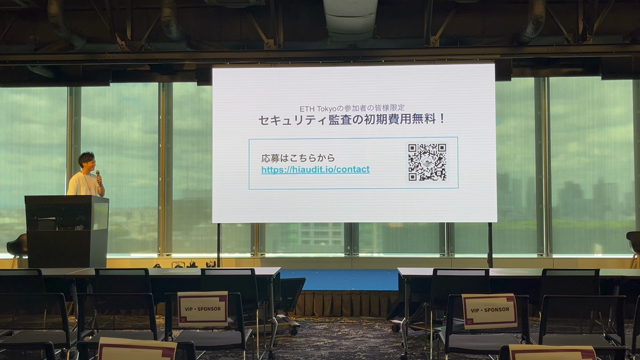
Talk Session by Techfund. This video features a representative from a tech fund discussing the security aspects of the Web3 industry, including recent hacking cases and the overall trends in the sector. The speaker introduces their company, which has been supporting startups since 2014 and entered the blockchain space around 2016. They focus on security audits and have partnered with a Ukrainian security firm to stay at the forefront of vulnerability research. The presentation covers composability in blockchain, smart contract verification, and how these factors contribute to the growth and convenience of blockchain services. The speaker also addresses the increasing importance of security audits in protecting against threats and hacking incidents. They note that despite audits, about half of the projects that experienced leaks had been audited, highlighting the need for more robust security measures. The speaker encourages viewers to consider various audit companies and tools available, including their own tool that integrates multiple tools for comprehensive smart contract analysis. Finally, they mention their recent participation in a conference and invite attendees to consult with them at their booth for more information on their services and current promotions.
 07:48
07:48Scroll Updates and Future Visions!
ETHTokyoSep 21, 2024
Talk Session by Scroll. The video features RH, who introduces updates and future visions for the Scroll ecosystem in a relaxed, engaging manner. He begins with an overview of Scroll's recent achievements, noting its high ranking in total value locked (TVL) and significant growth since October 2023. He highlights the Darwin upgrade that reduced gas fees by 34% through proof recursion and mentions various ecosystem partners. RH then discusses Scroll Level Up, a public goods platform created by Scroll to facilitate learning about blockchain development and Solidity. The platform includes hackathons and educational content, aiming to support developers' growth within the Web3 space. He also touches on community aspects like meetups and Telegram groups that foster engagement. Finally, RH introduces the Level Up grants program with two tracks for applicants—start track and launch track—although he notes that applications are currently closed. The talk concludes with RH providing resources for further information on Scroll and inviting questions if time allows.
 07:18
07:18Providing Modularity at the Application Layer
ETHTokyoSep 20, 2024
Talk Session by Nero The video discusses Nero, a blockchain platform that aims to empower applications by providing modularity at the application layer. The speaker identifies the problem of one-dimensional fees and inefficient markets in current blockchain systems, which leads to a lack of utility for application tokens. Nero addresses fee volatility and the Goldilocks problem of finding the optimal fee level by allowing applications to customize their own paymaster, which can set gas tokens, markup fees, and sponsor gas costs. This system is designed to increase demand for an application's token, create new revenue streams, and attract users. Nero's key breakthroughs include parametric pricing, fee sharing with applications, consignment block space that reduces risk for developers, and the option for applications to select their own transaction bundlers. The platform also plans to offer abstract wallet management for users, improving account recovery and creating a more satisfying experience. Overall, Nero positions itself as a solution that gives economic power back to applications by allowing them to set their own rules within the ecosystem while attracting new users and fostering growth.
 03:45
03:45Embarking on a New Chapter
ETHTokyoSep 20, 2024
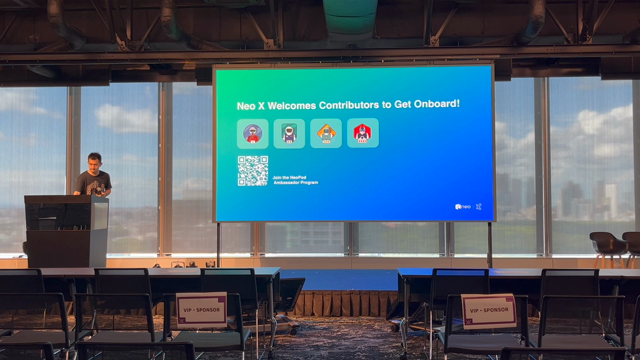
Talk Session by Neo-X Steven, the head of development for Neo Blockchain, introduces NeoX, an EVM compatible sidechain designed to attract more EVM developers to the Neo ecosystem. Launched in July, NeoX offers full EVM compatibility, allowing existing DApps to integrate seamlessly. The platform emphasizes its anti-MEV features to protect transactions from front-running through encrypted transactions that only consensus nodes can decrypt. Additionally, NeoX maintains the original two-token model with Neo and GAS tokens and retains the DBFT consensus algorithm for one block finality. A native bridge is available for token transfers between Neo N3 and NeoX. Steven also mentions an Elevates program aimed at encouraging more Ethereum developers to join their ecosystem and invites contributors to get involved.
 21:37
21:37Advancing Parallel EVM: Parallel I/O via EIP-7650 and Intelligent I_O Preloading
ETHTokyoSep 18, 2024
We delve into two innovative strategies to maximize the advantages of parallel I/O. EIP-7650 (Programmable Access Lists) and Intelligent I/O Preloading. The video features a co-developer of QuackChain and a co-author of an EIP discussing the enhancement of blockchain technology to build a world supercomputer by improving computing, storage, and access. The focus is on parallel EVM (Ethereum Virtual Machine) and its ability to increase performance by executing transactions simultaneously and reducing IO (input/output) bottlenecks. Two strategies are proposed for optimizing EVM: programmable access lists, which allow smart contracts to specify the data they need preloaded, thereby reducing latency; and intelligent IO pre-loading, which automatically identifies common access patterns for efficient data retrieval. The talk also covers the potential of parallel IO strategies to significantly reduce gas costs for transactions and improve overall execution speed. The speaker suggests that programmable access lists are easier to implement than intelligent IO pre-loading due to the latter's reliance on more innovative approaches like AI. The video concludes with a Q&A session addressing questions about the feasibility and implementation challenges of these strategies.
 22:54
22:54Tokamak zk-EVM: A new type of zk-EVM
ETHTokyoSep 18, 2024
This talk will propose a new zk-EVM type that compromises between existing zk-rollups and optimistic rollups. The video features a speaker introducing a new development approach to GKE rollups, focusing on Layer 2 solutions for scaling improvements over Layer 1. The discussion will cover the concepts of GKP and SNARKs in defining rollups, as well as sharing the vision and future of GKP. The video appears to contain repeated content, possibly due to an error in the text provided.
 24:02
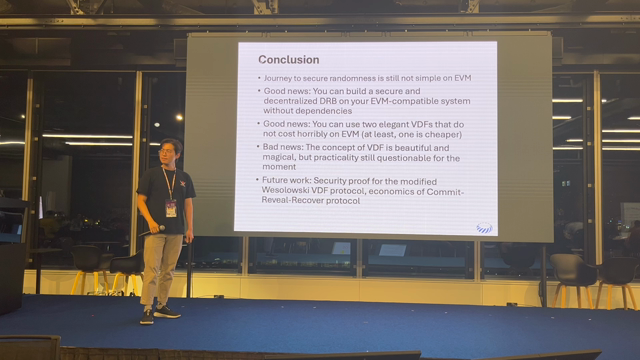
24:02VDF-Based On-Chain Random Beacon: Practice and Challenges
ETHTokyoSep 18, 2024
This talk will discuss constructing a VDF-based on-chain Distributed Random Beacon (DRB), introduce two VDF mechanisms, share optimization techniques, and compare applications of Commit-Reveal schemes enhanced by VDF, noting the challenges in blockchain environments. The video discusses the development of a distributed random beacon (DRV) for an L2 blockchain due to the lack of support from existing oracle services. The DRV is essential for applications that require secure random numbers, such as leader elections and lotteries. The presenter emphasizes the importance of liveness in DRVs, which ensures that random numbers are generated even if some participants disrupt the process. They introduce the commit-reveal-recover scheme using VDF (Verifiable Delay Function) as a solution to achieve strong liveness, allowing recovery of random numbers if the process is interrupted. The challenges of implementing VDF on Ethereum Virtual Machine (EVM) are addressed, focusing on verifying VDF evaluations within smart contracts. Two types of VDFs, Pitchfork and Wesolowski's, are compared in terms of gas costs and implementation complexity. The video also touches on the concept of hash-to-prime functions. Finally, strategies for implementing these VDFs are discussed, with insights into optimizing gas usage by balancing protocol repetitions and modular exponentiation checks on EVM for Pitchfork VDF implementation.
 22:20
22:20True real-life token-enabled projects: Mechanisms and Impacts
ETHTokyoSep 18, 2024
This talk will explore how applications built on Dev Protocol have supported various tokenized projects that are viable in the real life, including creators, stores, and social infrastructure. The video features a team that is developing blockchain protocols across Japan, Switzerland, and India. The speaker, who typically resides in Tokyo and enjoys watching anime daily, introduces the concept that 97% of the world's population does not use blockchain. The video appears to discuss the impact of blockchain technology on those who do use it, potentially including perspectives from various sectors such as public sector professionals and business owners.
 13:07
13:07Enter the Portal Network
ETHTokyoSep 18, 2024
This talk with introduce a decentralized way for all users to access Ethereum in a resource efficient way, but still maintain full access to the state. The video discusses the challenges of accessing Ethereum in a decentralized manner due to the high requirements for running a full node, such as significant storage, constant operation, and technical knowledge. The speaker introduces the portal network as a solution that allows nodes to store only the data they need, reducing the burden on individual nodes while maintaining access to necessary information. The portal network operates on a peer-to-peer protocol and utilizes distributed hash tables for data storage, ensuring that data remains accessible and isn't flushed from the network. The incentive model for the portal network is based on low participation costs with high data value. The speaker outlines various networks within the portal framework, including ones dedicated to history, state, and transactions, and explains how data validation works using accumulators and Merkle-Patricia trees. The timeline for launching different components of the portal network is discussed, with some parts already operational. Portal integration could significantly reduce storage requirements for running a validator or full node. The speaker mentions upcoming improvements like vercal tries and an EIP that would allow offloading old blocks. They also highlight that participation in the portal network requires minimal resources. Various teams are building clients compatible with the portal network, including an Ethereum Foundation team working on a Rust client called Trim. The video concludes with an invitation to learn
 21:34
21:34TLSNotary: Bridging Data from web2 to web3 Using Privacy-Preserving MPC
ETHTokyoSep 18, 2024
TLSNotary is an open-source project that utilizes MPC-TLS (Multi-Party Computation-Transport Layer Security) to enable users to prove and share their data while preserving their privacy. The video features a presentation by Chris from the TLS Notary team discussing the project's aim to securely bring data from Web 2.0 to Web 3.0 using privacy-preserving multi-party computation (MPC). He explains that TLS Notary is part of Privacy and Scaling Explorations, a research lab funded by the Ethereum Foundation, which focuses on programmable cryptography and building proof-of-concept applications. Chris provides an overview of Transport Layer Security (TLS), emphasizing its role in ensuring secure communication on the internet by confirming data origin and integrity but lacking portability. He illustrates this limitation with an example where Alice needs to prove her bank balance to Bob without Bob being able to trust the document's authenticity. TLS Notary aims to solve this problem by enabling data portability without relying on trusted third parties while preserving privacy through MPC TLS technology. Chris describes use cases such as creating a Web 3.0 ride-hailing service that leverages driver ratings from an existing platform like Uber without Uber's cooperation or knowledge. He delves into how TLS Notary works, explaining the roles of servers, provers, and verifiers in the original TLS and how TLS Notary introduces an additional verifier who participates in key exchange using MPC. This process ensures that no single party
 26:53
26:53Scaling Web3 Technology with Authentic DevRel & Collaborative Dev Innovation
ETHTokyoSep 18, 2024
Exploring the transformative impact of Snaps permissionless innovation in the Wallet ecosystem. Discover how authentic relationships and collaborative innovation are reshaping wallet technology in Web3. The video features a speaker named Francesco from the DevRel team at MetaMask discussing developer tooling with a focus on Snaps and permissionless innovation. He talks about the importance of Snaps for extending the functionality of MetaMask, allowing developers to integrate features like interoperability, transaction insights, privacy, and on-chain notifications. Francesco highlights that Snaps can support various blockchains and assets that are not natively supported by MetaMask. He also mentions the recent update to Flask V12 and notes that over 50 Snaps have been approved for use by the community. Francesco emphasizes permissionless innovation as crucial for community growth and details how developer relations (DevRel) play a role in supporting developers through educational content, tutorials, feedback loops, and fostering a safe space for discussion. He introduces the concept of a hierarchy of builder needs, akin to Maslow's hierarchy of needs, explaining how it applies to developers' requirements. Additionally, Francesco discusses the importance of understanding different levels of developer expertise when creating documentation and tutorials. He advises against product-specific conversion tactics in favor of value-driven onboarding that prioritizes educational content. The video also includes mention of an event called Builder Nights focused on deep technical topics. Lastly, Francesco provides frameworks for engaging with developers at different stages in
 1:22:00
ETHBerlin04 Closing Ceremony and Winner Announcements
ETHBerlinSep 6, 2024
ETHBerlin04 May 24-26, 2024, CIC Innovation Campus The DoD closes the hackathon with a special guest on stage and awarding all hackathon winners. ETHBerlin04 - https://ethberlin.org A Department of Decentralization event - https://dod.ngo The video is about the closing ceremony of ETH Berlin, where the speaker expresses gratitude to the participants, especially the hackers who worked through the night. The speaker highlights that the Department of Decentralization, which organizes events like ETH Berlin, is a non-profit collective run by volunteers and funded by donations, grants, and sponsorships. The event saw 802 attendees with various contributors including hackers, volunteers, judges, mentors, and speakers. A total of 83 projects were submitted across different tracks and categories. The speaker also informs viewers about the need to create a Zoopas profile to vote for the Hacker's Favorite award and mentions that Vitalik Buterin will be joining them on stage for an interview. During this interview, Vitalik shares his favorite Ethereum moments related to Berlin and discusses his personal connection to the city. He reminisces about coding in Berlin with other Ethereum co-founders and attending significant Ethereum events in the city. The video concludes with a reflection on DEFCON 0, Ethereum's first developer conference held in Berlin.
 42:04
42:04ETHBerlin04 Workshop: Odysseas, GregTheGreek - ZK vs TEE: Wat to do (as a product builder)?
ETHBerlinSep 5, 2024
ETHBerlin04 May 24-26, 2024, CIC Innovation Campus Technical Workshop: Odysseas, GregTheGreek - ZK vs TEE: Wat do (as a product builder)? This session delves into TEEs and ZK for Ethereum product builders with limited technical depth in these areas. We will examine key considerations such as performance, trust assumptions, cost efficiency, and the complexity of integration to determine their suitability for privacy and verifiable computation in applications. ETHBerlin04 - https://ethberlin.org A Department of Decentralization event - https://dod.ngo The video features a discussion by product builders in the crypto technology field, focusing on the decision-making process when choosing between two cryptographic technologies for product development. The speakers emphasize their perspective as product creators rather than researchers, aiming to help viewers understand how to ship products quickly while considering the trade-offs and advantages of two specific technologies: T's (Trusted Execution Environments) and ZK (Zero Knowledge Proofs). The video includes audience participation where members provide definitions of ZK and T's. Zero Knowledge Proofs are described as cryptographic protocols that allow proving knowledge or computations without revealing all the details, while Trusted Execution Environments are explained as secure chips that prevent data leakage during computations. The main difference highlighted between the two technologies is that T's are hardware-based solutions for privacy and security, while ZK is a software-based approach. The speakers point out that each has its own advantages depending on whether one prioritizes privacy or verifiable computation. The discussion then shifts to five key verticals to consider when choosing between ZK and T's for product development: performance, security, trust assumptions, ease of integration, and maturity. These factors are crucial in deciding which technology aligns best with a team's goals, especially regarding how quickly a product can be brought to market. The video
 37:10
37:10ETHBerlin04 Fireside: Vitalik Buterin - Ethereum Community and Values
ETHBerlinSep 5, 2024
ETHBerlin04 May 24-26, 2024, CIC Innovation Campus Vitalik Buterin, Franziska Heintel, Afri Schoedon ETHBerlin04 - https://ethberlin.org A Department of Decentralization event - https://dod.ngo The video features a prominent figure in the cryptocurrency space discussing various topics related to Ethereum, its history, and its community values. The guest shares fond memories of Ethereum's early days in Berlin, including the development of test networks and the launch events. They reflect on the growth of the community from the first small gathering to thousands of participants at later events. The conversation also delves into how Berlin's political culture influences the Ethereum community's values, emphasizing open source culture and innovation over profit motives. The guest discusses their vision for Ethereum as a platform for trustworthy, free, and open internet applications that respect user privacy and collaboration needs. They touch on technological advancements like zero-knowledge proofs that address blockchain limitations such as privacy and scalability. The dialogue further explores Ethereum's evolution in response to changing technologies and world politics, highlighting the need for a coherent ecosystem where different applications work together seamlessly. The guest also reflects on their manifesto about making Ethereum cyberpunk again, advocating for an updated vision that aligns with current social and technological trends. Overall, the video is an in-depth look at Ethereum's past achievements, current state, community values, and future aspirations within the rapidly evolving world of blockchain technology.
 39:10
39:10ETHBerlin04 Workshop: Tino Breddin - Integrating RPCh in your Dapp to privately connect to RPCs
ETHBerlinSep 4, 2024
ETHBerlin04 May 24-26, 2024, CIC Innovation Campus Technical Workshop: ETHBerlin04 Workshop: Tino Breddin - Integrating RPCh in your Dapp to privately connect to RPC endpoints ETHBerlin04 - https://ethberlin.org A Department of Decentralization event - https://dod.ngo The video features Tino Bredin discussing RPC (Remote Procedure Call) security, the privacy implications of using an RPC endpoint, and how to enhance the privacy of decentralized applications (dApps) for users. He highlights the importance of transport privacy, focusing on protecting metadata such as IP addresses that are often exposed during internet usage. To illustrate his point, he demonstrates a tool called Derp, which mimics an RPC provider and logs requests made through a user's wallet, revealing how easily metadata can link different user accounts. Bredin then introduces Hopper's solution to this privacy issue, which involves using the RPC-H SDK within a dApp to anonymize RPC requests by unlinking the user's IP address from their on-chain activity. He provides a hands-on example by showing how to integrate RPC-H into a basic blockchain explorer dApp that fetches and displays block data and transaction logs. The video includes a step-by-step guide on setting up DERP as an RPC endpoint in MetaMask, cloning a GitHub repository with the example dApp code, switching between branches with and without RPC-H integration, and installing necessary dependencies to run the application.
 39:59
39:59ETHBerlin04 Workshop: Austin Griffith - Build an Ethereum dApp in 40 mins
ETHBerlinSep 4, 2024
ETHBerlin04 May 24-26, 2024, CIC Innovation Campus Technical Workshop: Austin Griffith - Build an Ethereum dApp in 40 mins ETHBerlin04 - https://ethberlin.org A Department of Decentralization event - https://dod.ngo The video features a presenter explaining how to quickly build a decentralized application (DApp) using Scaffold ETH, a tool designed to facilitate the development process. The presenter assumes the audience has knowledge of Ethereum and introduces the Build Guild, a DAO focused on developer onboarding, education, and providing grants. They also mention Speedrun Ethereum as a resource for technical individuals learning to build on Ethereum. The main focus of the video is demonstrating how Scaffold ETH can be used for rapid prototyping and product building without getting bogged down by common issues such as wallet or network problems. The presenter goes through the process of creating a new project called "ETH Burr" using Scaffold ETH, including setting up a local blockchain with Anvil from Foundry, deploying an example smart contract, and starting a local frontend. They then navigate to localhost 3000 to show what Scaffold ETH looks like out of the box and discuss its features like burner wallets and a faucet for obtaining test ether (eeth). The presenter demonstrates how to interact with an example greeter contract and then proceeds to write and deploy a simple smart contract that includes a counter function. Throughout the video, the presenter emphasizes the ease of iteration and tinkering with smart contracts in Scaffold ETH, showing how changes can be quickly deployed and tested locally.
 40:31
40:31ETHBerlin04 Opening Ceremony
ETHBerlinSep 4, 2024
ETHBerlin04 May 24-26, 2024, CIC Innovation Campus Afri & Franzi from the DoD open the hackathon! ETHBerlin04 - https://ethberlin.org A Department of Decentralization event - https://dod.ngo The video features Francie and Afri welcoming participants to the opening ceremony of a hackathon event in East Berlin. They provide an overview of the event, emphasizing that it's a hands-on hackathon with no passive spectators, and encourage everyone to actively contribute. They welcome all hackers, volunteers, mentors, judges, speakers, experience hosts, and remind returning attendees about the event's purpose: to make a difference and build useful things. They urge new participants to read the manifesto for inspiration. The hosts outline house rules including the necessity of wearing a wristband for entry, inform attendees that the venue is open 24 hours with food and drinks provided, and stress that there will be no tolerance for code of conduct violations. They explain the venue's security system for door access using color-coded signals and encourage exploration of the multi-floor venue while cautioning against accessing restricted areas. They highlight essential information for hackers such as joining the matrix room for communication with mentors and other participants. The summary conveys that this video is an informative guide for attendees on how to navigate and make the most out of their hackathon experience at East Berlin.
 35:24
35:24ETHBerlin04 Keynote: Peter van Valkenburg - Are there limits to the reach of US Sanctions laws?
ETHBerlinSep 4, 2024
ETHBerlin04 May 24-26, 2024, CIC Innovation Campus Peter van Valkenburg - Are there limits to the reach of US Sanctions laws? ETHBerlin04 - https://ethberlin.org A Department of Decentralization event - https://dod.ngo The video features a speaker discussing the implications of the Tornado Cash prosecutions and how US sanctions laws could potentially affect developers. The speaker, a lawyer from Coin Center, emphasizes the importance of legal advice for those working on privacy tools and censorship-resistant software. They explore the reach and limits of US sanctions laws, specifically the International Emergency Economic Powers Act, and argue that sanctioning immutable smart contracts like those used by Tornado Cash may overstep legal boundaries. The video also touches on constitutional principles of free speech and privacy, highlighting the need for well-reasoned policy arguments to protect civil liberties in the digital world. The talk is part of a series addressing recent legal actions against developers of privacy-focused crypto tools and aims to provide clarity on the legal risks involved in such work.
 30:03
30:03End of the Ethereum Killer Narrative; The Future of Onchain Businesses
ETHTokyoSep 3, 2024
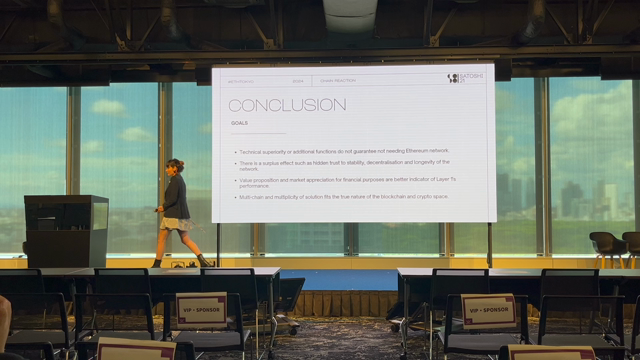
This talk will discuss how advancements in scalability solutions are empowering Ethereum to accommodate a vast network of transactions and interactions, fostering seamless operations for onchain businesses of all scales. The video features Melissa Kurtcan, founder and CEO of Satoshi21 Venture Studio, discussing insights from the Chain Reaction Incubator in Southeast Asia and her six years of experience in the cryptocurrency industry. She aims to address the fundamental principles and ideologies of blockchain technology, especially in light of the recent FTX incident. Melissa questions the validity of the "Ethereum killer" narrative, suggesting it might be more marketing hype than reality. She emphasizes that blockchain is ideologically different from other technologies because it solves technical problems with an ideological approach. The talk will cover Bitcoin's value proposition as decentralized digital scarcity and Ethereum's evolution towards programmable decentralization. Melissa critiques the blockchain trilemma (decentralization, security, scalability) and suggests a multi-chain ecosystem for achieving these goals alongside privacy. She outlines that to challenge an existing layer one blockchain like Ethereum, a new platform must offer a paradigm shift and execute perfectly to gain market penetration. The summary is that technical superiority alone won't lead to mass adoption without underlying ideology, and she argues against narratives that claim established blockchains like Ethereum are outdated.
 21:20
21:20A Lightweight Architecture for Ethereum Archive Nodes
EthCCAug 9, 2024
The core idea is to maintain compacted, flattened, and fine-grained (i.e., transaction-level) historical states by flattening the minimum state changes of each transaction required for the world state. The video features a talk by Andy, the CEO of BlockSec and a professor at Zhejiang University, discussing their research on optimizing Ethereum archive nodes. The research is a collaborative effort between BlockSec, students, and other partners. Andy emphasizes the importance of building real systems with tangible impacts and outlines BlockSec's role in enhancing blockchain security through various products and solutions. Andy explains that blockchain optimization can be achieved at different layers, including consensus mechanisms, execution layers, and storage engines. Their work focuses on optimizing the storage engine to improve efficiency and reduce costs by modifying the state model within Ethereum's archive nodes. He provides an overview of Ethereum's storage layer, explaining that it operates as a state machine driven by transactions that change states. The state is an account-based model with each account having its own storage referenced by a storage root. All states are encoded in a Merkle Patricia Tree (MPT) for quick data authentication. Different types of Ethereum nodes exist with varying capabilities regarding historical data storage. Full nodes only maintain the latest world state for reorganization tolerance while archive nodes preserve all historical states but require significant disk space due to saving all intermediate MPTs at each block. Archive nodes are essential for detecting transaction attacks and smart contract vulnerabilities through historical transaction analysis. They also help
 33:28
33:28Protoapps and Consumer Apps in the DeAI World
New FoundationAug 6, 2024
Building consumer apps in the deAI space for mass adoption, Farcaster, creators and beyond. The video features a panel discussion on the topic of "proto apps" and the integration of AI with the crypto world. The panel includes co-founder David Phelps, who coined the term "proto apps," Celia from Ritual, Hugo Hopman from New Foundation, and Jeff Shi from Flock IO. They explore how web 3 technologies enable open-source development and data sharing, contrasting with the closed, siloed approach of web 2. Examples include how contests can be run on various chains with community involvement and how AI is moving from a centralized model to one where algorithms are decentralized. The panelists discuss the implications for developers and founders in building on this new internet stack, emphasizing collaboration and composability in the ecosystem.
 16:58
16:58Enabling Decentralized Networks With DePin and PoC
EthCCJul 18, 2024
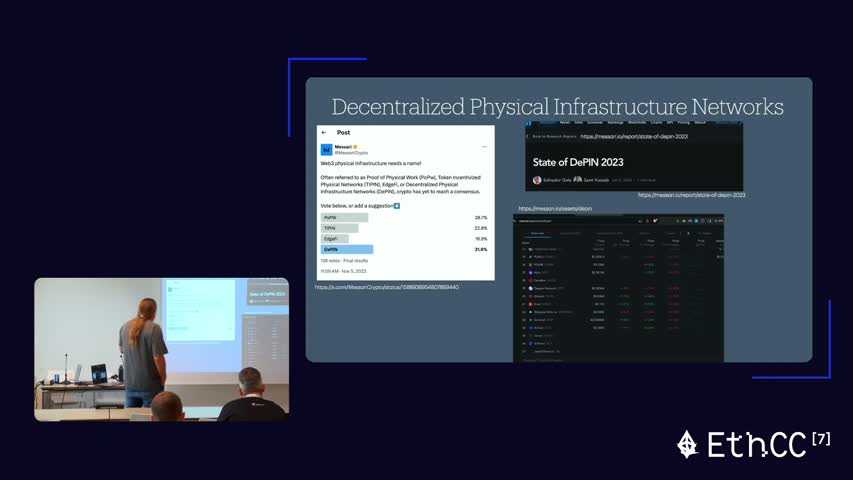
We introduce Proof of Capacity (PoC) that allows on-chain verification of off-chain cryptographic proofs over (almost any) arbitrary hardware commitments to decentralized network. We discuss PoC's role in enabling decentralized network stacks. The video discusses the evolution of the term "Deepin" in the cryptocurrency space, which was chosen to describe a particular sector involving decentralized networks and physical work. The speaker notes that Misari, a crypto analytics firm, conducted a Twitter poll in late 2022 to settle on this term, and later published an influential overview of the state of Deepin in 2023. The video highlights that there are over 60 tokens or projects associated with Deepin, indicating its significance. The speaker explains that Deepin encompasses both physical and digital resources, with a focus on digital resources like computing power. Projects like Filecoin are mentioned for their contributions to digital storage solutions. The speaker emphasizes the importance of proof systems in verifying storage and computing resources, noting the challenges unique to computing power compared to storage. Fluence is introduced as a decentralized cloud compute platform that aggregates CPU (and potentially GPU) resources for developers to purchase capacity. The platform uses WebAssembly and Docker for deploying general compute tasks. It is governed by a DAO and has its own token. The importance of supply preceding demand in protocol structure is stressed, with emphasis on creating incentives for resource providers to commit capacity without immediate demand. The speaker warns against protocols incentivizing non-existent capacity as it can be detrimental. Proof systems
 35:30
35:30Designing High-Impact Web3 Grants Programs
EthCCJul 18, 2024
This workshop uses the newly created Grants Program Design Canvas to guide you through every step of designing a grants program - from crafting clear goals to building a program that drives real results. Coach Jay, a former high-performance coach turned Web3 enthusiast, introduces a tool designed to help launch and optimize grants programs called the Grants Program Canvas. He explains that this tool is inspired by the Business Model Canvas, which revolutionized startup business planning by enabling rapid iteration of ideas. The Grants Program Canvas aims to simplify and streamline the complex planning process associated with grants programs, making it easier for organizations to attract high-quality builders to their ecosystems. The video will cover an overview of the Grants Program Canvas, including a demonstration of how it works. Coach Jay outlines that the canvas is divided into four key phases: Define, Design, Execute, and Learn. Each phase has specific quadrants that guide users through setting objectives, choosing funding mechanisms, defining roles and responsibilities, engaging with audiences, determining disbursement strategies, and conducting retrospectives. The tool is meant for both new and veteran ecosystem growth leaders and can be used for both new and existing grants programs across various types of organizations. Coach Jay plans to workshop the Define phase in the session using the canvas in a Miro board with audience participation. In summary, the video presents a hands-on session on how to use a strategic planning tool for grants programs within Web3 ecosystems, aiming to help leaders effectively plan and grow their initiatives.
 31:15
31:15Decentralized App Stores: Shaping Apps distribution future
EthCCJul 18, 2024
App Stores have a central place in our digital life, serving as the primary hub for distributing digital services. Their centralisation in the hands of a few major players jeopardizes our freedom. Let’s explore how we can decentralize them… The video features a speaker discussing the future of decentralized app stores and the importance of creating an open ecosystem that values privacy and freedom. The talk delves into the history of operating system distribution platforms, from mainframes to modern app stores, and emphasizes the need for a permissionless distribution system within the web3 ecosystem. The speaker explains how their platform, Metamask, introduced NAPS (community-built applications) to allow developers to enhance the wallet with new features without centralized control. The focus is on creating a permissionless evaluation system where community sentiment, rather than a central authority, determines app trustworthiness. Key capabilities required for this system include permissionless evaluation, registration, and security enforcement. The video also covers identity verification within a peer-to-peer network and the establishment of trust circles through peer trust assertions to evaluate apps' security credibly. Architectural principles such as censorship resistance and leveraging decentralized storage like ceramic network and Verax for storing verifiable credentials are also discussed to ensure data integrity and trust value calculations.
 12:39
12:39Creating a Unified Liquidity Layer Across Web3 || Jonathan Lim,
Stable SummitJul 12, 2024
Creating a Unified Liquidity Layer Across Web3 The video features Jonathan Lim, a product manager at Circle, discussing the current state and future of stablecoins. He begins by engaging the audience with a mood check and then proceeds to talk about his dislike for the term "stablecoins," suggesting that it implies a lack of dynamism, which he disagrees with. Lim highlights the market validation of stablecoins through traditional financial players entering the space. He shares statistics about the Cross-Chain Transfer Protocol (CCTP), including $10 billion transferred since launch, $250 million in weekly volume, 1 million unique transactions, and involvement from over 50 active developers. Lim emphasizes the importance of network effects and shows how adoption increased as more chains were added to CCTP. He discusses capital efficiency in terms of USDC circulation moving cross-chain and presents data on increasing interchain velocity. The impact on users is shown through the generation of 47K multi-chain wallets since CCTP's launch. He briefly touches on an incentive campaign spike in wallet creation due to airdrop farming but clarifies that it's not a primary use case for CCTP. Lim's vision is for CCTP to help users enjoy multi-chain benefits without drawbacks like fragmentation. He illustrates cross-chain volume with a chart showing thick lines between certain nodes, indicating high
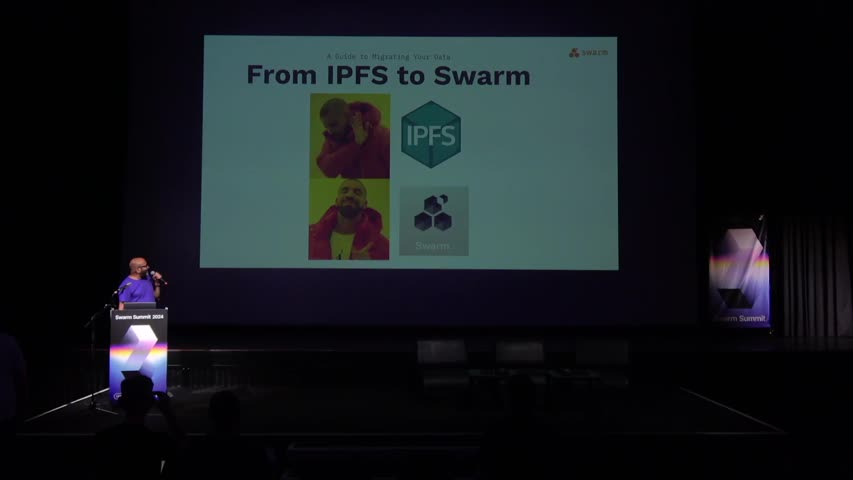 21:21
21:21Moving from IPFS to Swarm || Ramesh Pallikara
SwarmJun 24, 2024
A talk that focuses on what everyone needs to know about IPFS and Swarm, its pros and cons and how to use Swarm instead of IPFS. The video features Ramesh, a developer relations representative at Swarm, who has over 20 years of full-stack development experience and has been working with IPFS and Swarm for nearly three years. He discusses the benefits of using Swarm as an alternative to IPFS for certain drawbacks users may encounter. Ramesh clarifies that while he appreciates IPFS, he believes Swarm offers superior solutions for data availability, download speeds, and decentralization without the need for constant node operation or reliance on third-party services. He explains the technical aspects of IPFS, including its content addressing system through CIDs (content identifiers) and IPNS (Interplanetary Name Service) for mutable pointers to content. Addressing misconceptions about IPFS, he notes that it is not entirely free unless users run their own nodes or use pinning services with limitations. Ramesh then compares Swarm to IPFS in terms of atomic units, download speeds, censorship resistance, privacy, payment systems, and incentives for running nodes. He clarifies terminology differences between the two platforms regarding pinning and CIDs. The video also includes a tutorial on migrating from IPFS to Swarm using command-line tools and libraries like BJS for dApps. Ramesh invites viewers to try out Swarm and join their Discord
 11:21
11:21The Swarm Ecosystem: 6 months in review || Costanza Gallo
SwarmJun 24, 2024
We will review the highlights of the past few months, and some exciting news from the ecosystem. This journey will bring us from outer space, to the ocean, to Thailand, inside the blockchain rabbit hole. In this video, Costanza introduces the Swarm ecosystem and its advantages over traditional cloud services like AWS. The presentation covers partnerships and developments within the Swarm community, focusing on how Swarm addresses challenges in data integrity, accessibility, and secure storage for organizations such as the European Space Agency. Costanza highlights a collaboration with DigitalOcean that simplifies decentralized storage access for developers through a one-click app. Additionally, a partnership with IoTeX is announced, enhancing transparency and liquidity in the Swarm network. The video concludes with excitement for future innovations and community engagement in the decentralized technology space.
 07:25
07:25Empowering Creators: Pay-to-Download Services on Swarm Network - Spaces || Tex
SwarmJun 24, 2024
Introducing a simple experimental pay-to-download service utilising Swarm as a storage backbone. The video discusses the idea of a platform where users can explore and interact with the work of other visualizers, such as viewing communities that have made decisions using tools like Gutenberg. It suggests the ability to see files created with these tools, purchase them, and view other people's projects. The platform would also allow users to create new projects from their home, work on files such as an AI agent, and develop cyberpunk-themed ideas. The focus seems to be on developing, sharing, and collaborating on creative files within a community setting.
 18:35
18:35Bringing ENS to daily internet use || Pavel Losev
SwarmJun 21, 2024
The talk will cover on different ways of how ENS-powered websites could be integrated into computers natively, without any need of gateways. It will compare 3 main approaches: Custom DNS Server, DNS client modules and a web extension. The video features a presentation by Pavel, a front developer at DNS, discussing how to integrate decentralized web (D-Web) domain names, specifically those ending in .eth, into everyday internet usage. He explains that .eth is an Ethereum-based alternative to the traditional DNS system with ownership managed by a DAO and resolutions done via smart contracts. Pavel reviews several methods for resolving .eth domain names, including HTTP gateways, browser integrations like in Brave, DNS servers with Web3 support, and running a local DNS server. He highlights the challenges of each method, such as censorship risks with HTTP gateways and limited support from major DNS providers. Pavel also provides a demo showing how he resolved .eth domains locally using various tools and discusses potential improvements for D-Web accessibility. The video concludes with an audience Q&A session where Pavel advises on handling domain squatting issues.
 34:09
34:09Practical use cases of Swarm that you can do today || Áron Soos
SwarmJun 21, 2024
What does Swarm look like from a user's perspective? What are the available tools and how to navigate through them? This workshop will walk you through real-world use cases and show off the capabilities of the Swarm network. The video tutorial demonstrates how to set up and use various tools for interacting with the Swarm decentralized storage network. The presenter starts by showing how to start a B node on the mainnet and then introduces the Swarm CLI for managing node status and interacting with the network. Viewers learn how to use different commands to check node status, install postage batches, and upload/download content. The video further explores using the B dashboard for a graphical interface to manage Swarm interactions, including uploading files and checking postage stamps. The presenter also explains the concept of immutable and mutable postage stamps for content management. Next, the tutorial covers EtherJot, a markdown-first blogging tool that requires a local B node and a postage stamp. The presenter shows how to start a blog, customize it with themes and plugins, manage assets, and enable dynamic features like comments using Swarm's feeds. Additionally, the video discusses exposing Web3 content to Web2 users through ENS domains and eth.limo service. It also introduces gateway proxy as a tool for curating content, managing postage stamps, and securing gateways. Finally, the presenter briefly showcases Swarm Desktop for managing B nodes and accessing applications like EtherJot. Questions from the audience lead to discussions on mapping human-readable URLs to Swarm hashes using DNS, Gateway Proxy rem
 11:20
11:20Swarm light node as a mobile application || Balint Ujvari
SwarmJun 20, 2024
In order to participate in the Swarm network there is a high entry barrier. To help the adoption of Swarm, the capabilities of a light node can be built into a mobile application. This video features Balint Ujvari introducing a new mobile application feature for SolarPunk, known as Swarm Lightnode. Balint provides insight into the motivation behind creating a user-friendly mobile app that simplifies the process of running a Swarm node, which traditionally requires technical configuration. The app aims to be easily downloadable, installable, and configurable with a simple UI on both Android and iOS platforms. The minimum requirement for the app is to enable uploading and downloading data from the Swarm network. Balint discusses his experience with updating and refactoring an original implementation, addressing networking issues on Android devices by manually updating certain packages. He also mentions cross-compatibility with desktop applications and the potential for compiling the app to Wasm for web browser use. For developers, Balint outlines the steps needed to compile and install the app using Android SDK and environment variables, along with enabling installation from unknown sources on Android devices. He suggests Optaneum as a user-friendly solution for automatically downloading updates. The video includes a demonstration of configuring and using the app, showcasing its ease of use, error handling capabilities, and how it manages peer connections and wallet data. Balint concludes by offering to show the working proof of concept in person and invites further discussion on it.
 15:22
15:22Running a Swarm node inside a browser
SwarmJun 20, 2024
Going through the limitations and possibilities of running a SWARM node inside a browser to make connecting to the network more convenient. The video features Josef from SolarFunk discussing the implementation and improvements of a new feature added to Swarm, as well as enhancements to their "glubi" (nodes or hubs). He addresses various web-related challenges encountered during development, including issues with web wallets like MetaMask, and the handling of cryptocurrencies and tokens. The presentation aims to share insights into the project's progress and address numerous questions that arose during its development.
 1:00:10
Taiko
ZuBerlinJun 19, 2024
Clip The video features a discussion and presentation on the concept of base sequencing, a term related to blockchain technology. Base sequencing is described as layer one sequencing that is decentralized, neutral, and reuses existing infrastructure without introducing a new brand or token. It's presented as a public good that provides shared sequencing for roll-ups on the Ethereum blockchain. The speaker talks about the benefits of base sequencing, such as network effects and improved properties like security, programmability, scalability, low latency, and composability. The presentation delves into how Ethereum can achieve low latency and composability through pre-confirmations at internet speeds and synchronous composability with shared sequencing. Additionally, the concept of super transactions across multiple roll-ups is introduced. The speaker discusses real-time proving for ZK roll-ups and liquidity providing as short-term solutions for synchronous composability. Technical details of implementing pre-confirmations with MevBoost are covered, highlighting challenges with proposer sophistication and suggesting delegation to sophisticated entities called gateways. The talk also includes discussions about collateralizing sequencers with ETH for pre-confirmations and the gas efficiency of on-chain processes. The roadmap for implementing these ideas includes launching a DevNet at Zooberlin for testing pre-confirmations in a development environment, aiming for a testnet at ECC (Ethereum
 00:18
00:18Taiko
ZuBerlinJun 18, 2024
Clip The video discusses the implementation of multiple APIs in the context of blockchain technology. It suggests that pre-confirmation gateways, which are considered sophisticated parties, should be responsible for this task rather than L1 proposers, who are assumed to be less sophisticated. The speaker also mentions that standardizing this process is important in the future.
 22:46
22:46Building Decentralized Apps Quickly
LBWTVJun 17, 2024
Building Decentralized Apps Quickly - Kc Pella The video features Casey Peli, a software developer and volunteer, discussing how to build decentralized applications (dApps) quickly and efficiently. Targeting developers, content writers, and anyone interested in making money in the decentralized space, Casey introduces Build Guild, a community that supports developers across various roles including design, product management, and marketing. He covers educational resources like Speedrun Ethereum for learning smart contract development through challenges. Casey highlights the importance of grants for developers and content creators and introduces a tool called Skaffold E2 that simplifies the dApp development process on EVM-compatible chains. He demonstrates using Skaffold E2 to create a dApp without overwhelming Node Package Manager (NPM) with installations. The tool allows for automatic frontend generation from smart contracts, saving developers time. He also explains how to deploy smart contracts on different networks using Yarn commands and how to verify them easily. Casey shows how to update frontend applications with new network targets and deploy them online using Vercel directly from the terminal. Additionally, Casey talks about grants available through Build Guild that provide funding for projects. He explains the Build Guild app's back office where developers can share their builds, draw inspiration from others' work, and potentially earn monthly ETH rewards by contributing to the community.
 17:55
17:55StreamEth
LBWTVJun 17, 2024
StreamEth By Samuel Ojo The video features a developer from Streameth, Samuel Ojo, discussing the advantages of their platform for hosting virtual and hybrid events. Samuel outlines the limitations of traditional Web2 media companies, such as IP restrictions, monetization difficulties, censorship issues, high fees, lack of ad control, and limited customizability. He then presents Streameth as a complete Web3 solution that overcomes these problems by allowing event organizers to host customizable events with features like decentralized chat and IPFS storage to ensure content permanence. The platform also offers engagement tools, automated post-production editing, automated text transcription generation, and the ability to create video NFTs for unique monetization and access opportunities. Samuel explains that Streameth is affordable and utilizes multiple blockchains including Ethereum and BSC for smart contract deployment. He emphasizes that content on IPFS is not deleted but can be unpinned from databases like Pinata without being removed from the blockchain network. The presentation concludes with an invitation for questions from the audience.
 55:40
55:40Ethereum Governance
LBWTVJun 15, 2024
Ethereum Governance. Speaker: Tim Beiko The video features a live discussion with a key figure in the blockchain space, focusing on the Ethereum community and its governance. The speaker, Tim, has a background in core developer coordination and has contributed significantly to the Ethereum ecosystem. He explains how Ethereum governance works, detailing the roles of different stakeholders such as core developers, EIP champions, consensus participants, node operators, users, and the broader community. Tim emphasizes the importance of protocol rules and specifications that nodes must implement to maintain network integrity. He also discusses contentious forks in Ethereum's history and how governance decisions are made during such events. Additionally, Tim addresses the challenges of evolving governance as more stakeholders join and changes become more complex. He shares insights on initiatives like Protocol Guild that support core developers and mentions funding opportunities through grants for infrastructure development. Questions from attendees revolve around how African communities can contribute to infrastructure development and engage with ongoing initiatives. Tim suggests building high-quality infrastructure providers for geographical decentralization and connecting local payment systems to blockchain on-ramps as potential areas for contribution. He also highlights funding sources like the Ethereum Foundation's grants program (ESP) and other L2s or DAOs interested in developing their ecosystems. Finally, there's excitement about DevCon's Scholars Program that funds community leaders to attend DevCon events and a
 27:52
27:52Resource Plasma by Christopher Goes
ZuBerlinJun 14, 2024
Clip The video features a speaker named Christopher discussing the concept of "resource plasma" and its relation to Ethereum scaling solutions. Initially, the talk was intended to cover Enoma Intent Machines in Ethereum but shifted to focus more broadly on plasma. Christopher begins with an audience survey about their familiarity with plasma before diving into the main content. The presentation is structured into five parts: 1. Explaining what plasma is: Plasma is a family of Ethereum scaling solutions that differ from roll-ups because they do not require the main chain validators to store all data. 2. Discussing problems with plasma: Three main issues are identified—dependency tracking, developer-facing complexity, and incentive-compatible generalization. 3. Introducing the Enoma resource machine (ARM): ARM is an alternative state architecture that organizes state differently than traditional blockchain virtual machines. 4. Describing resource plasma: Resource plasma combines ARM with plasma, aiming to address some of the identified problems. 5. Addressing the hard problem of plasma: The talk concludes by acknowledging that while resource plasma can help with certain issues, incentive-compatible generalization remains a fundamental challenge that requires application-specific considerations. Christopher elaborates on how resource plasma operates, its advantages over traditional plasma constructions, and how it simplifies certain aspects like dependency tracking. However, he also
 31:46
31:46powdr: zkVM stack & compiler by Leonardo Alt
ZuBerlinJun 14, 2024
Clip The video features a speaker named Leo discussing Powder, a ZK stack compiler designed for creating zero-knowledge proofs. The talk includes a high-level introduction to ZK circuits and ZK virtual machines (VMs), followed by coding demonstrations. Leo explains that ZK circuits allow for off-chain computations to generate proofs that can be verified on-chain at a lower cost than performing the computation on-chain. He then introduces the concept of ZKVMs, which are more flexible than traditional ZK circuits because they can execute dynamic programs. Leo mentions several existing ZKVM implementations and discusses the advantages and disadvantages of current approaches. The focus shifts to Powder, which allows developers to compile high-level code into circuits without having to write them by hand. Leo provides an in-depth explanation of how Powder works, including its architecture and integration with various proof systems. He emphasizes the flexibility of Powder in supporting different VMs and front-end languages. Leo also demonstrates how to define a VM within Powder using an example program that computes the sum of a list. He shows how RISC-V assembly can be transpiled into Powder's intermediate representation (IR) and then compiled into constraints for proof generation. Throughout the video, Leo addresses questions about benchmarks, VM support, and developer experience. He highlights the