About 29 results
 20:52
20:52Mark Richardson
Building Better DEXes: Mean-Rate Exchange | Dr. Mark Richardson, Bancor | ETHSofia 2026
ETHSofiaOct 6, 2026
Dr. Mark Richardson of Bancor argues that the familiar bonding curve is one of the least helpful ways to describe a decentralised exchange. Starting from a simple discrete order book, he shows how an arithmetic distribution of liquidity lets the realised price be computed as a two-point mean, and how the x times y equals k model is the geometric-mean case of the same idea. Taking the limit to a continuous density function reveals an infinite family of bonding curves, from arithmetic to harmonic, described by a single exponent. He explains how defining DEXes by their exchange rate rather than an invariant removes the domain limits of current concentrated liquidity designs, including access to the arithmetic microstructure common on order book markets. Keynote at ETHSofia 2026, 24 September 2026, Sofia Tech Park, Sofia. Part of Blockchain Week Bulgaria 2026. Speaker ▸ Dr. Mark Richardson, Project Lead, Bancor Mark Bentley Richardson, holding a PhD from the University of Melbourne, redirected his career from research science to DeFi in 2021, now serving as Bancor's Project Lead. Under his guidance, Bancor launched Carbon DeFi, a system that enhances user customization in decentralized exchanges by enabling strategy-specific liquidity utilization. Richardson's leadership emphasizes consistent innovation while maintaining the key principles of decentralization, user safety, and operational simplicity. X: https://x.com/MBRichardson87 Chapters 00:00 Two families of invariant-curve DEXes 01:47 Starting from a discrete order book 04:03 There is no single price of a token 05:01 The two-point arithmetic mean shortcut 07:34 Geometric mean clearing and x times y equals k 09:49 Why AMM bid liquidity sits far from the price 10:49 From order books to continuous density functions 12:10 An infinite family of bonding curves 14:19 Formalising the curves 16:06 Describing a curve purely in prices 17:37 How this fixes concentrated liquidity 19:37 Density functions over curve invariants 20:36 Closing titles Blockchain Week Bulgaria: https://www.blockchainweek.bg ETHSofia: https://www.ethsofia.com Future Finance Forum: https://www.blockchainweek.bg/f3 Follow Blockchain Week Bulgaria X: https://x.com/BWBulgaria LinkedIn: https://www.linkedin.com/company/blockchain-week-bulgaria Follow ETHSofia X: https://x.com/EthSofiaBG LinkedIn: https://www.linkedin.com/company/ethsofia Telegram: https://t.me/+b-33LJUpAB5iODNk Nothing in this video is financial advice. About the organiser Blockchain Week Bulgaria, ETHSofia and the Future Finance Forum are organised by the Bithope Foundation, founded in 2014 by Vladislav Dramaliev. Inspired by Andreas Antonopoulos, it is Europe's first non-profit operating exclusively with bitcoin donations. Over more than ten years, it has supported 50+ charitable campaigns, and in January 2016 it co-founded the Sofia Crypto Meetup, now the region's longest-running monthly crypto event. https://bithope.org
 19:59
19:59The State of Crypto | Martin Leinweber, MarketVector Indexes | Future Finance Forum 2026
ETHSofiaOct 6, 2026
Martin Leinweber of MarketVector Indexes draws on index data back to 2015 and more than 2,300 tokens to argue that crypto rewards size, not speculation. The top ten coins hold roughly 90% of market cap, there is no small-cap premium, and a liquid micro-cap basket lost about 19% a year. He shows which coins held up in both bull and bear markets, why privacy is a strong theme, and why DeFi, at 2% of market cap but 65% of on-chain fees, looks mispriced. He expects stablecoins, tokenisation and AI agents to drive a fundamentals-led altcoin cycle, and explains the fees-and-users methodology behind his Token Terminal index. Keynote at Future Finance Forum 2026, 25 September 2026, Sofia. Part of Blockchain Week Bulgaria 2026. Speaker ▸ Martin Leinweber, CFA, Head of Digital Asset Research and Strategy, MarketVector Indexes Martin Leinweber leads digital asset research at MarketVector Indexes, developing index products and institutional research, and serving as the firm's primary voice on crypto markets globally. He brings nearly two decades of portfolio management experience across equities, fixed income, and alternatives. LinkedIn: https://www.linkedin.com/in/martin-leinweber-cfa-7758b012b Chapters 00:00 Introduction 00:19 Twelve years of data on 2,300 tokens 01:03 Crypto is concentrated: the top 10 hold 90% 02:13 No size premium in crypto 03:21 Micro caps: the pump and dump that works on paper 04:26 The most consistent coins in bull and bear markets 06:54 Screening for relative strength: the privacy theme 09:01 What the leaders share: revenue and users 10:02 On-chain fundamentals: DeFi is 2% of cap, 65% of fees 11:19 Stablecoins, tokenisation and AI agents 13:49 The Token Terminal top 10 index 15:45 Prediction: a fundamentals-driven altcoin cycle 17:30 Q&A: The index methodology 19:46 Closing titles Blockchain Week Bulgaria: https://www.blockchainweek.bg ETHSofia: https://www.ethsofia.com Future Finance Forum: https://www.blockchainweek.bg/f3 Follow Blockchain Week Bulgaria X: https://x.com/BWBulgaria LinkedIn: https://www.linkedin.com/company/blockchain-week-bulgaria Follow ETHSofia X: https://x.com/EthSofiaBG LinkedIn: https://www.linkedin.com/company/ethsofia Telegram: https://t.me/+b-33LJUpAB5iODNk Nothing in this video is financial advice. About the organiser Blockchain Week Bulgaria, ETHSofia and the Future Finance Forum are organised by the Bithope Foundation, founded in 2014 by Vladislav Dramaliev. Inspired by Andreas Antonopoulos, it is Europe's first non-profit operating exclusively with bitcoin donations. Over more than ten years, it has supported 50+ charitable campaigns, and in January 2016 it co-founded the Sofia Crypto Meetup, now the region's longest-running monthly crypto event. https://bithope.org
 22:51
22:51Mooly Sagiv
Using LLM Generated Formal Specs to Prevent the Next DeFi Hack | Mooly Sagiv (Certora) at ETHConf
ETHGlobalJul 9, 2026
In this talk, Mooly Sagiv from Certora presents how LLM generated formal specifications can help prevent the next DeFi hack. He frames the problem: coding agents are increasingly replacing software engineers, but hackers are winning, and even with excellent auditing firms and tooling the industry cannot find all bugs. The situation will worsen as every new AI model release creates new threats while code grows more complex. He critiques the informal approach to intent taken by companies like Anthropic, arguing intent should not be handled informally, and proposes agentic formal verification as the solution. He pushes back on the myth that formal verification is intractable or requires a PhD, arguing the real hard problem is not computation but formal specification: verification is only as good as the properties you specify, which is why teams that claim to be formally verified still get hacked, since they verified the wrong property. Mooly explains Certora's new open source, token based tool that bridges the gap between informal and formal specs. A developer writes intent informally (for example keep the balance safe), and the tool automatically generates a formal invariant (the sum of balances equals the total), which can then be proven or tested. The tool is agnostic to Certora's own prover, works with tools like Rocq, Lean, and Halmos, and fits into the development cycle before an audit through an interactive human-in-the-loop process, including a design hardening agent that makes designs more verification ready from the design document stage. He demos a toy counter contract with a trivial bug, showing how the tool generates properties in English, proves two of three rules, surfaces the bug, and validates the fix with a mathematical guarantee that future LLM versions cannot break. He then shows a real anonymized gambling protocol audited before deployment, where the tool automatically inferred 15 properties, found a real violation confirmed by their team, and suggested a validated fix. He closes on the product launching July 15 (Solidity only, GPL3, generating Foundry tests and including static analysis and bug finding at around $300 per run), and two takeaways: AI is why formal verification finally matters, and AI is also what makes formal verification easy by translating prover output into human understandable explanations. 00:00 Introduction 00:56 A Talk for Coders and Non-Coders Alike 01:18 How Coding Agents Are Replacing Software 01:47 Why Auditing and Tools Cannot Find All Bugs 02:28 Why Informal Intent Is the Wrong Approach 02:40 Introducing Agentic Formal Verification 03:05 Making Formal Verification as Easy as Testing 03:29 A History of Formal Verification and Its Myths 04:01 Why Intractability Is a Myth 04:32 Why Verification Depends on Specification 04:52 Why Verified Code Still Gets Hacked 05:11 How LLMs Help Find Formal Specifications 05:29 From Intent to Invariant 06:35 Beyond Verification: Generating Tests 07:07 How It Fits Into the Development Cycle 07:30 A Tool to Use Before the Audit 07:59 Why Getting Properties Right Is Hardest 08:37 Inside the Tool: Agnostic to the Prover 09:30 Hardening the Design for Verification 10:06 The Audit Agent and Security Review 10:44 Plugging In Rocq, Lean, and Halmos 11:01 Two Examples: Toy and Real 11:34 The Toy Counter Contract Bug 11:55 How the Agent Finds Properties in English 12:34 Proving Rules and Surfacing the Bug 12:57 Why a Violation Could Be Code or Spec 13:30 Validating the Fix With a Proof 14:26 Applying the Tool to Real Code 14:45 A Real Protocol Audited Before Deployment 15:20 How the Tool Inferred 15 Properties 16:25 The Paused Contract Condition It Caught 17:00 Finding and Confirming a Real Bug 17:33 Validating the Suggested Fix 18:04 The Status of the Tool 18:49 The July 15 Product Launch 19:40 Pricing Around $300 per Run 20:19 Two Surprising Takeaways 20:47 Why AI Made Formal Verification Matter 21:06 How AI Makes Formal Verification Easy 22:33 Closing and Call to Try the Tool _ _ _ _ _ _ _ _ _ _ _ _ _ _ _ _ _ _ _ _ *ETHConf 2026* ETHConf is a 3 day event for founders, industry leaders, and builders who are excited about the possibilities of building on top of Ethereum. Connect with 2,000+ top innovators in crypto, finance, technology, and policy at our inaugural three-day event packed with showcases, demos, partnerships, and conversations shaping the future of the global economy. _ _ _ _ _ _ _ _ _ _ _ _ _ _ _ _ _ _ _ _ ✅ *Follow ETHConf* X: https://x.com/ethconf Website: https://ethconf.com _ _ _ _ _ _ _ _ _ _ _ _ _ _ _ _ _ _ _ _ 🎟️ Get your early bird tickets for ETHConf 2027: https://ethconf.com/2027#tickets 🎤 View the full ETHConf 2026 Speaker Schedule: https://ethconf.com/schedule _ _ _ _ _ _ _ _ _ _ _ _ _ _ _ _ _ _ _ _
 15:43
15:43Evan Miyazono
Evan Miyazono: Alignment Is Not Enough | Intelligence at the Frontier 2026
Funding the CommonsMay 9, 2026
Imagine a box where an AI system learns everything about your values and preferences. You walk in, spend a few hours, and walk out with a perfectly aligned AI. Evan Miyazono's talk starts here — and then explains why that's still not enough. Evan, founder of Atlas Computing and former director of Funding the Commons, argues that for high-stakes domains like nuclear infrastructure or financial systems, even a 99% probability guarantee isn't acceptable. Alignment is necessary but not sufficient. What's needed alongside it is structure: explicit checks and balances, verifiable constraints, and institutions with clearly scoped responsibilities — the same logic behind how democracies are designed to prevent unchecked power. His proposal is a 5-to-1 nonprofit where delegates from labs agree on a shared model specification that becomes a verifiable, multipolar governance target no single company controls. Speaker: Evan Miyazono (Atlas Computing) This session was part of Intelligence at the Frontier, held March 14–15, 2026, at Frontier Tower in San Francisco. Learn more at https://www.fundingthecommons.io
 20:35
20:35Paul Riechers: Understanding AI, Unlocking Optionality | Intelligence at the Frontier 2026
Funding the CommonsMay 9, 2026
We are building systems we don't understand. Paul Riechers thinks that's the core problem, and that it's fixable. Paul, co-founder of Simplex and research lead at the Astera Institute, brings a physics background to AI safety. His central argument: without a mathematical understanding of what intelligence actually is, the debate between AI optimists and pessimists has no ground to stand on. Everyone has strong feelings. Nobody has a shared truth to point to. His research finds that transformer models develop internal world models with universal geometric structure, the same representations emerging across different architectures. That's evidence that interpretability is possible and that we can eventually understand what these systems are doing, not just observe what they produce. Speaker: Paul Riechers (Simplex / Astera Institute) This session was part of Intelligence at the Frontier, held March 14–15, 2026, at Frontier Tower in San Francisco. Learn more at https://www.fundingthecommons.io
 12:01
12:01Quentin Feuillade-Montixi: Why AI Needs Its Own Language | Intelligence at the Frontier 2026
Funding the CommonsMay 9, 2026
Building AI systems today means choosing between two bad options: the rigidity of traditional code or the unpredictability of language models. Quentin Feuillade-Montixi thinks neither is good enough, and that we need a new abstraction layer between them. Quentin, founder of WeaveMind and co-founder of Prism Evals, built the behavior elicitation benchmark for AI safety evaluation. His frustration with how AI systems are currently built led him to develop a framework where everything operates at the same level of abstraction — giving developers the structure and verifiability of code while preserving the flexibility needed to work with language models. The goal is to make what AI agents are actually doing visible and controllable, not just at the output level but at the level of the system itself. Speaker: Quentin Feuillade-Montixi (WeaveMind) This session was part of Intelligence at the Frontier, held March 14–15, 2026, at Frontier Tower in San Francisco. Learn more at https://www.fundingthecommons.io
 16:07
16:07Ryan Kidd: Scaling AI Safety and Security | Intelligence at the Frontier 2026
Funding the CommonsMay 9, 2026
Only 0.1% of people working on AI are working on frontier AI safety and security. Ryan Kidd thinks that number needs to get to 1%, fast. Ryan, founder of MATS Research, argues that talent is the primary bottleneck in AI safety, not funding or ideas. Funding is growing. Research directions exist. What's missing is the pipeline of people with the skills, connections and credentials to do the work. At current growth rates, AI safety won't reach the scale of comparable technical challenges before AGI arrives. MATS runs fellowships several times a year across alignment, interpretability, security and governance — deliberately outside traditional academic structures. Ryan's call to the room: if you have a good idea for making AI safer, you don't need a PhD to pursue it. Speaker: Ryan Kidd (MATS Research) This session was part of Intelligence at the Frontier, held March 14–15, 2026, at Frontier Tower in San Francisco. Learn more at https://www.fundingthecommons.io
 20:29
20:29Esben Kran: Superintelligence Companies and Humanity's Future | Intelligence at the Frontier 2026
Funding the CommonsMay 9, 2026
Superintelligence is likely within a decade. Esben Kran's question is where to put the money to prepare for it. Esben, co-founder of Seldon Lab and founder of Apart Research, argues that we are at an inflection point where AI safety has moved from a research problem to a market opportunity. Seldon is his answer — a Y Combinator-style accelerator for AI safety startups, focused on companies that can scale to $100 billion while tying every dollar earned to a measurable unit of security created in the world. His thesis: if AI replaces labor and becomes the largest industry in the world, AI safety will become the second largest. He makes the case that the biggest leverage point is no longer compute but verification — a conclusion now backed by a new paper out of MIT arguing that verification technology is the moat in the age of AGI. The three options for anyone serious about AGI risk: join a lab, lobby for policy, or proactively engineer the secure infrastructure we'll need. Seldon is betting on the third. Speaker: Esben Kran (Apart Research / Seldon) Slides: https://ftcseldonlab.netlify.app This session was part of Intelligence at the Frontier, held March 14–15, 2026, at Frontier Tower in San Francisco. Learn more at https://www.fundingthecommons.io
 52:44
52:44Andreas Tsamados
“The Next Privacy Revolution Starts with Good UX" Andreas Tsamados x Fileverse
Ethereum Cypherpunk CongressNov 9, 2025
A fast, feisty deep-dive with Andreas Tsamados (Miroyatu), co-founder of Fileverse on why great UX is the missing piece for privacy adoption. We cover building Google-class collaboration without surveillance, local-first AI (no servers), real AI security risks (prompt injection & model poisoning), decentralization that actually helps users, and how regulation + community can pry open Big Tech lock-in. Timestamps 00:00 – Intro: Who is Andreas Miroato & what Föver builds (Ddocs / Dsheets) 01:00 – From PhD in AI & cybersecurity to co-founding privacy-first tools 03:00 – Anger at digital injustice: why surveillance pushed him to act 04:30 – People do care about privacy — the real problem is bad UX 06:00 – Designing privacy by default: local-first, offline-ready, no logins 08:00 – How crypto apps failed at UX & what open, responsive building means 10:00 – Builders’ dilemma: staying true to values while finding funding 12:00 – Crypto grants, donors & hackathons as lifelines for independent devs 13:30 – Internet blackout & centralized cables a wake-up call for Europe 15:00 – Mesh networks like Guifi.net as blueprints for community resilience 17:00 – His PhD: how states weaponize AI in cyberwarfare & hacking 19:00 – Why academia must stay slow and how corporate AI twists research 21:00 – The “AI doom” myth: fear as marketing & distraction from real risks 23:00 – How LLMs leak data: prompt-injection & model-poisoning explained 25:00 – Governments, data poisoning & the new information battleground 26:30 – Using AI privately: local models & cloud dependence 28:00 – Developers must carry the burden privacy shouldn’t rely on users 29:00 – “Regulations are our friends”: GDPR, portability & fighting monopolies 31:00 – Decentralized apps as naturally compliant & ethically sustainable 33:00 – His privacy stack: Cwtch, Radicle, Brave Leo, DataRights.eu & more 36:00 – Vision: an internet of ownership, interoperability & algorithmic freedom 39:00 – Exposing data colonialism Worldcoin & exploitation in the Global South 42:00 – Protecting biometrics & ending predatory AI business models 44:00 – Cultural picks: The Internet’s Own Boy, Yale privacy essay, hacker spaces 46:00 – “Find your people”: community as energy & resistance 48:00 – Closing thoughts, floppy-disk gift & the Gen Z “3D-printed save button” moment - This conversation is part of Privacy Academy Interviews – a peer-to-peer knowledge project exploring the most important ideas in Web3, privacy, and digital freedom. Learn more: https://academy.web3privacy.info/p/interviews A W3PN Media House production. Directed by Federico Marchi https://x.com/BabyBitProd Interview by Peter Farbey https://x.com/0xfarbey Andreas https://x.com/miroyato https://fileverse.io Let privacy be with you!
 25:02
25:02Kartik Talwar, Jordi Baylina
Fireside Chat with Kartik Talwar & Jordi Baylina at Pragma Prague 2025
ETHGlobalOct 9, 2025
In this fireside chat at Pragma Prague 2025, Kartik Talwar sits down with Jordi Baylina, co-founder of Polygon and technical lead of Polygon ZKVM, to explore cutting-edge zero-knowledge technology. They discuss real-time proof generation, hardware optimizations, the revolutionary potential of obfuscation technology, and critical questions around decentralization in L2 ecosystems. Baylina shares insights from building zkEVM, latency optimization strategies, and his vision for maintaining crypto's core values while pushing technological boundaries. 00:00 Introduction to Jordi Baylina and Polygon ZKVM 00:54 Focus on zkISK and real-time proof generation 01:28 Optimizing ZK technology for latency vs cost 02:02 Redesigning protocols for fast block proofs 02:38 Parallelization and execution optimization strategies 03:09 Aggregation layer improvements for speed 03:40 Hardware vs software optimization breakdown 04:09 RISK5 execution optimization breakthroughs 05:21 Achieving 1.5GHz RISK5 execution speeds 05:54 Proof aggregation time optimizations 06:59 GPU utilization lessons from Polygon 07:37 When GPU acceleration becomes cost-effective 08:09 Security learnings from zkEVM deployment 08:39 Production-ready ZK implementations 09:12 Introducing obfuscation as next-gen ZK tech 09:51 Bitcoin bridge potential without forks 10:29 Concept of program obfuscation explained 11:01 Embedded keys in obfuscated programs 11:31 Bitcoin-Ethereum bridge example 12:05 Current state of obfuscation research 12:39 Interdisciplinary approaches to obfuscation 13:44 Potential for trustless private blockchains 14:16 Running L2s on Bitcoin via obfuscation 14:51 Decentralization challenges in real-time proving 15:27 Market pressures vs decentralization values 16:08 Centralized sequencers in current rollups 16:48 Importance of censorship resistance 17:24 Missing values in L2 decentralization 18:00 Need for decentralized sequencers 18:33 Universal access requirements 19:05 User demand driving decentralization 19:37 Business priorities vs security tradeoffs 20:17 Advice for new L2 founders 20:52 Web3 vs Web2 architecture decisions 21:22 Measuring decentralization levels 22:23 Application-specific decentralization needs 22:54 Ethereum's base layer decentralization 23:50 Stack decentralization inheritance _ _ _ _ _ _ _ _ _ _ _ _ _ _ _ _ _ _ _ _ 🇨🇿 *Pragma Prague* Pragma Prague 2025 was held on May 29th at Holešovice Market in Prague, Czech Republic and was an in-person summit for builders and leaders in the web3 ecosystem. This event was in collaboration with ETH Prague. Watch the full Pragma Prague YouTube Playlist here: ETHGlobal's Pragma series takes place in cities around the world, and is designed to be a different kind of event. Pragma is a one-stage conference with founders-only on stage, bringing together a small group of curated attendees and speakers to discuss the future of web3 and reflect on the past. _ _ _ _ _ _ _ _ _ _ _ _ _ _ _ _ _ _ _ _ ✅ Follow Jordi Baylina X: https://x.com/jbaylina ✅ Follow Polygon zkEVM X: https://x.com/polygonzkevm ✅ Follow Kartik Talwar X: https://x.com/TheRealKartik ✅ Follow ETHGlobal X: https://x.com/ETHGlobal Warpcast: https://warpcast.com/ethglobal Website: https://ethglobal.com YouTube: https://www.youtube.com/@UCfF9ZO8Ug4xk_AJd4aeT5HA _ _ _ _ _ _ _ _ _ _ _ _ _ _ _ _ _ _ _ _ Are you interested in Ethereum development and entrepreneurship? 👉 Sign up for the next ETHGlobal event: https://ethglobal.com/events 🎁 Get exclusive access and perks with ETHGlobal Plus! https://ethglobal.com/plus 📣 Want us to throw an event in your city? Tell us where! https://ethglobal.com/city _ _ _ _ _ _ _ _ _ _ _ _ _ _ _ _ _ _ _ _
 20:30
20:30Kartik Talwar
Fireside Chat with Lisa Cuesta Bunin and Kartik Talwar
ETHGlobalOct 9, 2025
In this fireside chat, Lisa Cuesta Bunin, COO of Aztec Labs, discusses her transition from investor to operator, joining Aztec to address key blockchain challenges: scalability and privacy. She shares insights on scaling a crypto startup, building a world-class technical team, and bridging gaps as the first non-technical hire. Lisa details Aztec’s evolution from a research-heavy, cryptography-focused startup to a leading developer of a decentralized, privacy-centric Layer 2 (L2) on Ethereum. She explains the importance of decentralization, the shift from centralized products like ZK Money to a fully programmable L2, and Aztec’s approach to privacy—enabling client-side proofs and developer control over public/private data. Lisa highlights Noir, Aztec’s universal zk programming language, and previews upcoming milestones: the adversarial testnet, ZK Passport for proof of humanity, and the Ignition launch, which will deploy governance, staking, and sequencer contracts on Ethereum L1, followed by the Alpha execution environment. The conversation emphasizes leadership, adaptability, decentralization, privacy, and ecosystem growth in web3. 00:00 Introduction 00:30 Lisa’s Background: Investing to Operating 01:45 Entering Crypto: Early Observations 03:07 Joining Aztec: First Non-Technical Hire 04:54 Scaling Aztec: Early Challenges & Growth 07:32 Building Company Processes & Unique Problems 09:12 Aztec’s Evolution: Research to Product 11:41 Balancing Research & Engineering 13:38 Decentralization at Aztec 16:11 Aztec’s Approach to Privacy 18:19 Developer Experience & Noir Language 19:20 What’s Next: Testnet, ZK Passport, Ignition Launch 20:10 Closing Remarks _ _ _ _ _ _ _ _ _ _ _ _ _ _ _ _ _ _ _ _ 🇺🇸 *Pragma New York* Pragma New York 2025 was held on August 14th at Vesper Events in Brooklyn, New York and was an in-person summit for builders and leaders in the web3 ecosystem. Watch the full Pragma New York YouTube Playlist here: https://www.youtube.com/playlist?list=PLXzKMXK2aHh5TRLdUXjnhUVfdbBtu6z2j ETHGlobal's Pragma series takes place in cities around the world, and is designed to be a different kind of event. Pragma is a one-stage conference with founders-only on stage, bringing together a small group of curated attendees and speakers to discuss the future of web3 and reflect on the past. _ _ _ _ _ _ _ _ _ _ _ _ _ _ _ _ _ _ _ _ ✅ Follow Lisa Cuesta Bunin X: https://x.com/lisacuesta ✅ Follow Aztec X: https://x.com/aztecnetwork ✅ Follow Kartik Talwar X: https://x.com/TheRealKartik ✅ Follow ETHGlobal X: https://x.com/ETHGlobal Warpcast: https://warpcast.com/ethglobal Website: https://ethglobal.com YouTube: https://www.youtube.com/@UCfF9ZO8Ug4xk_AJd4aeT5HA _ _ _ _ _ _ _ _ _ _ _ _ _ _ _ _ _ _ _ _ Are you interested in Ethereum development and entrepreneurship? 👉 Sign up for the next ETHGlobal event: https://ethglobal.com/events 🎁 Get exclusive access and perks with ETHGlobal Plus! https://ethglobal.com/plus 📣 Want us to throw an event in your city? Tell us where! https://ethglobal.com/city _ _ _ _ _ _ _ _ _ _ _ _ _ _ _ _ _ _ _ _
 22:49
22:49Lefteris Karapetsas
"Most dApps Betray Privacy"- Lefteris Karapetsas, Rotki. w Peter Farbey | Web3Privacy Now Academy
Ethereum Cypherpunk CongressOct 9, 2025
In this Privacy Academy Interview, Lefteris Karapetsas (Founder of Rotki) dives into the challenges of building privacy-respecting software in Web3, the tension between transparency and privacy on Ethereum, and why financial self-sovereignty matters. This interview is a must-watch for anyone building in Web3, caring about financial privacy, or questioning the current state of dApps, AI, and decentralized infrastructure. Lefteris Karapetsas: https://x.com/lefterisjp Rotki: https://rotki.com/ 00:00 – Introduction: Who is Lefteris Karapetsas & what is Rotki 01:25 – Why he built Rotki: FOSS, financial transparency & privacy 02:11 – What is Rotki? How it preserves data 04:00 – Dapps building challenges 06:01 – Dapps building approach advice 06:55 – On decentralisation and privacy 07:46 – How to survive and be sustainable 09:25 – Why more projects should charge users 10:35 – Dilemma of privacy & transparency in Ethereum 13:42 – Practical advice on how to be private online 15:15 – How does the internet of the future look? 18:23 – Hot take on AI. How to use it privately? 21.49 – Final reco: piece of culture to enrich your mind ... This conversation is part of Privacy Academy Interviews – a peer-to-peer knowledge project exploring the most important ideas in Web3, privacy, and digital freedom. Learn more: https://academy.web3privacy.info/p/interviews A W3PN Media House production. Directed by Federico Marchi https://x.com/BabyBitProd Interview by Peter Farbey https://x.com/0xfarbey Let privacy be with you!
 53:05
53:05"How Artists and Hackers Can Save the Internet Together" - Kassandra, Silviculture Society
Ethereum Cypherpunk CongressOct 9, 2025
In this conversation, Kassandra, a passionate Ethereum community member, shares his unique journey from theater and choreography into cryptography and Ethereum development. He reflects on the intersection of art and Web3, the ideological roots of cypherpunk culture, and the emerging concept of "care-punk" as a new framework for digital resistance. The interview explores how privacy can be reframed as an act of self-care and envisions a future internet where state power is balanced by decentralized infrastructure and community values. Timecodes: 00:00 – Introduction: Who is Kassandra & her path to crypto 01:35 – From choreography & theater to programming & Ethereum 03:24 – Silviculture Society: what it is & why it exists 05:15 – Crypto values: openness, coordination, and mental models 07:25 – Cypherpunk to Carepunk: reframing privacy through softness 10:02 – Care as resistance: emotional labor & online safety 12:20 – Design, UX & ethics: why wallets should protect users 14:35 – On building privacy tools with love and intention 17:22 – Privacy as self-care vs. paranoia 20:04 – The role of artists, activists & writers in crypto 23:02 – On aesthetics, interfaces, and building meaningfully 25:14 – Power of language in Web3: naming, framing, resisting 27:41 – Critiquing the surveillance society through beauty 30:02 – Vulnerability, community, and staying human online 32:55 – Hope, despair & the complexity of being privacy-aware 35:11 – ZK & emotional architecture: intimacy vs data-mining 37:22 – What’s worth protecting? Privacy, expression, connection 39:45 – Advice for newcomers: don’t be afraid of technicality 42:10 – Decentralized governance & systems of care 44:38 – Final reflections: joyful resistance & digital dignity 47:10 – Cultural recs: science fiction, soft resistance & more 49:33 – Closing thoughts: build with love, build with others This conversation is part of Privacy Academy Interviews – a peer-to-peer knowledge project exploring the most important ideas in Web3, privacy, and digital freedom. Learn more: https://academy.web3privacy.info/p/interviews A W3PN Media House production. Directed by Federico Marchi https://x.com/BabyBitProd Interview by Peter Farbey https://x.com/0xfarbey Let privacy be with you!
 47:22
47:22"Stop Worshipping Tokens - Build Better DAOs",- Auryn Macmillan, Founder of Gnosis Guild
Ethereum Cypherpunk CongressOct 9, 2025
Auryn Macmillan (Founder, Gnosis Guild) on the long road to DAOs, why modular on-chain organizations need to evolve over time, and how privacy safeguards integrity, not just secrecy. We talk basketball - Bitcoin - Ethereum road, early DAO lessons, building Conditional Tokens at Gnosis, founding Gnosis Guild, and the Zodiac standard for modular accounts and “progressive decentralization.” Auryn introduces Enclave, a cryptographic alternative to TEEs that blends ZK proofs, FHE, and MPC for collaborative confidential compute (think: secret ballots and sealed-bid auctions). Plus: what’s actually working in DAOs today (Aave, Lido, Gnosis, Nouns), useful tooling (Hats Protocol, Metal X), the case for practical pluralism, how to start coding from a non-traditional background, and practical privacy tips (VPN/Proton, Signal/Session, Brave). Timecodes 00:00 – Intro: who Auryn is; DAOs, privacy & autonomy 01:21 – From pro basketball to Bitcoin/Ethereum; first DAO rabbit holes 04:00 – Early forums, Vitalik’s posts, 2016 “The DAO,” and fallout 05:57 – Community to product to engineering: closing the feedback loop 08:15 – Roles at Gnosis; Conditional Tokens & prediction markets 09:44 – Founding Gnosis Guild; building for the Gnosis DAO to Zodiac 11:58 – Why modular accounts & progressive decentralization matter 13:55 – Spinning out Gnosis Guild; venture-studio path 14:44 – Enclave: ZK + FHE + MPC for encrypted, verifiable aggregation 16:55 – Secret ballots beyond paper; distributing trust (coordinator) 18:58 – From voting to a broader class of privacy-preserving computations 20:03 – Sports lessons: work ethic, team dynamics, process & failure 21:56 – Breaking the “I’m non-technical” ceiling; learning to code 23:52 – Practical on-ramp: understanding code like a new language 25:55 – Book tip: Algorithms to Live By (CS ideas → daily life) 27:01 – DAOs today: protocol vs. firm-like; what’s working 28:35 – Examples: Aave DAO, Lido DAO, Gnosis DAO, Nouns (mechanism design) 30:46 – Tools to watch: Hats Protocol (roles/structure), Metal X 32:43 – Privacy’s role: integrity of systems & reducing data liability 35:04 – Two buckets: 1 integrity (votes, auctions) 2 access/liability 37:25 – Practical pluralism: client diversity & multi-frontend resilience 41:22 – Future vision: locally autonomous “watersheds” (sci-fi: A Half-Built Garden) 44:20 – Starter privacy kit: VPN/Proton, Signal or Session, Brave 46:05 – Cultural recs & close: Algorithms to Live By ... This conversation is part of Privacy Academy Interviews – a peer-to-peer knowledge project exploring the most important ideas in Web3, privacy, and digital freedom. Learn more: https://academy.web3privacy.info/p/interviews A W3PN Media House production. Directed by Federico Marchi https://x.com/BabyBitProd Interview by Peter Farbey https://x.com/0xfarbey Let privacy be with you!
 26:36
26:36Your Code, Their Rules? Not Anymore - Meet Radicle. Eleftherios, Co Founder of Radicle - Privacy
Ethereum Cypherpunk CongressOct 9, 2025
Timecodes 00:00 – Intro: who is Eleftherios; Radicle & Drips 00:31 – Berlin / Dappcon context; talk on Radicle security 01:11 – Background: Greece, Berlin; SoundCloud; ML/analytics leadership 02:48 – Web2 disillusion; first looks at Bitcoin/Ethereum 04:26 – Deep dive into crypto; co-founding Radicle; Drips 05:37 – Goals: align incentives; why public goods funding matters 06:49 – Why Radicle: sovereignty, censorship resistance, rising geopolitics 08:29 – Early builds: 2019 IPFS alpha; 2020 custom-protocol beta; scaling pains 10:30 – Radicle 1.0; community growth 12:39 – Drips origin: new value flows for OSS via dependencies 15:13 – Mechanism: creators set redistribution %; interdependence as a feature 16:23 – Example: 60/40 split trend; onboarding stories 18:45 – Funders & rounds: Octant, ENS; RetroPGF via Drips 20:46 – Why privacy: human flourishing; protecting developers; 22:57 – 30-year view: a less exploitative, more fulfilling digital life 25:33 – Culture recommendation: Karina Barbieri - Patterns of Consciousness ... This conversation is part of Privacy Academy Interviews - a peer-to-peer knowledge project exploring the most important ideas in Web3, privacy, and digital freedom. Learn more: https://academy.web3privacy.info/p/interviews A W3PN Media House production. Directed by Federico Marchi https://x.com/BabyBitProd Interview by Peter Farbey https://x.com/0xfarbey Let privacy be with you!
 32:01
32:01Ameen Soleimani
“No Positive Use for Privacy?”- The Perception We Must Change. Ameen Soleimani, Oxbow
Ethereum Cypherpunk CongressOct 9, 2025
Ameen Soleimani (CTO, Oxbow) on building Privacy Pools—on-chain privacy that excludes known bad actors. He covers: - Tornado Cash’s arc (grants, growth, sanctions) and why we need to reframe privacy as a public good. - How Oxbow’s whitelist + waiting-period model works while remaining non-custodial. - Legal updates & support links for Tornado Cash developers (Alexey, Roman). - ZK beyond money: Freedom Tool & Iranians.vote, private voting with passport proofs. - Cypherpunk today, privacy 101 habits, and a future of blockchain-based governance. Timecodes 00:00 – Intro: Ameen Soleimani, CTO of Oxbow 00:22 – Setting: Devcon, lots of privacy projects this week 00:33 – Background: ConsenSys (MetaMask, Gnosis, Infura), payments, RAI, DAOs, now privacy 01:24 – Why privacy? MolochDAO grants to Tornado Cash; later abuse → sanctions & arrests 03:41 – “Privacy for the good guys”: changing the narrative; Tornado’s (little-known) compliance tool 04:21 – Judge’s claim of “no positive use case” & why useful products must prove otherwise 04:50 – Tornado Cash case status: Alexey’s sentence/appeal; Roman’s upcoming trial; donation links 06:05 – DOJ memo vs. prosecution; gov’t isn’t monolithic 06:53 – Can you exclude terrorists/bad funds? What’s feasible on-chain 08:20 – What is Oxbow/Privacy Pools? Whitelist, waiting period, approved sources vs. rejects 09:36 – Non-custodial design: users can always withdraw back to the origin 10:24 – KYC isn’t sufficient if funds come from hacks 10:36 – Base-layer privacy as default? Excitement & risks; need ways to dissociate from abuse 11:42 – Hard parts of base-layer privacy (everything becomes part of the anonymity set) 12:49 – Privacy Pools origins: Vitalik’s idea → ETHDenver prototype → paper → company 14:55 – Why Oxbow starts centralized on the whitelist (legal prudence), path to multiple lists later 15:47 – Live now: mainnet ETH; ERC-20 and cross-chain next (privacypools.com) 15:54 – Ethereum in ~near future: L2 UX, faster/cheaper, better ZK; social ZK use cases 16:48 – Freedom Tool: ZK passport proofs, shadow elections; Iranians.vote fork 18:46 – Voting on-chain with ZK: viable in the future 19:44 – What is a cypherpunk today? 22:05 – Virgil Griffith’s take: cypherpunks weren’t ambitious enough; build pro-social systems 24:32 – Privacy 101: VPNs, anonymous crypto, secure devices; learn by using tools 25:25 – “Deposit all your ETH,” terrorists not allowed 25:54 – 30-year future: programmable, transparent institutions; blockchain-based governance ideas 27:54 – “Constitutional monarchy” on-chain thought experiment; permissions, budgets, exit rights 29:29 – Cultural rec: learn modern Iranian history; Ameen’s pinned thread as a starter 31:38 – Wrap-up ... This conversation is part of Privacy Academy Interviews – a peer-to-peer knowledge project exploring the most important ideas in Web3, privacy, and digital freedom. Learn more: https://academy.web3privacy.info/p/interviews A W3PN Media House production. Directed by Federico Marchi https://x.com/BabyBitProd Interview by Peter Farbey https://x.com/0xfarbey Let privacy be with you!
 39:32
39:32Antonio Seveso
The Wallet Privacy Crisis And the Fight to Fix It. Antonio Seveso, CTO & Co-founder of Fluidkey
Ethereum Cypherpunk CongressOct 9, 2025
Antonio Seveso (CTO & Co-founder of Fluidkey) shares his path from GDPR-era privacy startups to building Fluidkey - a tool that fixes one of crypto’s biggest adoption blockers: public addresses exposing your entire history. He explains how hackathons shaped Fluidkey’s design, why ENS integration was a turning point, and how community feedback pushed them to bridge bank transfers with on-chain minting. Antonio is candid about the mistakes of “zombie projects,” the balance between listening to users and following convictions, and why co-founders need shared values above all. Beyond tech, Antonio talks about making privacy practical, why “free” services often mean you are the product, and how to start with simple habits. Looking ahead, he imagines AI running inside trusted execution environments, delivering private computation by default. His cultural reference: hacker Kevin Mitnick and the reminder that humans, not systems, are often the weakest link. Timecodes 00:00 – Intro: Who is Antonio Seveso & what is Fluidkey 01:04 – First privacy startup & GDPR era learnings 01:55 – Moving full-time into Web3; meeting co-founder at a hackathon 03:17 – Mistakes at hackathons & the problem with “zombie projects” 05:23 – The core problem: addresses expose history & balances 07:22 – Solution: fresh addresses per payment, smart accounts 08:36 – Analogy to the early internet: infrastructure hides complexity 11:31 – ENS integration: one name, infinite fresh addresses 12:40 – Community feedback: from nerdy privacy → practical UX 13:36 – Beyond CEX: why better UX beats centralized shortcuts 15:42 – UX & team building: the power of complementary co-founders 18:05 – Values & alignment: how to not “kill your co-founder” 22:06 – Sustainability: grants, voting, and VC without shame 24:26 – Mistakes & lessons: ideas vs. real use, side projects, money 27:07 – Privacy for beginners: habits, Linux, “why is this free?” 30:59 – Perfect future: AI tailored, open-source, private by default 34:27 – Private AI through TEEs: compute without data leakage 37:00 – Advice: share problems publicly, don’t stay in your bubble 38:28 – Cultural rec: Kevin Mitnick’s hacker stories & social engineering 39:23 – Closing thoughts & reflections ... This conversation is part of Privacy Academy Interviews – a peer-to-peer knowledge project exploring the most important ideas in Web3, privacy, and digital freedom. Learn more: https://academy.web3privacy.info/p/interviews A W3PN Media House production. Directed by Federico Marchi https://x.com/BabyBitProd Interview by Peter Farbey https://x.com/0xfarbey Let privacy be with you!
 27:23
27:23Juan Benet
Juan Benet I InterPlanetary Consensus I Protocol Labs I Pragma Denver 2024
ETHGlobalOct 9, 2024
Join Juan Benet, founder of Protocol Labs, in this deep-dive fireside chat from Pragma Denver 2024 as he unveils InterPlanetary Consensus (IPC) — a radically scalable architecture for blockchain systems inspired by interplanetary design principles. Interviewed by ETHGlobal’s Kartik Talwar, Juan discusses how IPC builds on IPFS and Filecoin, enabling billions of transactions per second, hierarchical subnets, finality in partitioned chains, and real-time application logic like gaming, social networks, and decentralized infrastructure. Juan also shares Protocol Labs’ evolution into a massive open-source R&D network, why current blockchain scalability is insufficient for consumer apps, and how we can rethink developer primitives, bridge infrastructure, and public goods funding to usher in a new wave of performant, decentralized technologies. 00:00 Intro to InterPlanetary Consensus with Juan Benet 00:55 Why consumer apps don’t use Web3 yet 02:09 IPC: A new architecture for blockchain scalability 03:18 Designing systems across planetary latency 05:18 Hierarchical tree of chains explained 06:58 Partition tolerance and recursive subnets 08:35 Finality and checkpointing in IPC 09:47 Filecoin FVM and custom subnet logic 10:46 Application-specific blockchain orchestration 11:51 IPC vs traditional rollups 13:20 MMO example: fast logic vs secure state 14:18 Tradeoffs and complexity of subnet interoperability 15:17 Designing calling conventions between chains 17:28 Vision behind founding Protocol Labs 20:32 The true cost of R&D and tech translation 22:05 Funding gaps between science and products 23:34 How public goods funding can bridge the R&D gap 25:02 Protocol Labs as an open R&D network 26:02 Rethinking startup culture in decentralized ecosystems 27:01 Closing: IPC and the future of scale in Web3 _ _ _ _ _ _ _ _ _ _ _ _ _ _ _ _ _ _ _ _ 🇺🇸 *Pragma Denver* Pragma Denver 2024 took place at The Arch in Denver on February 28, 2024, and was an in-person summit for builders and leaders in the web3 ecosystem. Pragma is a one-stage conference with founders-only on stage, bringing together a small group of curated attendees and speakers to discuss the future of web3 and reflect on the past. Watch the full Pragma Denver playlist here: https://youtube.com/playlist?list=PLXzKMXK2aHh4lJw0vruQ4prh8iMDUk89i&si=ayJ64Sgcqew1fdFk ETHGlobal's Pragma series takes place in cities around the world, and is designed to be a different kind of event. Ever since we first introduced our new event series, Pragma, in Tokyo in the spring of 2023, we have been fostering a curated, global community of individuals who deeply care about web3. _ _ _ _ _ _ _ _ _ _ _ _ _ _ _ _ _ _ _ _ ✅ *Follow Juan Benet* X: https://x.com/juanbenet ✅ *Follow Protocol Labs* X: https://x.com/protocollabs ✅ *Follow ETHGlobal* X: https://x.com/ETHGlobal Warpcast: https://warpcast.com/ethglobal Website: https://ethglobal.com YouTube: https://www.youtube.com/c/ETHGlobal _ _ _ _ _ _ _ _ _ _ _ _ _ _ _ _ _ _ _ _ _Are you interested in Ethereum development and entrepreneurship?_ 👉 Sign up for the next ETHGlobal event: https://ethglobal.com/events 🎁 Get exclusive access and perks with ETHGlobal Plus! https://ethglobal.com/plus 📣 Want us to throw an event in your city? Tell us where! https://ethglobal.com/city _ _ _ _ _ _ _ _ _ _ _ _ _ _ _ _ _ _ _ _
 15:47
15:47Bridging the gap: Business management for DAO
ETHTokyoSep 8, 2024
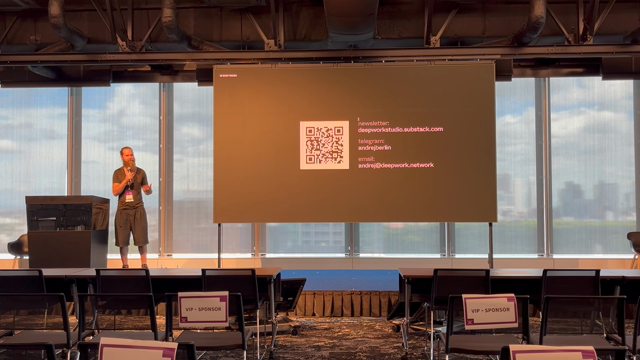
This talk will discuss the principles on how to manage businesses as a DAO. The video presents a guide on effective business management and building successful organizations, especially within the Web3 and DAO spaces. The speaker, who has extensive experience working with numerous teams, highlights three key areas that successful companies excel in: internal cohesion, user and market research, and resource management. The video discusses the importance of aligning team goals and processes, understanding user needs to create valuable products, and managing resources wisely in an uncertain economic climate. The speaker emphasizes creating a clear mission statement and values, documenting standard operating procedures, utilizing tools like Note and Vote for efficient decision-making, conducting user research to build trust with stakeholders, and implementing treasury policies for financial management. The talk also covers how to stand out in a crowded market, reduce running costs to minimize the need for external investment, and identify undervalued opportunities as an investor. Agile sprints are suggested as a method for organizing team efforts towards achieving goals. Lastly, the speaker offers access to their biweekly newsletter via a QR code for insights into their organization's transparent operations and progress updates. The goal is to encourage the creation of organizations that are beneficial to humans while being economically viable.
 21:20
21:20A Lightweight Architecture for Ethereum Archive Nodes
EthCCAug 9, 2024
The core idea is to maintain compacted, flattened, and fine-grained (i.e., transaction-level) historical states by flattening the minimum state changes of each transaction required for the world state. The video features a talk by Andy, the CEO of BlockSec and a professor at Zhejiang University, discussing their research on optimizing Ethereum archive nodes. The research is a collaborative effort between BlockSec, students, and other partners. Andy emphasizes the importance of building real systems with tangible impacts and outlines BlockSec's role in enhancing blockchain security through various products and solutions. Andy explains that blockchain optimization can be achieved at different layers, including consensus mechanisms, execution layers, and storage engines. Their work focuses on optimizing the storage engine to improve efficiency and reduce costs by modifying the state model within Ethereum's archive nodes. He provides an overview of Ethereum's storage layer, explaining that it operates as a state machine driven by transactions that change states. The state is an account-based model with each account having its own storage referenced by a storage root. All states are encoded in a Merkle Patricia Tree (MPT) for quick data authentication. Different types of Ethereum nodes exist with varying capabilities regarding historical data storage. Full nodes only maintain the latest world state for reorganization tolerance while archive nodes preserve all historical states but require significant disk space due to saving all intermediate MPTs at each block. Archive nodes are essential for detecting transaction attacks and smart contract vulnerabilities through historical transaction analysis. They also help
 08:14
08:14Improving the Market Research Industry with MyPoPCoRN || Greg Ross
SwarmJun 20, 2024
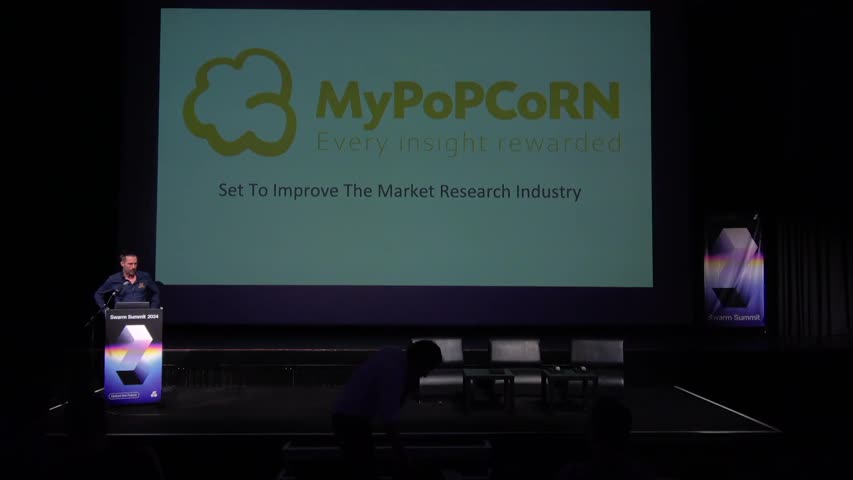
PoP CoRN is a groundbreaking platform revolutionizing market research by integrating blockchain technology to ensure secure, transparent, and high-quality data collection. Our innovative Proof of Participation reward system incentivizes genuine user engagement by distributing tokens daily. Greg Ross introduces MyPopcorn, a platform designed to enhance the market research industry by helping small businesses, academic researchers, and students find survey participants without needing to offer incentives. He shares a personal story of being contacted for a survey to highlight the challenges in obtaining survey responses. MyPopcorn aims to solve these issues and others like privacy and centralization through its unique token mining mechanism based on participation, secure data storage using decentralized technology, and AI-driven survey creation and analysis. The platform offers multiple revenue streams, including subscription fees, tradable tokens for gamification strategies, premium business intelligence dashboards, tailored reports, analytics services, and licensing opportunities. Greg announces the launch of MyPopcorn at the Swarm Summit and calls for early adopters to sign up on their website to join the private sale and testnet launch. He encourages viewers to support and invest in MyPopcorn's growth by joining their community.
 24:42
24:42Execution Tickets with Pascal from ephema
ZuBerlinJun 12, 2024
Clip The video outlines the concept of execution tickets and their role in managing MEV (Maximal Extractable Value) within blockchain protocols. The speaker discusses ongoing research focused on capturing MEV at the protocol level through execution tickets, which were first proposed to separate the consensus chain (beacon chain) from the execution chain. They explain how this separation allows for randomization to prevent issues like multi-block MEV and liveness problems. The talk delves into data analysis on multi-block MEV, examining whether there's value in controlling multiple slots consecutively. Preliminary findings suggest more multi-slot sequences occur than expected by chance, but the reasons behind this are not fully understood. The speaker also covers simulation results of different mechanism designs for selling execution tickets, such as auctions and pricing mechanisms. Initial takeaways indicate challenges in achieving decentralization and transferring existing pricing models like EIP-1559 directly to execution tickets. Future steps include making simulation agents more sophisticated with strategic bidding and updating the multi-block MEV data analysis with newer information. The talk concludes with a Q&A session clarifying how execution tickets can redistribute MEV earnings from validators to all token holders, potentially benefiting a broader set of stakeholders within the ecosystem.
 01:50
01:50Kick-Off day 2 with Drew
ZuBerlinJun 12, 2024
Clip The video features a speaker greeting the audience and introducing the day's agenda, which will focus on reiterating the previous day's discussions about different team approaches in the crypto field. The speaker mentions an unsuccessful attempt to buy sunglasses in Berlin before moving on to the day's schedule. The morning session will provide a high-level overview of Ethereum and its latest research, while the afternoon will be workshop-oriented, addressing four to five core questions with unbiased presentations and discussions. The goal is to achieve some alignment among the various teams present on key issues, with further discussions potentially continuing at the ECC. The session starts with a topic related to subject inclusions, followed by applause.
 11:32
11:32Boyana Mecheva
Formulating unbiased findings and insights
Conflux - Web3 UX UnconferenceNov 16, 2023
No description The video features Bojana, a user researcher discussing the importance of formulating unbiased findings and insights in the design process. She emphasizes the tendency for designers to be influenced by what they hope to be true about their products, which can lead to overlooking actual user needs. Using examples from her work with clients in the Web3 space, she illustrates how research helped pivot product designs to better meet user expectations. One case study involved an escrow protocol for online transactions of physical goods, where the perceived value and quality of items significantly impacted user decisions. Another example highlighted a peer-to-peer lending platform's need for clear information to help users make attractive lending offers. Bojana concludes by stressing the importance of recognizing additional user needs and avoiding costly mistakes by staying grounded in research findings rather than assumptions or desires. She briefly touches on how she communicates the value of research within organizations before wrapping up her talk.
 31:46
31:46Christine Kim
Panel I The Ethereum Governance Process with Christine Kim | Pragma New York 2023
ETHGlobalOct 9, 2023
Christine Kim, VP of Research at Galaxy Digital, breaks down the complexities of Ethereum’s governance in this in-depth session at Pragma New York 2023. Learn how Ethereum upgrades happen, who the key stakeholders are, and why the governance model has evolved far beyond Bitcoin’s classic trilemma of developers, miners, and nodes. Christine explains the roles of the Ethereum Foundation, client teams, validator node operators, and dApp developers, while also detailing how proposals like EIP-4844, EIP-7514, and Cancun-Deneb are shaped and debated. Gain insights into how decisions are made on ACD calls, through GitHub, EthMagicians, and Discord, and why protocol upgrades are becoming slower but more critical. Whether you're a builder, researcher, or stakeholder, this talk is a must-watch for understanding Ethereum’s decentralized coordination and the future of its upgrade process. 00:00 Introduction to Ethereum governance 00:37 Agenda overview and disclaimer 01:12 Bitcoin governance model explained 05:30 Why Ethereum governance is different 06:43 Ethereum’s diverse developer base 07:49 Validators vs node operators 10:14 Challenges in identifying Ethereum node users 10:49 Ethereum’s four key governance actors 11:24 Role of the Ethereum Foundation 13:44 Ethereum client teams and core devs 15:20 Validator node operators and upgrade influence 18:52 Motivations behind validator behavior 19:22 Importance of dApp developers in governance 22:12 Governance decision-making forums 24:00 GitHub’s role and centralization concerns 25:06 History of Ethereum upgrades 26:06 Governance evolution post-merge 26:40 Cancun-Deneb upgrade timeline 27:13 EIP-7514 and validator set growth 28:58 Call for broader governance participation 29:34 What’s next: Prague-Electra upgrade 30:37 Why upgrades are getting more complex 31:12 Final thoughts and closing remarks _ _ _ _ _ _ _ _ _ _ _ _ _ _ _ _ _ _ _ _ 🇺🇸 *Pragma New York* The fifth edition of Pragma took place in New York in September 2023 with a curated series of high-quality talks that sparked thought and discussion. Pragma is a one-stage conference with founders-only on stage, bringing together a small group of curated attendees and speakers to discuss the future of web3 and reflect on the past. Watch the full Pragma New York 2023 playlist here: https://youtube.com/playlist?list=PLXzKMXK2aHh6xsRbmx2niHEDyOyt1mddu&si=6Ic960b2hQyz9RGw ETHGlobal's Pragma series takes place in cities around the world, and is designed to be a different kind of event. Ever since we first introduced our new event series, Pragma, in Tokyo in the spring of 2023, we have been fostering a curated, global community of individuals who deeply care about web3. _ _ _ _ _ _ _ _ _ _ _ _ _ _ _ _ _ _ _ _ ✅ *Follow Kartik Talwar* X: https://x.com/therealkartik Warpcast: https://warpcast.com/kartik ✅ *Follow ETHGlobal* X: https://x.com/ETHGlobal Warpcast: https://warpcast.com/ethglobal Website: https://ethglobal.com YouTube: https://www.youtube.com/c/ETHGlobal _ _ _ _ _ _ _ _ _ _ _ _ _ _ _ _ _ _ _ _ _Are you interested in Ethereum development and entrepreneurship?_ 👉 Sign up for the next ETHGlobal event: https://ethglobal.com/events 🎁 Get exclusive access and perks with ETHGlobal Plus! https://ethglobal.com/plus 📣 Want us to throw an event in your city? Tell us where! https://ethglobal.com/city _ _ _ _ _ _ _ _ _ _ _ _ _ _ _ _ _ _ _ _
 20:25
20:25Blockchain Scalability: Optimism - Rise of the Superchain | ETHDenver 2023
Ethereum DenverOct 9, 2023
In this video, we delve deeper into the fascinating world of blockchain scalability for the decentralized web. Building upon a previous Defcon talk, Karl Floersch acknowledges that while the earlier session provided high-level insights and visuals, this talk will take a more detailed and in-depth approach. The problem of blockchain scalability has been an ongoing challenge since its inception, and it remains a pressing issue even in 2023. Throughout this presentation, we explore the complexities surrounding blockchain scalability and how it impacts the decentralized web. We examine various factors that contribute to this challenge and discuss potential solutions that have emerged over time. From exploring different consensus mechanisms to analyzing network congestion issues, we leave no stone unturned in our quest for understanding. Join us as we unravel the intricacies of blockchain scalability and gain valuable insights into its implications for the decentralized web. Stay tuned for an enlightening discussion on how this long-standing issue is being addressed by experts in the field. #blockchainscalability #decentralizedweb #buidl TLDR: The key idea of the video is that a super chain, consisting of multiple chains with added security and scalability, can solve the scalability problem of blockchain and enable the creation of a vibrant open source community in the decentralized web. 00:00 📈 Karl Floersch proposes the idea of a super chain to solve the scalability problem of blockchain and provide real value to people in the decentralized web. 02:25 📈 Developers can write code without worrying about underlying computers, allowing for easy composition of smart contracts and the creation of a vibrant open source community, while scalability technology in the Ethereum ecosystem is leading to the development of abstraction layers for globally scalable applications like Twitter. 05:28 🔗 The superchain is a network of multiple chains that adds security and scalability, abstracting away the underlying infrastructure, but collaboration from the blockchain industry is needed for this step. 08:51 🔑 The L1 sequencer in the Ethereum ecosystem does not forge transactions, but rather discards those with invalid signatures, ensuring the integrity of the L2 chain; generalized derivation functions enable scalability and isolation of chains. 12:30 📨 Cross-chain messaging enables the transfer of messages between different chains, facilitating actions like processing withdrawals from the red chain on Ethereum. 14:19 🔗 Messaging between different chains is achieved by verifying a proof system, allowing the blue chain to authenticate messages from the red chain, while proof systems help reduce compute requirements for verifying chains. 17:02 🔗 Infinite chains and chain messaging can be achieved through coordination between sequencers, addressing the bottleneck of data availability by adding L1 data availability or using the plasma protocol, resulting in a horizontally scalable super chain. 19:28 🌍 We can create a future where decentralized compute and open source software are used to fund public goods and build the open source internet.
 17:53
17:53Security & Interoperability in Disparate Scaling Topologies | ETHDenver 2023
Ethereum DenverOct 9, 2023
In this insightful video, we dive into the fascinating world of bridges and their crucial role in scaling technologies. Bridges serve as connectors that enable assets to be securely locked in one context and utilized in another. However, as our speaker highlights, this process is not without its challenges. We explore the intricate topic of security vulnerabilities and the potential risk of theft associated with bridges. Moreover, our discussion extends to examining the importance of considering trade-offs when implementing various scaling solutions like state channels. By understanding these trade-offs, we can make informed decisions that balance efficiency and security. Join us as we unravel the complexities surrounding bridges in scaling technologies. Gain valuable insights into how they function, their inherent risks, and strategies for mitigating those risks effectively. #Bridges #ScalingTechnologies Dr. K Co-Founder Quai Network TLDR: The key idea of the video is that scaling solutions for Ethereum must address the security vulnerabilities of bridges and consider trade-offs between different mechanisms like state channels, plasma, and ZK rollups to ensure data availability, validity, and synchronization. 00:00 💡 Scaling technologies require bridges to enable interoperability, but the inherent security vulnerabilities of bridges must be considered and addressed in the design of scaling solutions. 01:14 🔒 Ethereum must be locked in Ethereum before being used in optimism, posing risks; when considering scaling solutions, it's important to examine trade-offs like state channels and plasma, as different mechanisms have varying challenges in synchronization, validity, and data sharing, with ZK rollups offering high data availability and validity guarantees, while optimism provides high data availability but less rigorous validity guarantees. 04:00 🔒 Plasma have different data availability and validity levels, but formal verification and code audits can mitigate risks associated with bugs, while mechanisms like Roll-Ups provide ZK proofs for state transitions without relying on external trust or off-chain consensus rules. 06:23 🔒 Side chains and plasma face an oracle problem in communicating with Ethereum, requiring off-chain consensus mechanisms and validator sets, while continuous monitoring of scaling contexts is necessary for security. 08:11 🔒 We face ordering, data availability, and synchrony issues when running in an off-chain context, which can lead to loss of state and assets, requiring us to wait for chains to progress towards finalization. 09:40 🔒 Quiet Network is a scaling solution that mitigates risks and ensures synchronicity by enforcing reciprocal validation, providing atomic roll forward and backward, finalization in chain context, and scalability without sacrificing other scaling solutions. 13:26 📚 Qui Network is a hierarchy of merge mine blockchains that eliminates the need for oracles and synchronization, allowing for the creation of performance subnets that can scale horizontally with demand. 15:36 🔒 Eventual referencing allows for layer 2 speed, layer 1 security, and reliable transactions, while scalability issues are eliminated by dynamically increasing the number of shards to meet demand.
 1:00:43
Demetri Kofinas x Hasu
ETHGlobalOct 9, 2021
Demetri Kofinas and Hasu share some of the exciting prospects of how Ethereum can solve some of the world's greatest problems. ---------------------------------------------------- Follow us: https://twitter.com/ETHGlobal Check us out: https://ethglobal.co Email us at: hello@ethglobal.co
 58:06
58:06Christian Reitwiessner
STARKs: Verifying Computations Faster than Re-Executing Them - Christian Reitwiessner
DevconOct 9, 2018
Explanation of the main ideas behind STARKs. Slides (with updates): https://docs.google.com/presentation/d/1KuNRQ0IcGc8qO0RASmrwvwiRmzH-Et5LEXTFvQmQCeg Recording and editing by https://twitter.com/alexboerger