About 15 results
 24:01
24:01Building for the On Chain Agent Economy I Goutham Deva, Nalin Mittal
ETHGlobalAug 9, 2026
In this workshop at ETHGlobal New York 2026, Nalin Mittal and Goutham Deva from Google Cloud's Web3 team present building for the on-chain agent economy, centered on ERC-8004 and accessing its data through BigQuery. Nalin, who leads Web3 product efforts, notes Google Cloud has built Web3 products since 2018, with BigQuery datasets for over 40 blockchains, faucets for many test networks, and growing agentic access. He frames the core problem: as agents gain autonomy and begin purchasing from and delegating to other agents, real-time markets will form on the fly, but you cannot extend trust across organizational boundaries without knowing who you are dealing with. Standards like MCP (for tools and services) and Google's A2A (agent-to-agent communication) exist, but the trust piece is still missing, and ERC-8004 bridges that gap. Goutham and Nalin explain that ERC-8004, built in collaboration with MetaMask, the Ethereum Foundation, and Coinbase and live on Ethereum mainnet since January 29 (and other chains), establishes three pieces. Identity: calling a register event mints an NFT tied to the agent and returns an agent ID, with the metadata holding a name, description, and most importantly the service endpoints (A2A, MCP), whether it supports x402, and which trust models it uses. Reputation: a give-feedback contract method lets anyone leave on-chain, public feedback (star ratings, uptime, response times) via open-ended tags. Validation: still a work in progress, a way to prove an agent did the work it claimed via a third-party validator and hash. They then show how to access the 8004 data through Google's BigQuery Ethereum dataset (indexed from genesis to chain tip, with a generous 1 TB free tier plus a $1,000 coupon for the track), walking through live SQL queries for registrations per day, decoding a register event, a reputation leaderboard, and an x402 join showing which agents support x402. Nalin lays out the $5,000 cash prize for applications leveraging the identity and reputation data (like an explorer or analytics dashboard), and closes with Q&A on monetization (none, it is an open registry), available datasets like Base, how feedback works, spam, and whether the spec extends beyond agents. 00:00 Introduction 00:11 Meet Nalin and Google Cloud Web3 00:54 Meet Goutham 01:16 How the Workshop Is Structured 01:40 The $5,000 Prize 02:01 Why Agents Need Trust 02:23 Delegation and Real-Time Agent Markets 02:41 MCP, A2A, and the Missing Trust Piece 03:39 Trusting Agents Across Organizations 04:01 The Three Pieces of ERC-8004 04:36 Built With MetaMask, EF, and Coinbase 04:54 Identity: Registering an Agent 05:34 What the Agent File Contains 05:55 Service Endpoints and x402 Support 06:18 Reputation: Giving Feedback 06:39 Why Tags Are Open-Ended 07:05 Building a Reputation System 07:15 Validation: Proving Work Was Done 07:58 The Identity and Reputation Registries 08:21 The BigQuery Ethereum Dataset 08:47 The Free Tier and $1,000 Coupon 09:30 How to Set Up Access 10:14 Walking Through Live Queries 11:29 Understanding the Dataset Fields 11:50 Query: Registrations Per Day 12:24 Query: Decoding a Register Event 13:12 Reading the Agent URI 13:58 Decoding Input Data on the Contract 14:22 Query: Reputation Leaderboard 14:52 Query: The x402 Join 15:55 More on the Prize 16:15 What a Winning Application Looks Like 17:01 Where to Find Resources 17:24 Q&A: Plans to Monetize 8004 18:11 Q&A: Datasets for Base and BNB 18:41 Q&A: What Is 8004 19:36 Q&A: Interesting Findings in the Agents 19:52 Q&A: How Leaving Feedback Works 21:00 Q&A: Judging and Spam 22:00 Q&A: Does the Spec Go Beyond Agents 23:11 Closing _ _ _ _ _ _ _ _ _ _ _ _ _ _ _ _ _ _ _ _ *ETHGlobal New York 2026* This workshop is specifically for ETHGlobal New York 2026, a 3-day hackathon held June 12-14 at the Metropolitan Pavilion, bringing together the most skilled web3 developers, designers and product builders from all around the globe for a weekend-long adventure to advance the Ethereum ecosystem! Watch the full ETHGlobal New York 2026 playlist here: https://www.youtube.com/playlist?list=PLXzKMXK2aHh7MZ8T-ict6YshkFDw9WJCu _ _ _ _ _ _ _ _ _ _ _ _ _ _ _ _ _ _ _ _ ✅ *Follow ETHGlobal* X: https://x.com/ETHGlobal Website: https://ethglobal.com YouTube: https://www.youtube.com/c/ETHGlobal _ _ _ _ _ _ _ _ _ _ _ _ _ _ _ _ _ _ _ _ _Are you interested in Ethereum development and entrepreneurship?_ 👉 Sign up for the next ETHGlobal event: https://ethglobal.com/events 🎁 Get exclusive access and perks with ETHGlobal Plus! https://ethglobal.com/plus 📣 Want us to throw an event in your city? Tell us where! https://ethglobal.com/city _ _ _ _ _ _ _ _ _ _ _ _ _ _ _ _ _ _ _ _
 12:54
12:54The Missing Pieces for Institutional Adoption | Azeem Khan (Miden) at ETHConf
ETHGlobalJul 9, 2026
In this talk, Azeem Khan, co-founder of Miden, cuts through the headlines to address the reality of the missing pieces for institutional adoption of crypto. Drawing on his experience as a UNICEF Crypto Fund consultant, a Forbes Crypto contributor, and a CoinDesk writer, he introduces Miden as a next-generation ZK blockchain that raised $25 million last year from a16z crypto, 1kx, and others. He frames the core problem: blockchains have been either fully public (creating dystopian financial surveillance) or fully private (making illicit activity easy), and while permissioned chains are one attempted fix, the average person cares less about decentralization than about counterparty risk. Miden aims to give privacy and compliance to individuals and institutions at once, focused on onboarding institutions. He argues institutional adoption matters because the billion users will not come from meme coins but from people with real money in financial institutions going on chain, noting the 2024 bull run was kicked off by BlackRock's ETF, yet most activity remains stuck in pilots rather than full deployment. Azeem shares insights from speaking with leaders like the head of digital assets at Invesco and Amy Oldenburg who leads digital asset strategy at Morgan Stanley, both $2.5 trillion firms, and buckets the obstacles into four categories. Technical barriers include compliant privacy, interoperability and fragmentation, settlement delays, too few custody and stablecoin providers, weak institutional risk tooling, and shallow liquidity depth (large players would move price charts). Regulatory and compliance barriers include token classification and tax uncertainty (he has not created a US onshore entity for fear the SEC could freeze accounts and block payroll), weak auditing and reporting, insurance shortages, cross-border tax complexity, and reputational risk (the New York Knicks closed off crypto after nearly signing FTX). Operational and governance barriers include counterparty risk, DAO decentralization theater run by whales, and broken token economic models where airdrops create sell pressure rather than demand. Cultural and organizational barriers include quarterly earnings pressure, talent shortages, risk-averse conservatism, and internal knowledge gaps where crypto evangelists are not the decision makers (Invesco needs 50 teams to sign off on a product). He ends optimistically on progress in privacy tech, stablecoin regulation, and institutional DeFi (which he thinks will simply become onchain finance), arguing crossing the chasm requires regulators, builders, and institutions collaborating on trust, compliance, and usability, with long-term vision over short-term hype. 00:00 Introduction 00:11 The Reality Behind the Headlines 00:29 About Azeem 01:02 What Is Miden 01:32 The Problem With Fully Public or Private Chains 01:56 Why Counterparty Risk Matters More Than Decentralization 02:18 Why Institutional Adoption Matters 02:38 Why the Billion Users Will Come From Institutions 03:02 Still in Pilots, Not Full Deployment 03:32 The Three Institutional Perspectives 03:59 Why Adoption Has Stalled 04:21 Technical Barrier: Compliant Privacy 04:42 Interoperability and Fragmentation 05:00 Settlement Delays and Inefficiency 05:21 Too Few Custody and Stablecoin Providers 05:44 The Problem of Liquidity Depth 06:02 Regulatory and Compliance Barriers 06:26 Why He Has No US Onshore Entity 06:40 Auditing, Reporting, and Insurance Shortages 07:16 Cross-Border Tax and Reputational Risk 07:44 Operations and Governance Barriers 08:02 DAO Decentralization Theater 08:36 Why Token Models Are Broken 08:57 Cultural Barriers: Quarterly Earnings Pressure 09:26 Talent Shortages and Risk-Averse Culture 10:13 Why Evangelists Are Not the Decision Makers 10:49 Why Invesco Needs 50 Teams to Sign Off 11:07 Where the Industry Is Making Progress 11:29 From DeFi to Onchain Finance 11:56 What It Takes to Cross the Chasm 12:16 Long-Term Vision Over Short-Term Hype 12:34 Closing _ _ _ _ _ _ _ _ _ _ _ _ _ _ _ _ _ _ _ _ *ETHConf 2026* ETHConf is a 3 day event for founders, industry leaders, and builders who are excited about the possibilities of building on top of Ethereum. Connect with 2,000+ top innovators in crypto, finance, technology, and policy at our inaugural three-day event packed with showcases, demos, partnerships, and conversations shaping the future of the global economy. _ _ _ _ _ _ _ _ _ _ _ _ _ _ _ _ _ _ _ _ ✅ *Follow ETHConf* X: https://x.com/ethconf Website: https://ethconf.com _ _ _ _ _ _ _ _ _ _ _ _ _ _ _ _ _ _ _ _ 🎟️ Get your early bird tickets for ETHConf 2027: https://ethconf.com/2027#tickets 🎤 View the full ETHConf 2026 Speaker Schedule: https://ethconf.com/schedule _ _ _ _ _ _ _ _ _ _ _ _ _ _ _ _ _ _ _ _
 20:24
20:24Tomasz Stanczak
Ethereum and Robots: New Asset Class | Tomasz Stanczak (Nethermind) at ETHConf
ETHGlobalJul 9, 2026
In this wide-ranging talk, Tomasz Stanczak, founder of Nethermind and now founder of Complete Robot (a fully owned Nethermind subsidiary, not a departure), explores robots and physical AI as a new asset class and where Ethereum fits. After two years talking about agentic AI, robots, and how Ethereum can coordinate agents and solve identity, he decided to actually build rather than tell people it is easy, and shares the harder but exciting realities. He surveys the landscape: AI agents, compute, and robotics (embodied or physical intelligence), agent-to-agent and machine-to-machine payments, agentic commerce as the most immediately implementable case, and onchain compute metering (referencing the Blockrun AI team from his HF0 residency in San Francisco). His own focus is machine-to-machine micropayments, fleet billing, and self-deployable businesses, imagining how a largely autonomous economy of agents and robots would need to be structured. Tomasz walks through robotics trends: a robot beating a human at package sorting (a robot runs 6,000 hours a year versus a human's 2,000), and the economics where robots make sense wherever their amortized cost per hour undercuts expensive human labor, opening questions about insurance, regulation, financing, and operating robotic fleets as yield-generating asset classes. He notes China leads in absolute deployed industrial robots while Korea, Singapore, Germany, and Japan lead in density, and describes the energetic re-industrialization movement he witnessed in Detroit (Newlab, BCON) and across the US and Europe. On blockchain-to-robot, he covers identity systems (World, Boop, the latter incubated at Nethermind), verifiable robot actions, training, and data collection amid cross-border mistrust of foreign-made robots, and yield tokenization treating robotic fleets as deployable yield businesses. He flags a friction: strong identity plus reputation reduces the need for micropayments (enabling subscriptions and credit), while micropayments minimize trust but raise KYC and AML problems at scale. He observes that centralized players like Tesla often strip the decentralization from crypto's visions while shipping the same product, discusses DePIN precedents like Helium and their incentive misalignments, and covers stablecoin-backed debt like USD.AI backed by GPU (and potentially robot) fleets. He closes on tokenized real assets enabling on-demand fleet deployment, heavy regulation ahead, growing token use from physical AI, X2X adoption needing layer-2 scaling, and his focus on recursive autonomous capital allocation. 00:00 Introduction 00:11 Founding Complete Robot Under Nethermind 00:33 Two Years on Agentic AI and Robots 00:58 Why He Decided to Build Instead of Talk 01:33 The Landscape: Agents, Compute, and Robotics 02:10 Machine-to-Machine Payments and Self-Deployable Businesses 02:41 Imagining a Fully Autonomous Economy 03:05 The Robot That Beat a Human at Sorting 03:53 The Economics of Robot vs Human Labor 04:25 Robotic Fleets as an Asset Class 05:22 Robotic Density Around the World 05:48 The Potential in North American Robotics 06:36 The Re-Industrialization of Detroit 07:26 Why People Must Meet to Build Physically 09:01 Blockchain to Robots: Identity Systems 09:22 Verifiable Robot Actions and Cross-Border Mistrust 10:29 Yield Tokenization of Robotic Fleets 11:00 The Friction Between Identity and Micropayments 11:50 Why Micropayments Raise KYC and AML Problems 12:40 How Tesla Strips Decentralization From Crypto Visions 13:33 Where Decentralized Fleets Could Work 14:30 Lessons From DePIN Projects Like Helium 15:14 The Unfairness in Tokenized Solutions 15:40 Stablecoin-Backed Debt Like USD.AI 16:08 Tokenized Real Assets and On-Demand Fleets 16:38 The Permissionless Vision vs Heavy Regulation 17:12 Why Physical AI Grows Token Use 17:38 Compute vs Money at the Energy Level 18:35 The Growing Adoption of X2X 19:13 Carrying Blockchain DNA Into Agents and Robots 19:46 Closing: Recursive Autonomous Deployment _ _ _ _ _ _ _ _ _ _ _ _ _ _ _ _ _ _ _ _ *ETHConf 2026* ETHConf is a 3 day event for founders, industry leaders, and builders who are excited about the possibilities of building on top of Ethereum. Connect with 2,000+ top innovators in crypto, finance, technology, and policy at our inaugural three-day event packed with showcases, demos, partnerships, and conversations shaping the future of the global economy. _ _ _ _ _ _ _ _ _ _ _ _ _ _ _ _ _ _ _ _ ✅ *Follow ETHConf* X: https://x.com/ethconf Website: https://ethconf.com _ _ _ _ _ _ _ _ _ _ _ _ _ _ _ _ _ _ _ _ 🎟️ Get your early bird tickets for ETHConf 2027: https://ethconf.com/2027#tickets 🎤 View the full ETHConf 2026 Speaker Schedule: https://ethconf.com/schedule _ _ _ _ _ _ _ _ _ _ _ _ _ _ _ _ _ _ _ _
 32:31
32:31The Trustless Agentic Economy with ERC 8004 and x402 I Ed Marquez
ETHGlobalJun 9, 2026
In this workshop, Ed Marquez walks through the three foundational layers needed for a trustless agentic economy: identity (ERC-7804), communication (Google's A2A protocol now under the Linux Foundation), and payments (X2X). He frames the vision of a near-future agentic web where AI agents discover, communicate with, and pay each other autonomously, and demonstrates how these three open protocols together enable that economy. Ed does live coding demos showing each layer. For A2A, he shows how agents expose an agent card describing their skills, capabilities, and streaming support. For X2X, he demonstrates how just 15 lines of middleware can gate any Express endpoint behind stablecoin micropayments, using Cloudflare's pay per crawl initiative with publishers as a real world example. He walks through the facilitator architecture that separates blockchain execution from business logic, then combines A2A with X2X to create an AI agent that charges 1/10th of a cent per stock summary query. For ERC-7804, he covers the three registries: identity (NFT-based), reputation (score-based feedback with optional IPFS or HCS-stored details), and validation, explaining how server agents authorize clients to leave signed feedback, creating verifiable reputation that lets autonomous agents safely discover and trust each other. 00:00 Introduction 00:11 Three Pillars of the Agentic Economy 02:26 Technologies: ERC-7804, A2A, X2X 02:49 GitHub Repo Walkthrough 03:33 A2A Agents and Agent Cards 05:14 A2A Client Setup 06:00 Introduction to X2X Protocol 07:12 X2X for Micropayments and Pay Per Crawl 08:19 Implementing X2X Middleware 10:00 Combining A2A with X2X Payments 11:47 X2X Facilitator Architecture 13:33 Client Side X2X Integration 15:30 Live Demo: AI Agent with Paid A2A Endpoint 17:14 Verifying the Transaction on Hashscan 17:54 The Trust Problem in Autonomous Agents 19:46 Introduction to ERC-7804 20:58 The Three Registries: Identity, Reputation, Validation 22:23 Validation Registry Explained 23:16 Live Demo: Registering an Agent on ERC-7804 24:38 Minting the Identity NFT 25:54 Setting Agent Metadata and Trust Mechanisms 27:47 Reputation Feedback Flow 28:39 Authorizing Feedback with Signed Tokens 29:34 Feedback URIs: IPFS vs Hedera Consensus Service 31:20 Closing and Discord Call to Action _ _ _ _ _ _ _ _ _ _ _ _ _ _ _ _ _ _ _ _ ✅ *Follow ETHGlobal* X: https://x.com/ETHGlobal Website: https://ethglobal.com YouTube: https://www.youtube.com/c/ETHGlobal _ _ _ _ _ _ _ _ _ _ _ _ _ _ _ _ _ _ _ _ _Are you interested in Ethereum development and entrepreneurship?_ 👉 Sign up for the next ETHGlobal event: https://ethglobal.com/events 🎁 Get exclusive access and perks with ETHGlobal Plus! https://ethglobal.com/plus 📣 Want us to throw an event in your city? Tell us where! https://ethglobal.com/city _ _ _ _ _ _ _ _ _ _ _ _ _ _ _ _ _ _ _ _
 19:23
19:23Shaw Walters: Open by Default | Intelligence at the Frontier 2026
Funding the CommonsMay 9, 2026
When Shaw Walters got banned from X, he built his own AI-powered social platform with prediction markets, agent swarms and asymmetric information games. That wasn't a detour. It was research. Shaw, co-creator of ElizaOS and Eliza Labs, argues that we can't build trustworthy agents using just rules, prompts and sandboxes. The behavior needs to be in the model. To generate the training data required for that, he built Babylon, a city of agents where AI characters can trade, lie, scam each other and build reputation based on how well they play information markets. The best liar in an asymmetric information game, he argues, is demonstrating a kind of intelligence worth understanding. His broader argument is that agent infrastructure needs to stay open by default — auditable, forkable and not controlled by a handful of companies — and that games are becoming the lab conditions for how agents will operate in the real world. Speaker: Shaw Walters (Eliza Labs / ElizaOS) This session was part of Intelligence at the Frontier, held March 14–15, 2026, at Frontier Tower in San Francisco. Learn more at https://www.fundingthecommons.io
 21:20
21:20E.G. Galano
From Web3 Infra to AI Infra: Differentiating in the Agentic Era I E.G. Galano
ETHGlobalMay 9, 2026
In this talk, E.G. Galano, co-founder of Infura, draws parallels between the evolution of blockchain infrastructure and today's AI infrastructure to share lessons on product differentiation in the agentic era. He traces Infura's journey from being the first Ethereum RPC gateway in 2016, through scaling challenges during CryptoKitties and DeFi Summer, to eventually losing market share as infrastructure commoditized — and how they responded by moving up the stack into multi-chain support, NFT APIs, and higher-margin indexing services. E.G. argues that AI inference is following the same pattern: starting as base-layer access, adding abstractions, then requiring coordination and outcomes layers. He shares his personal "E-Stack" project — a multi-agent system mirroring Infura's org chart with agents for protocol upgrades, SRE, support, product management, and even a crypto Twitter lurker for incident detection. He then presents Infura's marketplace vision where anyone can permissionlessly serve RPC traffic with staked SLAs and verifiable reputation scores, and explains how this model extends to AI skill and API marketplaces — solving the problem of data-driven, verifiable tool selection for agents that currently rely on Reddit sentiment rather than actual performance metrics. 00:00 Introduction 00:10 Inference Is the New Infrastructure 01:37 Parallels Between Ethereum and AI Infrastructure Cycles 03:09 Abstractions: From RPC to Specialized AI Models 03:53 Scaling Challenges and Battle-Testing 04:40 What Is Infura and Its Core Value Proposition 05:58 CryptoKitties, ICOs, and DeFi Summer Scaling 07:19 Self-Hosting vs Managed Services: The Recurring Debate 08:18 Declining Market Share Despite Growing Users 09:52 Differentiating When Infrastructure Commoditizes 10:25 Going Multi-Chain as Costs Decreased 11:27 AI's Next Layer: Outcomes and Agent Coordination 12:49 The E-Stack: A Multi-Agent Infura Org Chart 15:05 Building Moats: Network Effects Over Code 16:41 Infura's Marketplace: Permissionless RPC Providers 17:29 Agent Discovery, Payments, and Reputation 18:28 Verifiable Performance Scoring for Marketplaces 19:12 Extending to AI Skill and API Marketplaces 20:02 Data-Driven Decisions for Vibe-Coded Production Apps 21:04 Closing _ _ _ _ _ _ _ _ _ _ _ _ _ _ _ _ _ _ _ _ 🇫🇷 *Pragma Cannes 2026* Pragma Cannes 2026 was held on April 2nd at the JW Marriott Hotel in Cannes, France and was an in-person summit for builders and leaders in the web3 ecosystem. Watch the full Pragma Cannes 2026 YouTube Playlist here: https://www.youtube.com/playlist?list=PLXzKMXK2aHh5OnsJ95gz7HoI1tLUj3kZr ETHGlobal's Pragma series takes place in cities around the world, and is designed to be a different kind of event. Pragma is a one-stage conference with founders-only on stage, bringing together a small group of curated attendees and speakers to discuss the future of web3 and reflect on the past. _ _ _ _ _ _ _ _ _ _ _ _ _ _ _ _ _ _ _ _ ✅ Follow E.G. Galano X: https://x.com/egalano ✅ Follow Infura X: https://x.com/infura_io ✅ Follow Kartik Talwar X: https://x.com/TheRealKartik ✅ Follow ETHGlobal X: https://x.com/ETHGlobal Warpcast: https://warpcast.com/ethglobal Website: https://ethglobal.com YouTube: https://www.youtube.com/@UCfF9ZO8Ug4xk_AJd4aeT5HA _ _ _ _ _ _ _ _ _ _ _ _ _ _ _ _ _ _ _ _ Are you interested in Ethereum development and entrepreneurship? 👉 Sign up for the next ETHGlobal event: https://ethglobal.com/events 🎁 Get exclusive access and perks with ETHGlobal Plus! https://ethglobal.com/plus 📣 Want us to throw an event in your city? Tell us where! https://ethglobal.com/city
 18:51
18:51Identity for Apps, Agents & More with ENS I Kevin Krone
ETHGlobalMay 9, 2026
In this workshop, Kevin Krone from ENS Labs introduces the Ethereum Name Service protocol and explores how ENS can serve as an identity layer for apps, AI agents, and interoperable cross-chain naming. He covers the basics of ENS — turning hex addresses into human-readable names, attaching rich profile metadata like social accounts and multi-chain addresses, and how forward and reverse resolution work together to create primary names. Kevin dives deeper into how ENS can function as a namespace for AI agents, proposing a pattern where agents use subnames for versioning and text records for storing metadata like endpoints, skills, and readme files. He demos a verification tool linking ENS names with ERC-7804 agent registrations to create a closed-loop attestation. He also introduces "on.eth," a new two-letter ENS name enabling interoperable cross-chain name resolution via ERC-7828, allowing names like "vitalik.eth@base" to resolve across networks. The session closes with hackathon prize tracks for AI agent integration and creative ENS use. 00:00 Introduction 00:36 What Is ENS 01:39 ENS as a User Experience Protocol 02:41 ENS Profiles and Metadata 03:29 Personalized DApp Experiences with ENS 05:15 How ENS Resolution Works 05:37 Forward and Reverse Resolution 06:43 Setting Up Primary Names Across Chains 07:30 ENS as a Namespace for AI Agents 08:34 Agent Metadata in Text Records and Subnames 09:14 ENS and ERC-7804 Agent Registration 10:45 Live Demo: ENS-7804 Verification Tool 12:47 Reputation and Verifiability Challenges 13:58 Introducing on.eth: Interoperable Chain Names 15:41 ERC-7828 and Cross-Chain Name Resolution 18:15 What You Can Build with ENS 18:58 Hackathon Prize Tracks 19:30 Q&A _ _ _ _ _ _ _ _ _ _ _ _ _ _ _ _ _ _ _ _ *ETHGlobal Cannes 2026* This workshop is specifically for ETHGlobal Cannes 2026, a 3-day hackathon held April 3-5 at the Palace of Festivals and Congresses of Cannes, bringing together the most skilled web3 developers, designers and product builders from all around the globe for a weekend-long adventure to advance the Ethereum ecosystem! Watch the full ETHGlobal Cannes 2026 playlist here: https://www.youtube.com/playlist?list=PLXzKMXK2aHh5YrcvSj6KSTztLMy58d7d4 _ _ _ _ _ _ _ _ _ _ _ _ _ _ _ _ _ _ _ _ ✅ *Follow ETHGlobal* X: https://x.com/ETHGlobal Website: https://ethglobal.com YouTube: https://www.youtube.com/c/ETHGlobal _ _ _ _ _ _ _ _ _ _ _ _ _ _ _ _ _ _ _ _ _Are you interested in Ethereum development and entrepreneurship?_ 👉 Sign up for the next ETHGlobal event: https://ethglobal.com/events 🎁 Get exclusive access and perks with ETHGlobal Plus! https://ethglobal.com/plus 📣 Want us to throw an event in your city? Tell us where! https://ethglobal.com/city _ _ _ _ _ _ _ _ _ _ _ _ _ _ _ _ _ _ _ _
 18:34
18:34Social Contracts for Web3 Coordination I Tushar Ojha
ETHGlobalNov 9, 2025
Tushar Ojha, founder of True Network, discusses the concept of onchain reputation as a new primitive for Web3 social contracts, arguing that reputation is superior to capital for scalable, trustless coordination. He critiques current blockchain systems that rely on capital staking, highlighting their scalability and centralization issues. Ojha proposes using reputation—earned, non-transferable, and costly to fake—as a portable, plural asset for coordination, governance, and accountability. He references historical uses of reputation in governance (Akbar, Ashoka) and explains how blockchain enables immutable, transparent, and verifiable reputation systems. True Network enables protocols to issue attestations, build reputation models, and leverage reputation as an asset in social contracts, enabling use cases like onchain tournaments, improved governance, and Sybil resistance. He encourages the Web3 community to build on this narrative, sharing examples from ETH India and announcing the Ramen Network testnet. Ojha concludes that the time for onchain reputation has arrived. 00:00 Introduction 00:42 The Value of Reputation in Web3 01:15 What Problem Does Web3 Solve? 02:22 Perspectives on Blockchain: Credible Commitments & Trust 03:23 Coordination Without Trust 04:28 Capital-Based Alignment: Limitations 05:22 The Cost of Capital in Blockchain Security 06:03 Reputation as a New Primitive 07:05 Implementing Reputation: Challenges & History 08:40 Historical Reputation Systems: Akbar & Ashoka 09:07 Why Blockchain Reputation Systems Can Succeed 09:26 Credible Neutrality & Onchain Reputation 09:55 True Network: Architecture & Attestations 10:49 Identity, Credentials, and Reputation Models 11:41 Social Contracts: Programming Reputation 12:42 Formal Definition of Social Contracts 13:41 Use Cases: Games, Governance, and Accountability 15:04 Efficiency and Inclusivity of Reputation-Based Systems 15:51 ETH India: Building the Reputation Narrative 16:14 Example Projects: Fanbase & Placeholder 17:13 Community, Testnet, and Future Vision 17:46 Mission and Closing Remarks 18:08 Conclusion & Call to Action _ _ _ _ _ _ _ _ _ _ _ _ _ _ _ _ _ _ _ _ 🇮🇳 *Pragma New Delhi* Pragma New Delhi 2025 was held on September 25th at the JW Marriott Hotel in Aerocity New Delhi and was an in-person summit for builders and leaders in the web3 ecosystem. Watch the full Pragma New Delhi YouTube Playlist here: ETHGlobal's Pragma series takes place in cities around the world, and is designed to be a different kind of event. Pragma is a one-stage conference with founders-only on stage, bringing together a small group of curated attendees and speakers to discuss the future of web3 and reflect on the past. _ _ _ _ _ _ _ _ _ _ _ _ _ _ _ _ _ _ _ _ ✅ Follow Tushar Ojha X: https://x.com/techtusharojha ✅ Follow True Network X: https://x.com/TrueNetworkIO ✅ Follow ETHGlobal X: https://x.com/ETHGlobal Warpcast: https://warpcast.com/ethglobal Website: https://ethglobal.com YouTube: https://www.youtube.com/@UCfF9ZO8Ug4xk_AJd4aeT5HA _ _ _ _ _ _ _ _ _ _ _ _ _ _ _ _ _ _ _ _ Are you interested in Ethereum development and entrepreneurship? 👉 Sign up for the next ETHGlobal event: https://ethglobal.com/events 🎁 Get exclusive access and perks with ETHGlobal Plus! https://ethglobal.com/plus 📣 Want us to throw an event in your city? Tell us where! https://ethglobal.com/city _ _ _ _ _ _ _ _ _ _ _ _ _ _ _ _ _ _ _ _
 19:03
19:03AI Has A Wallet, Now What? - Michele D'Aliessi
ETHGlobalOct 9, 2025
Mike, co-founder of Superfluid Protocol, discusses the transformative impact of giving AI agents crypto wallets, enabling them to act as autonomous economic actors in the blockchain and Web3 ecosystem. He explains that AI agents, empowered with wallets, can own assets, transact on-chain, participate in DAOs, hire resources, and coordinate at scale. This shift demands a new focus on "agent experience"—optimizing protocols for machine users rather than humans, emphasizing legibility, modularity, composability, predictability, and auditability. Mike highlights the rise of agent-to-agent protocols, the importance of reputation systems, and the ongoing evolution from human-centric to agent-centric design. He notes that while AI-driven agents are already influencing DeFi and DAO governance, the field is still nascent, with most developments at the experimental stage. The talk concludes with a Q&A on agent swarms and the current state of agent-to-agent communication in Web3. 00:00 Introduction 00:32 Why AI Wallets Are a Gamechanger 01:12 The Rise of Autonomous Agents 02:11 Ownership and Capital for Agents 02:38 Crypto Wallets Empower AI Agents 03:11 AI Agents as Economic Actors 04:08 From Assistant to Entrepreneur Agents 05:02 AI in DAO Governance 05:51 AI and Blockchain: The Perfect OS 06:24 Blockchain’s Machine-Readable Advantages 06:57 Reputation and Transparency 07:21 Algo Trading and AI in Finance 08:11 AI Agents as Protocol Users 09:05 Designing Protocols for Humans vs Agents 10:13 Agent Experience: A New Paradigm 11:20 Optimizing for Agent Experience 13:21 Real-Time Value Transfer for Agents 14:40 Agents and Streaming Payments 15:37 Further Resources and Closing 15:57 Q&A: Agent-to-Agent Protocols 16:49 Agent Swarms and DeFi Coordination 18:00 State of Agent-to-Agent Communication 18:50 Closing Remarks _ _ _ _ _ _ _ _ _ _ _ _ _ _ _ _ _ _ _ _ 🇫🇷 *Pragma Cannes* Pragma Cannes 2025 was held on July 3rd at the Carlton Cannes in Cannes, France and was an in-person summit for builders and leaders in the web3 ecosystem. Watch the full Pragma Cannes YouTube Playlist here: https://www.youtube.com/playlist?list=PLXzKMXK2aHh6jZYPY5-YIBzvMtUT3ajjI ETHGlobal's Pragma series takes place in cities around the world, and is designed to be a different kind of event. Pragma is a one-stage conference with founders-only on stage, bringing together a small group of curated attendees and speakers to discuss the future of web3 and reflect on the past. _ _ _ _ _ _ _ _ _ _ _ _ _ _ _ _ _ _ _ _ ✅ Follow Superfluid X: https://x.com/Superfluid_HQ ✅ Follow ETHGlobal X: https://x.com/ETHGlobal Warpcast: https://warpcast.com/ethglobal Website: https://ethglobal.com YouTube: https://www.youtube.com/@UCfF9ZO8Ug4xk_AJd4aeT5HA _ _ _ _ _ _ _ _ _ _ _ _ _ _ _ _ _ _ _ _ Are you interested in Ethereum development and entrepreneurship? 👉 Sign up for the next ETHGlobal event: https://ethglobal.com/events 🎁 Get exclusive access and perks with ETHGlobal Plus! https://ethglobal.com/plus 📣 Want us to throw an event in your city? Tell us where! https://ethglobal.com/city _ _ _ _ _ _ _ _ _ _ _ _ _ _ _ _ _ _ _ _
 19:09
19:09Danny Zuckerman
AI's Infinite Game I Danny Zuckerman
ETHGlobalOct 9, 2025
Danny Zuckerman, COO of Recall, discusses the intersection of AI, crypto, and Web3, emphasizing the early stage of AI adoption and the challenges of trust, transparency, and evaluation. He critiques current AI benchmarks, highlighting issues like test set leakage and real-world underperformance. Recall aims to solve this by creating a decentralized, onchain AI reputation and discovery layer, where community-driven challenges and competitions evaluate AI agents’ real-world performance and alignment. Crypto is used to provide economic incentives and verifiable, tamper-proof records, enabling trust through staking and reputation. Recall’s products, such as live trading competitions and Recall Predict, leverage community participation to generate ungameable benchmarks and fine-grained rankings across domains. The goal is to prevent AI power concentration, foster open, transparent, and aligned AI, and create an infinite, evolving ecosystem governed by the community, not opaque black boxes. 00:00 Introduction 00:33 AI Adoption Cycle & Web3 Context 02:15 Early Stage of AI & Historical Parallels 03:36 The Infinite Game of AI 04:01 Trust, Fatigue, and Benchmark Limitations 06:02 Real-World Performance vs. Benchmarks 07:23 Need for New Evaluation Methods 08:11 Recall: AI Reputation & Discovery Layer 09:53 Live Trading Competitions & Community Engagement 11:01 Recall Predict & Community Evals 13:02 Expanding to Multiple Domains & Onchain Records 13:36 Crypto’s Role: Economic Skin in the Game 15:40 Economic Markets for AI Trust 16:10 Leaderboards, Search, and Multi-Agent Systems 17:22 Open, Transparent AI vs. Black Box Concentration 18:19 Call to Action & Community Involvement 18:58 Conclusion _ _ _ _ _ _ _ _ _ _ _ _ _ _ _ _ _ _ _ _ 🇺🇸 *Pragma New York* Pragma New York 2025 was held on August 14th at Vesper Events in Brooklyn, New York and was an in-person summit for builders and leaders in the web3 ecosystem. Watch the full Pragma New York YouTube Playlist here: https://www.youtube.com/playlist?list=PLXzKMXK2aHh5TRLdUXjnhUVfdbBtu6z2j ETHGlobal's Pragma series takes place in cities around the world, and is designed to be a different kind of event. Pragma is a one-stage conference with founders-only on stage, bringing together a small group of curated attendees and speakers to discuss the future of web3 and reflect on the past. _ _ _ _ _ _ _ _ _ _ _ _ _ _ _ _ _ _ _ _ ✅ Follow Recall X: https://x.com/recallnet ✅ Follow ETHGlobal X: https://x.com/ETHGlobal Warpcast: https://warpcast.com/ethglobal Website: https://ethglobal.com YouTube: https://www.youtube.com/@UCfF9ZO8Ug4xk_AJd4aeT5HA _ _ _ _ _ _ _ _ _ _ _ _ _ _ _ _ _ _ _ _ Are you interested in Ethereum development and entrepreneurship? 👉 Sign up for the next ETHGlobal event: https://ethglobal.com/events 🎁 Get exclusive access and perks with ETHGlobal Plus! https://ethglobal.com/plus 📣 Want us to throw an event in your city? Tell us where! https://ethglobal.com/city _ _ _ _ _ _ _ _ _ _ _ _ _ _ _ _ _ _ _ _
 24:04
24:04Victor Munoz
Flare Workshop Bring Any Web2 Data On Chain I Victor Munoz
ETHGlobalOct 9, 2025
Victor Munoz, Developer Evangelist at Flare, presents a workshop on how to bring Web2 data on-chain using the Flare blockchain. Flare is an EVM-compatible L1 blockchain with native, enshrined oracles, providing secure, decentralized access to external data. Key protocols include FTSO (Flare Time Series Oracle) for price feeds, FDC (Flare Data Connector) for verifying and attesting Web2 and cross-chain data, and FAssets for trustless asset representation from non-smart contract chains like Bitcoin and XRP. The workshop demonstrates fetching data from a Web2 API (Star Wars API), processing it with jq filters, verifying it via the FDC, and storing enhanced, verified data on-chain. Use cases include insurance automation, carbon credits, and on-chain reputation systems. Victor guides developers through Flare’s documentation, starter kits (Hardhat, Foundry), and a live coding example, emphasizing the importance of defining data structures and on-chain logic before implementation. 00:00 Introduction 00:40 Workshop Overview & Flare’s Uniqueness 02:07 Flare as an EVM L1 & Native Oracles 03:02 Flare Protocols: FTSO, FDC, FAssets 05:05 Use Cases: Insurance, Carbon Credits, Reputation 08:57 Flare Data Connector Flow Overview 09:42 Live Demo: Fetching & Verifying Web2 Data 11:09 Developer Resources & Starter Kits 12:39 Flare Developer Hub Walkthrough 14:00 Setting Up the Web2JSON Example 15:30 Running the Demo & Process Explanation 17:17 Demo Output & On-Chain Data Enhancement 18:44 Step-by-Step Log Analysis 21:03 Submitting Requests & Validator Consensus 22:08 Deploying Smart Contracts & On-Chain Logic 23:41 Decoding Proofs & Final Steps 24:30 Q&A and Wrap-up _ _ _ _ _ _ _ _ _ _ _ _ _ _ _ _ _ _ _ _ 🇺🇸 *ETHGlobal New York* This workshop is specifically for ETHGlobal New York, a 3-day hackathon held August 15-17, bringing together the most skilled web3 developers, designers and product builders from all around the globe for a weekend-long adventure to advance the Ethereum ecosystem! Watch the full ETHGlobal New York 2025 playlist here: https://www.youtube.com/playlist?list=PLXzKMXK2aHh4Xze0ZeSWCSGsw25clPpvZ _ _ _ _ _ _ _ _ _ _ _ _ _ _ _ _ _ _ _ _ ✅ *Follow Flare* X: https://x.com/FlareNetworks ✅ *Follow ETHGlobal* X: https://x.com/ETHGlobal Warpcast: https://warpcast.com/ethglobal Website: https://ethglobal.com YouTube: https://www.youtube.com/c/ETHGlobal _ _ _ _ _ _ _ _ _ _ _ _ _ _ _ _ _ _ _ _ _Are you interested in Ethereum development and entrepreneurship?_ 👉 Sign up for the next ETHGlobal event: https://ethglobal.com/events 🎁 Get exclusive access and perks with ETHGlobal Plus! https://ethglobal.com/plus 📣 Want us to throw an event in your city? Tell us where! https://ethglobal.com/city _ _ _ _ _ _ _ _ _ _ _ _ _ _ _ _ _ _ _ _
 29:56
29:56Identity in the Agent World
New FoundationJul 22, 2024
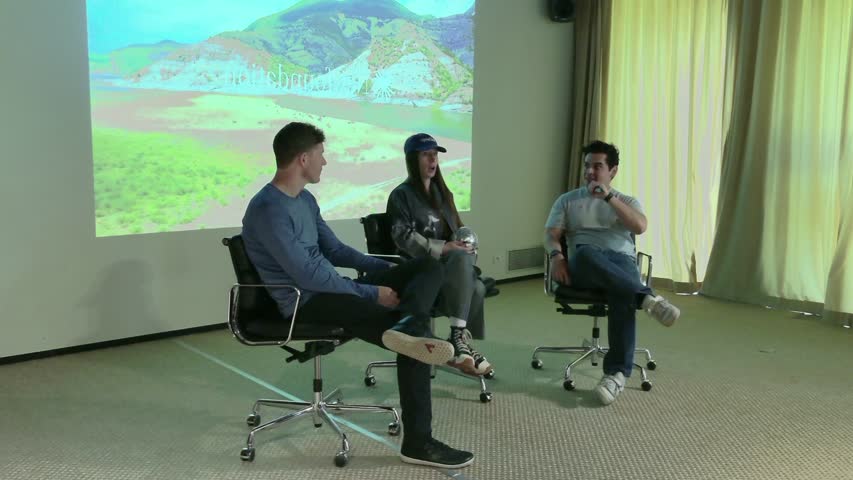
Unique digital signatures allow autonomous entities to interact and build reputations across networks. Evin McMullen (Disco), Kyle Weiss (Gitcoin), Bryce (EAS), moderated by Collin Lowenburg (Dabl) The video features a panel discussion with representatives from various organizations in the cryptocurrency and blockchain space, focusing on the topic of digital identity within the ecosystem. The speakers include Evan from Disco, Kyle from Gitcoin, and Mel from DoubleClub. They discuss their current roles, their views on digital identity, and how it's essential for more complex interactions beyond mere financial transactions on the blockchain. The conversation highlights the importance of controlling personal data and how digital identities can facilitate personalized experiences without compromising privacy. They also touch on the challenges of Sybil attacks in mechanisms like quadratic funding and the development of systems that allow users to prove their uniqueness without revealing specific personal details. The future of digital identities is envisioned as one where interactions with applications become seamless and personalized, akin to the experience depicted in "The Jetsons" TV show. The panelists also consider the role of AI agents in transactions, emphasizing the need for a trust layer to distinguish between genuine human users, beneficial bots, and nefarious actors. The discussion concludes with thoughts on setting industry standards for identification to improve interactions within the broader ecosystem.
 22:29
22:29Kartik Talwar
Fireside Chat I Kartik Talwar and Benny Giang I Future of NFTs with EIP 6551 | Pragma Waterloo 2023
ETHGlobalOct 9, 2023
Benny Giang, co-creator of CryptoKitties and co-author of EIP-6551, unveils the future of NFTs at Pragma Waterloo. In this demo-packed talk, Benny introduces Token Bound Accounts (TBAs) and the powerful ERC-6551 standard—enabling NFTs to own assets, act as on-chain agents, sign transactions, and participate in governance. Learn how NFTs are evolving into networked playable characters (NPCs), capable of AI-driven onchain actions across the metaverse and autonomous worlds. This groundbreaking session explores how NFTs go beyond profile pictures into programmable, composable, and truly non-fungible digital identities. 00:00 Intro to EIP-6551 and NFT evolution 01:07 Benny Giang introduction and history with NFTs 02:22 What is a Token Bound Account (TBA)? 03:05 Three powers of 6551: assets, identity, action 03:47 NFTs as wallets and interactive identities 04:27 AI-powered NFTs and NPC use cases 05:36 How 6551 fits the NFT standards landscape 06:43 EVM-compatible, multichain support explained 07:21 Prize tracks and hackathon opportunities 07:55 Live demo: NPC kitty with on-chain action 08:34 NPC sends NFT to another NFT’s account 09:31 Verifying the TBA interaction on tokenbound.org 10:08 Post-demo reflection with Kartik Talwar 10:51 How CryptoKitties started at ETHWaterloo 12:23 Why create ERC-6551 and not a new token standard 13:34 Making NFTs usable without solidity knowledge 15:16 Become, use, and interact with your NFTs 16:22 What can an NPC actually do? 17:35 Making NFTs about art and relationships again 18:39 What are Autonomous Worlds and why they matter 19:52 Dunbar’s number, object relationships & future AI 21:01 Visualizing social graphs and DAO participation 22:05 Call to action for builders to explore 6551 _ _ _ _ _ _ _ _ _ _ _ _ _ _ _ _ _ _ _ _ 🇨🇦 *Pragma Waterloo* The now third edition of Pragma kicked off with a curated series of high-quality talks that sparked thought and discussion among attendees as they were storming into the Auditorium of the CIGI Building. Pragma Waterloo 2023 was an opportunity discuss the future of web3 and reflect on the past. Watch the full Pragma Waterloo 2023 playlist here: https://youtube.com/playlist?list=PLXzKMXK2aHh7i8oFx5vCB9qTdadQqAjF0&si=NS2W71SteTbEs4T8 ETHGlobal's Pragma series takes place in cities around the world, and is designed to be a different kind of event. Pragma is a one-stage conference with founders-only on stage, bringing together a small group of curated attendees and speakers to discuss the future of web3 and reflect on the past. _ _ _ _ _ _ _ _ _ _ _ _ _ _ _ _ _ _ _ _ ✅ *Follow CryptoKitties* X: https://x.com/CryptoKitties ✅ *Follow the Kartik Talwar* X: https://x.com/therealkartik Warpcast: https://warpcast.com/kartik ✅ *Follow ETHGlobal* X: https://x.com/ETHGlobal Warpcast: https://warpcast.com/ethglobal Website: https://ethglobal.com YouTube: https://www.youtube.com/c/ETHGlobal _ _ _ _ _ _ _ _ _ _ _ _ _ _ _ _ _ _ _ _ _Are you interested in Ethereum development and entrepreneurship?_ 👉 Sign up for the next ETHGlobal event: https://ethglobal.com/events 🎁 Get exclusive access and perks with ETHGlobal Plus! https://ethglobal.com/plus 📣 Want us to throw an event in your city? Tell us where! https://ethglobal.com/city _ _ _ _ _ _ _ _ _ _ _ _ _ _ _ _ _ _ _ _
 12:49
12:49Verifiable credentials meet Web3 thanks to Zk | ETHDenver 2023
Ethereum DenverOct 9, 2023
Web3 will not reach mass adoption without an identity layer. Use cases such as digital democracy, personal DeFi, and portable reputation require a mechanism for identities that are richer than Ethereum addresses. To address this need, there are three main approaches: Verifiable Credentials, NFTs (SBT), and naming services (i.e ENS). While NFTs and ENS are easier to adopt and understand by the Web3 community, they do not offer the privacy and interoperability of the Verifiable Credentials approach - a standard defined by W3C and adopted by governments and organizations worldwide. Adopting Verifiable Credentials and DID as the identity layer for Web3 has the potential to bridge the gap between Web2 and enterprise applications and bring mass adoption to Ethereum. The challenge, however, is to provide tools that streamline the adoption and implementation of these standards by the Web3 community. These tools should abstract the complexity and provide the necessary privacy and security features required to use these identities on-chain. This is where PolygonID comes in. In this presentation, we will introduce the Polygon ID toolset provided to the Web3 community and go through some of the innovations that allow for the use of off-chain credentials in on-chain transactions. We will also analyze the use cases and possibilities created for existing Web3 applications, such as DAOs, DeFi, and games. TLDR: Verifiable Credentials are being brought to blockchain to address the need for identity verification in Web3, with support from all chain verifications for free fire credentials and Polygon ID moving towards standards. 00:00 🔍 Verifiable credentials are being brought to blockchain to address the growing need for identity verification due to the increasing use of generative AI and automation. 01:34 🔑 Web3's use cases such as democracy, high value transactions, portable reputation, and a single global identity require trust, which is hindered by the lack of trust in users, and now that scalability has been solved, the next step is to address this trust issue. 02:30 🔑 Decentralized identity in blockchain has two approaches, one being the use of NFTs to express attributes, but this limits the amount of information and richness of identities, especially for private information like biometrics and reputational scores. 04:09 🔍 Verifiable Credentials can now be verified on chain, providing flexibility and privacy for high value transactions, with support from all chain verifications for free fire credentials and Polygon ID moving towards standards. 06:24 📈 Polygon is creating Polygon ID to achieve liquidity of credentials and improve user experience in Web3. 08:18 👥 Adoption and ecosystem building are key to solving the identity layer problem, and the speaker's team is making their advanced did method open source to encourage adoption and unlock real-world use cases. 09:33 🚀 A product update with strong technology is not enough to solve the identity game on the blockchain, as it requires an ecosystem, and Polygon ID aims to attract people to their trusted infrastructure provider with massive adoption in the serum ecosystem. 11:06 📱 An open-source wallet SDK has been released, allowing for passwordless login and self-hosted nodes through Verifiable Credentials that can be checked with the verifier SDK and a JavaScript SDK available for issuing and verifying credentials on various platforms.
 23:49
23:49Empowering DAOs: Decentralized Interoperability Panel | ETHDenver 2023
Ethereum DenverOct 9, 2023
Welcome to our panel on empowering DAOS with decentralized interoperability. In this video, we will be discussing infrastructure and other important issues that affect DAOs. Joining us today are panelists from Radical, Gitcoin and Safe, who will share their insights and expertise. One of the key topics we'll explore is the concept of decentralized graph databases for developers to build applications within a graph database. We'll dive into how these databases, such as Ceramic's Compose DB, can enhance Dao tooling and reputation social. Throughout the discussion, our panelists will shed light on their respective projects and provide valuable insights into the world of DAOs. If you're interested in learning more about empowering DAOs through decentralized interoperability or want to gain a deeper understanding of infrastructure challenges faced by DAOs, this video is a must-watch. #DecentralizedInteroperability #DAOEmpowerment TLDR: The key idea of the video is that decentralization is crucial for building applications within a graph database, and it can be achieved through the use of decentralized protocols, interoperable stacks, and modular tools, while also considering the challenges of payment and maintaining an open approach to data visibility. 00:00 📢 Panelists discuss the launch of compose DB, a decentralized graph database for developers to build applications within a graph database, specifically for Dao tooling and reputation social. 01:47 📢 The speakers discuss their journey towards decentralization, starting as centralized companies and gradually adopting more decentralized practices, with one organization transitioning from a centralized app to a decentralized one. 05:40 📺 The speaker discusses the decentralization of grant stack protocol, including the launch of a permissionless protocol called aloe, the decentralization of the safe project's protocol and interfaces, and the collaboration with ceramic to decentralize back-end infrastructure, emphasizing the importance of interoperability and replacing centralized tooling with more modular and interoperable stacks. 08:30 📱 The app uses decentralized data on ceramic to create a unique proof of personhood, emphasizing neutrality, credibility, composer ability, and privacy in data storage and decision making for distributed data networks. 11:39 🔑 Decentralization is important for composability and can be achieved through blockchains like Ethereum, but additional features like Passport and Safe are needed to enhance decentralization and allow for multiple sources of trust. 14:13 🔑 Centralizing certain aspects of a product can improve user experience, but it's important to progressively decentralize and maintain an open approach to data visibility, while also considering the challenges of payment in fiat currency versus crypto. 17:56 📚 The speaker discusses the use of opolis for financial ties and explores monarium for on-chain asset storage and fiat transfers, while emphasizing the importance of using Ceramic as a data layer and developing decentralized primitives and tools. 21:34 📚 Establishing cultural norms and improving usability are important for competing with web2 and creating a decentralized community, while building on each other's tools and encouraging the adoption of products can drive progress.