About 14 results
 1:22:34
Kartik Talwar
Closing Ceremonies & Finalist Demos I Kartik Talwar
ETHGlobalAug 9, 2026
In this closing ceremony for ETHGlobal New York 2026, Kartik Talwar, co-founder of ETHGlobal, wraps up the hackathon with event stats, ten live finalist demos, and the partner prize reveal. He shares that 682 attendees and 486 hackers (31% new to web3) came from 152 cities, 44 countries, and six continents, supported by 100-plus sponsor staff, 18 mentors, and 20 Friday workshops with zero talks. The 486 hackers built 232 projects (27% on the new continuity track), and for the first time in eight months Python overtook TypeScript as the most common language. DeFi was the biggest category, wallets and payments the most common hacks, and infrastructure rose to third, with ENS, Arc, and Chainlink the most-used integrations and mainnet, Base, and Arc the most-deployed chains. He introduces the 16 partners giving out $200,000 in prizes and the ten finalists (three continuity, seven from scratch). The finalist demos showcase the range: Canary, parametric insurance on prediction markets that prices DeFi risk like a credit default swap; Acrew, which turns the AI coding spinner into an onchain ad marketplace tying one human to one agent via World ID; Void Tactics, a year-old fully onchain PVP spaceship game upgraded with Dynamic embedded wallets, World ID tournaments, and Walrus move history; Lynx, a terminal bridging prediction markets with tokenized securities and traditional finance data; DRO.buzz, a clipping marketplace on Arc, World ID, and Chainlink; Ansu, a dead-simple browser wallet for onboarding newcomers; Proof of Scan, a decentralized network of scan nodes using Sui, Walrus, and TLS notary to catch cloaked phishing sites; The Wallet Shift, a DeFi-Llama-style analytics dashboard indexing ERC-8004 agents via Google BigQuery; Immunity, a decentralized AI security protocol where agents mint antibodies against prompt injection, rebuilt with Chainlink CRE and ENS; and Cumulant, structured products (baskets, tranches, protected notes, distribution markets) on prediction markets via Dynamic and Arc. Kartik details the finalist rewards (ETHGlobal Plus, $1,000 per member, flight and developer credits, a Ledger Flex, and an exclusive hoodie), then races through 60 slides of partner prizes from 1inch, ENS, Google Cloud, Chainlink, Hedera, Ledger, LI.FI, Privy, Sui, Uniswap Foundation, World, Canton Foundation, Blink, Arc, Dynamic, and Unlink. He closes noting code will be verified over four weeks, thanks the team and partners, and previews upcoming events in Lisbon, ETHOnline, Tokyo, and Mumbai. 00:00 Opening Montage 01:35 Welcome to the Closing Ceremony 02:03 The Event by the Numbers 02:32 Thanking the 16 Partners 03:01 Why This Is a Hackathon, Not a Conference 03:49 Community Highlights and Stats 04:28 232 Projects and the Continuity Split 04:53 The Most Common Categories and Integrations 05:54 Thanking the Judges 05:57 A Quick Word on Feedback Forms 07:19 Introducing the Ten Finalists 08:02 Thanking Every Team That Submitted 09:53 Finalist Demo: Canary 13:54 Finalist Demo: Acrew 19:21 Finalist Demo: Void Tactics 25:19 Finalist Demo: Lynx 31:42 Finalist Demo: DRO.buzz 36:36 Finalist Demo: Ansu 41:30 Finalist Demo: Proof of Scan 47:19 Finalist Demo: The Wallet Shift 52:58 Finalist Demo: Immunity 58:30 Finalist Demo: Cumulant 1:04:36 What the Finalists Win 1:05:50 Starting the Partner Prizes 1:07:19 1inch Prizes 1:08:17 ENS Prizes 1:09:46 Google Cloud Prize 1:09:53 Chainlink Prizes 1:11:05 Hedera Prizes 1:12:15 Ledger Prizes 1:13:04 LI.FI Prizes 1:13:28 Privy Prizes 1:13:59 Sui Prizes 1:14:25 Uniswap Foundation Prizes 1:15:14 World Prizes 1:16:09 Canton Foundation Prizes 1:17:00 Blink Prizes 1:17:27 Arc Prizes 1:18:23 Dynamic Prizes 1:19:06 Unlink and Joint Prizes 1:19:50 Wrapping Up the Prizes 1:20:09 Closing Notes and Verification 1:20:38 Thanking the Team and Community 1:22:01 Upcoming Events and Farewell _ _ _ _ _ _ _ _ _ _ _ _ _ _ _ _ _ _ _ _ *ETHGlobal New York 2026* This workshop is specifically for ETHGlobal New York 2026, a 3-day hackathon held June 12-14 at the Metropolitan Pavilion, bringing together the most skilled web3 developers, designers and product builders from all around the globe for a weekend-long adventure to advance the Ethereum ecosystem! Watch the full ETHGlobal New York 2026 playlist here: https://www.youtube.com/playlist?list=PLXzKMXK2aHh7MZ8T-ict6YshkFDw9WJCu _ _ _ _ _ _ _ _ _ _ _ _ _ _ _ _ _ _ _ _ ✅ *Follow ETHGlobal* X: https://x.com/ETHGlobal Website: https://ethglobal.com YouTube: https://www.youtube.com/c/ETHGlobal _ _ _ _ _ _ _ _ _ _ _ _ _ _ _ _ _ _ _ _ _Are you interested in Ethereum development and entrepreneurship?_ 👉 Sign up for the next ETHGlobal event: https://ethglobal.com/events 🎁 Get exclusive access and perks with ETHGlobal Plus! https://ethglobal.com/plus 📣 Want us to throw an event in your city? Tell us where! https://ethglobal.com/city _ _ _ _ _ _ _ _ _ _ _ _ _ _ _ _ _ _ _ _
 20:15
20:15Fireside Chat with Ruben Amenyogbo (Architect Systems) and Shannon Corless (Prev BFS) at ETHConf
ETHGlobalJul 9, 2026
In this fireside chat, Shannon Corless, former Treasury Department official, interviews Ruben Amenyogbo, founder and CEO of Architect, a Swiss regulated global investment firm active in digital assets since 2017 with backings including Kiki, Privy, Worldcoin, and Zama. Ruben opens by explaining why Architect made the deliberate choice to be licensed rather than unregulated, framing it as both strategic and economic. Strategically, most of the world's capital sits behind regulated walls (large pension funds, endowments, insurance companies), and those institutions can only face regulated counterparties. Economically, an institutional grade setup commands a higher price point and management fees than offshore prop shops can charge. Ruben walks through the reality of billion dollar institutional due diligence, describing the structured progression from informal team conversations through deep diligence on business continuity planning, deputization, reserves, and insurance against long tail risks. On AML and compliance, he distinguishes firms that structure around compliance from those that structure within it, advocating for KYC at both capital formation level (knowing who is investing in the vault) and market level (ensuring capital isn't commingled with illicit assets when flowing into the market). On the geopolitical question of whether dollar backed stablecoins extend or erode US dominance, Ruben notes that while 95% plus of stablecoin flows are USD denominated, the fact that assets are dollar pegged does not mean the rails serve US interests, which is why figures like Jamie Dimon have publicly called out Brian Armstrong. He explains Architect's relocation to Switzerland during the Gensler era due to hostile regulatory conditions in the US. He closes with his three wave thesis: continued education and proof of concepts now, competitive dynamics among asset managers next, and osmosis bringing the largest balance sheets last, urging builders to avoid shortcuts that would compromise their reputations with institutional diligence teams. 00:00 Introduction 00:31 About Ruben and Architect 01:19 Why Architect Chose to Be Regulated 02:27 Strategic Reasoning: Capital Behind Regulated Walls 03:23 Economic Reasoning: Institutional Cost Base and Fees 03:50 What a Billion Dollar Due Diligence Process Looks Like 04:52 The Shift From Foreplay to Deep Diligence 05:20 Questions Cryptonative Founders Don't See Coming 06:24 AML, Sanctions, and Source of Funds as the Real Objection 06:47 The Two Levels of KYC 07:14 Structuring Around vs Within Compliance 08:02 KYC at the Capital Formation Level 08:22 KYC at the Market Level and Commingling Risk 09:16 Risk Management as a Risk Adjusted Returns Function 09:41 Mapping the Universe of Risk 10:14 Tools, Policies, and Screening Partners 10:51 Does Crypto Extend or Erode US Dollar Dominance 11:49 Stablecoin Flows Are 95% Plus USD Denominated 12:18 Who Controls the Rails Is the Contested Question 13:00 Capital Pools and the Politicization of Asset Management 14:00 Why Architect Incorporated in Switzerland 14:48 Operating Out of Palo Alto During the Gensler Era 15:19 The Global Mandate and Distributed Team 15:51 What Grown Up Looks Like for Digital Assets 16:26 The First Wave: Continued Education 17:02 BlackRock Bitcoin ETF and Securitize as Proof Points 17:33 Competitive Dynamics Among Large Asset Managers 18:07 Osmosis at the Allocator Level 18:54 What Five Year Winners Will Have Built 19:32 Avoiding Shortcuts That Get You on Treasury's Radar 20:00 Closing _ _ _ _ _ _ _ _ _ _ _ _ _ _ _ _ _ _ _ _ *ETHConf 2026* ETHConf is a 3 day event for founders, industry leaders, and builders who are excited about the possibilities of building on top of Ethereum. Connect with 2,000+ top innovators in crypto, finance, technology, and policy at our inaugural three-day event packed with showcases, demos, partnerships, and conversations shaping the future of the global economy. _ _ _ _ _ _ _ _ _ _ _ _ _ _ _ _ _ _ _ _ ✅ *Follow ETHConf* X: https://x.com/ethconf Website: https://ethconf.com _ _ _ _ _ _ _ _ _ _ _ _ _ _ _ _ _ _ _ _ 🎟️ Get your early bird tickets for ETHConf 2027: https://ethconf.com/2027#tickets 🎤 View the full ETHConf 2026 Speaker Schedule: https://ethconf.com/schedule _ _ _ _ _ _ _ _ _ _ _ _ _ _ _ _ _ _ _ _
 19:12
19:12Crypto x AI, AI x Crypto A Survey | Professor Ari Juels (IC3) at ETHConf
ETHGlobalJul 9, 2026
In this talk, Professor Ari Juels, co-director of the Initiative for Cryptocurrencies and Contracts (IC3), presents a lightning tour of a newly released 150 page survey on the intersection of crypto and AI, written with a long roster of co-authors. He opens by arguing that crypto and AI are not natural bedfellows. Crypto is hard: strictly programmatic and unforgiving, as shown by the Kelp DAO attack where a single poisoned message let the North Korean Lazarus group steal hundreds of millions. AI is soft: frontier models are unpredictable and error prone, like ChatGPT confidently saying raspberry has two Rs or drawing a rabbit with too many ears. Yet they can serve as middleware for each other, with Worldcoin (now World) as a proof point where crypto identity becomes essential to distinguish humans from bots in an AI saturated world. Ari walks through Crypto x AI applications where AI enhances crypto. He shows how a typical parametric flight insurance smart contract, while elegant, suffers from moral hazard and can't document actual harms, which is why AXA's Fizzy product was discontinued. By adding an LLM enhanced oracle, the same contract can ingest receipts and assess damages like real world insurance while preserving privacy. He covers AI powered investment funds, which IC3 calls coinouts (collective investment algorithms), and presents the fundamental coinout bind: either the strategy is transparent and gets front run publicly, or it's opaque and gets front run privately through covert channels. In the other direction (AI x Crypto), he addresses DePIN GPU networks with healthy skepticism, noting industry proofs of concept don't report communication or compute costs, and the largest decentralized trained model has only 40 billion parameters versus frontier models' trillions. He shows the same TEE plus LLM oracle pattern enabling confidential lending, whistleblower credentials, anonymous reviewer proofs, and code audits without revealing source. He closes with a warning about rogue agents (UAAS, unstoppable autonomous agents) that could use stablecoins to rent servers, establish censorship resistant command and control, conceal their code, and even rent humans through services like rentahuman.ai to influence the physical world. 00:00 Introduction 00:11 IC3 and the New Crypto AI Survey 00:37 Why Crypto and AI Are Not Natural Bedfellows 01:00 Crypto Is Hard: Programmatic and Unforgiving 01:52 The Kelp DAO Attack as Proof of Unforgivingness 02:41 Security Tools the Crypto Industry Has Pioneered 03:11 AI Is Soft: Unpredictable and Error Prone 04:24 World as a Proof Point of the Intersection 05:39 The Middleware Model for AI and Crypto 06:04 Crypto x AI: How AI Enhances Crypto 06:29 The Flight Insurance Smart Contract Example 07:07 Why Parametric Insurance Has Limitations 07:58 AXA's Fizzy Product and Why It Was Discontinued 07:58 Enhancing Oracles with LLMs 09:19 Hard Crypto Meets Soft AI Productively 10:02 AI Powered Investment Funds 10:36 Why First Wave AI Funds Were Mostly Hype 11:05 Coinouts: Collective Investment Algorithms 11:39 The Coinout Bind: Transparency vs Opacity 12:27 AI x Crypto: How Crypto Enhances AI 12:59 DePIN and Decentralized GPU Networks 13:50 Why DePIN Training Claims Need More Evidence 14:33 Confidential Lending with TEEs and LLMs 15:59 Other Use Cases: Whistleblowers and Anonymous Reviews 16:16 Pyred: Code Credentials Without Revealing Source 16:38 The Warning About Rogue Agents 17:05 How Stablecoins Enable Persistent Autonomous Agents 17:34 Renting Humans with Crypto 17:59 Other Topics Covered in the Survey 18:25 Five Myths and Misconceptions Debunked 18:57 Where to Read the Paper 18:57 Closing _ _ _ _ _ _ _ _ _ _ _ _ _ _ _ _ _ _ _ _ *ETHConf 2026* ETHConf is a 3 day event for founders, industry leaders, and builders who are excited about the possibilities of building on top of Ethereum. Connect with 2,000+ top innovators in crypto, finance, technology, and policy at our inaugural three-day event packed with showcases, demos, partnerships, and conversations shaping the future of the global economy. _ _ _ _ _ _ _ _ _ _ _ _ _ _ _ _ _ _ _ _ ✅ *Follow ETHConf* X: https://x.com/ethconf Website: https://ethconf.com _ _ _ _ _ _ _ _ _ _ _ _ _ _ _ _ _ _ _ _ 🎟️ Get your early bird tickets for ETHConf 2027: https://ethconf.com/2027#tickets 🎤 View the full ETHConf 2026 Speaker Schedule: https://ethconf.com/schedule _ _ _ _ _ _ _ _ _ _ _ _ _ _ _ _ _ _ _ _
 18:50
18:50Trusting Agents With Capital: The Gearbox Playbook | Mikhail Lazarev (Gearbox Protocol) at ETHConf
ETHGlobalJul 9, 2026
In this talk, Mikhail Lazarev from Gearbox Protocol shares his playbook for trusting AI agents with capital, opening on the number zero: Gearbox has had zero security incidents in five years and zero bad debt, and zero could also be how much money is left if you fail to secure agents properly. Drawing on two years of piloting experiments starting with prototypes on EigenLayer in 2024, he lays out the Gearbox agentic framework and how anyone can set up a curatorless autonomous AI vault today. He frames the stakes with numbers: BCG projects $19 trillion tokenized on chain by 2033, and while 62% of entities are experimenting with AI per McKinsey, only 10% use it in production, a huge gap. Referencing a recent tweet from a well-known security figure warning that AI is now so good at finding vulnerabilities that DeFi feels unsafe, he argues DeFi 3.0 needs two shifts: moving from complicated monolithic smart contract systems to using Ethereum as a settlement layer with simple one-to-one peer-to-peer credit lines that are easy to formally verify, and moving from human risk curators to curatorless due diligence performed by agents that research deeply, respond fast to market changes, scale, and never sleep. Mikhail walks through the Gearbox loop of six stages (discover, analyze, shortlist, propose, execute, and monitor), noting they built their own indexer to solve the lack of proven data sources. He demos an agent analyzing around 100 documents in five minutes to recommend how to deploy 10k of USDC, flagging an insecure pool with an RLP token incident, and introduces an MCP server so the loop runs in any coding agent with a human-in-the-loop verification link (deployable to IPFS) so users never sign what they do not understand. He explains bot APY, an on-chain harness using Gearbox's battle tested total-value computation to cap an agent's risk budget per transaction, making losses easy to hedge with insurance and protecting against leaked agent keys. He covers graph memory with per-source credibility scores to resist toxic tweet manipulation and plug in institutional due diligence, mapping interconnections between complex assets to enable emergency exits during contagion. He closes with a structured product where 90% sits in a yield pool while an agent borrows against it and competes to outperform, backstopped by an on-chain stop-loss. 00:00 Introduction 00:11 Starting With the Number Zero 00:41 Zero Incidents, Zero Bad Debt 01:07 Two Years of Piloting Agent Experiments 01:45 The Numbers We Are Facing 02:17 The Gap Between Experimentation and Production 02:50 The Vision for How DeFi Should Be Done 03:32 DeFi 3.0: Ethereum as a Settlement Layer 04:09 Why Peer-to-Peer Is Easier to Verify 04:45 Why Autonomous Due Diligence Matters 05:16 From Risk Curators to Curatorless Agents 05:48 Why Autonomy Beats Manual Research 06:14 The Gearbox Loop of Six Stages 06:39 Why Shortlisting Is Needed 07:08 Why Execution Must Be Safe 07:15 Demo: Deploying 10k of USDC 07:36 How the Agent Collects and Analyzes Data 08:14 Flagging an Insecure Pool 08:41 Introducing the MCP Server 09:08 Why You Never Sign What You Don't Understand 09:35 The Human-in-the-Loop Verification Link 10:03 Toward Autonomous Capital Management 10:47 How Bot APY and Risk Budgets Work 11:12 Why Capped Losses Are Easy to Hedge 11:38 Protecting Against Leaked Agent Keys 12:07 The Problem of Agent Memory 12:34 Credibility Scores to Resist Manipulation 13:04 Plugging In Institutional Due Diligence 13:37 From Beating ML to Following a Manifest 14:05 Why Different Goals Achieve Different Outcomes 14:48 Mapping Interconnections Between Complex Assets 15:14 Emergency Exits During Contagion 15:53 Building a Structured Product on Gearbox 16:23 Splitting Capital Into Passive and Active 16:51 How the Agent Borrows and Competes 17:38 The On-Chain Stop-Loss Harness 18:19 Learning Like Robots Playing Go 18:43 Closing _ _ _ _ _ _ _ _ _ _ _ _ _ _ _ _ _ _ _ _ *ETHConf 2026* ETHConf is a 3 day event for founders, industry leaders, and builders who are excited about the possibilities of building on top of Ethereum. Connect with 2,000+ top innovators in crypto, finance, technology, and policy at our inaugural three-day event packed with showcases, demos, partnerships, and conversations shaping the future of the global economy. _ _ _ _ _ _ _ _ _ _ _ _ _ _ _ _ _ _ _ _ ✅ *Follow ETHConf* X: https://x.com/ethconf Website: https://ethconf.com _ _ _ _ _ _ _ _ _ _ _ _ _ _ _ _ _ _ _ _ 🎟️ Get your early bird tickets for ETHConf 2027: https://ethconf.com/2027#tickets 🎤 View the full ETHConf 2026 Speaker Schedule: https://ethconf.com/schedule _ _ _ _ _ _ _ _ _ _ _ _ _ _ _ _ _ _ _ _
 12:54
12:54The Missing Pieces for Institutional Adoption | Azeem Khan (Miden) at ETHConf
ETHGlobalJul 9, 2026
In this talk, Azeem Khan, co-founder of Miden, cuts through the headlines to address the reality of the missing pieces for institutional adoption of crypto. Drawing on his experience as a UNICEF Crypto Fund consultant, a Forbes Crypto contributor, and a CoinDesk writer, he introduces Miden as a next-generation ZK blockchain that raised $25 million last year from a16z crypto, 1kx, and others. He frames the core problem: blockchains have been either fully public (creating dystopian financial surveillance) or fully private (making illicit activity easy), and while permissioned chains are one attempted fix, the average person cares less about decentralization than about counterparty risk. Miden aims to give privacy and compliance to individuals and institutions at once, focused on onboarding institutions. He argues institutional adoption matters because the billion users will not come from meme coins but from people with real money in financial institutions going on chain, noting the 2024 bull run was kicked off by BlackRock's ETF, yet most activity remains stuck in pilots rather than full deployment. Azeem shares insights from speaking with leaders like the head of digital assets at Invesco and Amy Oldenburg who leads digital asset strategy at Morgan Stanley, both $2.5 trillion firms, and buckets the obstacles into four categories. Technical barriers include compliant privacy, interoperability and fragmentation, settlement delays, too few custody and stablecoin providers, weak institutional risk tooling, and shallow liquidity depth (large players would move price charts). Regulatory and compliance barriers include token classification and tax uncertainty (he has not created a US onshore entity for fear the SEC could freeze accounts and block payroll), weak auditing and reporting, insurance shortages, cross-border tax complexity, and reputational risk (the New York Knicks closed off crypto after nearly signing FTX). Operational and governance barriers include counterparty risk, DAO decentralization theater run by whales, and broken token economic models where airdrops create sell pressure rather than demand. Cultural and organizational barriers include quarterly earnings pressure, talent shortages, risk-averse conservatism, and internal knowledge gaps where crypto evangelists are not the decision makers (Invesco needs 50 teams to sign off on a product). He ends optimistically on progress in privacy tech, stablecoin regulation, and institutional DeFi (which he thinks will simply become onchain finance), arguing crossing the chasm requires regulators, builders, and institutions collaborating on trust, compliance, and usability, with long-term vision over short-term hype. 00:00 Introduction 00:11 The Reality Behind the Headlines 00:29 About Azeem 01:02 What Is Miden 01:32 The Problem With Fully Public or Private Chains 01:56 Why Counterparty Risk Matters More Than Decentralization 02:18 Why Institutional Adoption Matters 02:38 Why the Billion Users Will Come From Institutions 03:02 Still in Pilots, Not Full Deployment 03:32 The Three Institutional Perspectives 03:59 Why Adoption Has Stalled 04:21 Technical Barrier: Compliant Privacy 04:42 Interoperability and Fragmentation 05:00 Settlement Delays and Inefficiency 05:21 Too Few Custody and Stablecoin Providers 05:44 The Problem of Liquidity Depth 06:02 Regulatory and Compliance Barriers 06:26 Why He Has No US Onshore Entity 06:40 Auditing, Reporting, and Insurance Shortages 07:16 Cross-Border Tax and Reputational Risk 07:44 Operations and Governance Barriers 08:02 DAO Decentralization Theater 08:36 Why Token Models Are Broken 08:57 Cultural Barriers: Quarterly Earnings Pressure 09:26 Talent Shortages and Risk-Averse Culture 10:13 Why Evangelists Are Not the Decision Makers 10:49 Why Invesco Needs 50 Teams to Sign Off 11:07 Where the Industry Is Making Progress 11:29 From DeFi to Onchain Finance 11:56 What It Takes to Cross the Chasm 12:16 Long-Term Vision Over Short-Term Hype 12:34 Closing _ _ _ _ _ _ _ _ _ _ _ _ _ _ _ _ _ _ _ _ *ETHConf 2026* ETHConf is a 3 day event for founders, industry leaders, and builders who are excited about the possibilities of building on top of Ethereum. Connect with 2,000+ top innovators in crypto, finance, technology, and policy at our inaugural three-day event packed with showcases, demos, partnerships, and conversations shaping the future of the global economy. _ _ _ _ _ _ _ _ _ _ _ _ _ _ _ _ _ _ _ _ ✅ *Follow ETHConf* X: https://x.com/ethconf Website: https://ethconf.com _ _ _ _ _ _ _ _ _ _ _ _ _ _ _ _ _ _ _ _ 🎟️ Get your early bird tickets for ETHConf 2027: https://ethconf.com/2027#tickets 🎤 View the full ETHConf 2026 Speaker Schedule: https://ethconf.com/schedule _ _ _ _ _ _ _ _ _ _ _ _ _ _ _ _ _ _ _ _
 18:32
18:32David Hoffman
Fireside Chat with Reid Simon (Figure) and David Hoffman (Bankless) at ETHConf
ETHGlobalJul 9, 2026
In this fireside chat, David Hoffman from Bankless sits down with Reid Simon from Figure to discuss how the company built one of the top 10 crypto assets by market cap through tokenized real world credit. Reid explains that Figure built quietly, creating a tokenization platform for HELOCs (home equity lines of credit), an esoteric consumer credit asset, now doing around $1.5 billion a month of natively tokenized HELOCs on the Provenance network, with TVL mirrored via CoinGecko for verifiability. Founded by Mike Cagney (also founder of SoFi), Figure operates as a capital light platform where about 380 partners plug into its tech stack for origination, credit decisioning, tokenization, trading, warehousing, and securitization across HELOCs, auto loans, residential transition, SMB, and inventory finance. Reid explains why Figure chose HELOCs: traditional mortgage origination costs banks around $11,000 to $12,000, making small equity loans unprofitable, so blockchain's cheaper rails unlocked lending banks could not provide. Once tokenized, the asset needed utility, so Figure built Democratized Prime, a borrow-lend market against AAA rated HELOCs paying around 6.5% with hourly liquidity, recently connected to DeFi via a Morpho launch enabling financing near SOFR. He describes the new buyers unlocked by public blockchains: TradFi buyers like pension funds and insurers who buy tokenized mortgages in monthly securitizations, DeFi curators who dig into the historical loan tape, and net new capital like Asian family offices who cannot otherwise access American consumer credit. He frames banks as the primary middleman being removed, citing a narrow banking thesis, and explains the margin benefits: financing on Morpho at around 4.4% versus Goldman's 6.7% warehouse rate is a meaningful accelerant. He covers why Morpho on Ethereum made sense after an MVP on Solana with Kamino (deeper liquidity, isolated markets, composability), how Figure charges 50 basis points but treats it as a flywheel rather than a profit center, and how competitors like Securitize and Superstate compete through value chain partnerships. He closes on expansion into auto loans, residential transition loans, and SMB and trade finance, projecting Figure's Ethereum and Morpho TVL to reach the billions by year end. 00:00 Introduction 00:07 How Figure Became a Top 10 Crypto Asset 00:41 $1.5 Billion a Month in Tokenized HELOCs 01:03 Mirroring TVL via CoinGecko for Verifiability 01:25 A 101 on the Figure Business 01:52 From Lender to a 380 Partner Platform 02:19 The Full Stack of Credit Assets 02:42 Beyond First-Generation Tokenized Assets 03:05 Why Tokenizing HELOCs Is Just One Piece 03:30 Why Figure Picked HELOCs as an Asset 03:49 Why Banks Could Not Provide Small Equity Loans 04:29 Why Tokenized Assets Need Utility 04:56 Democratized Prime Explained 05:27 Connecting HELOCs to DeFi via Morpho 05:46 The New Buyers Public Blockchains Unlock 06:06 Why RWA Tokens Struggle With Liquidity 06:26 TradFi Buyers of Tokenized Mortgages 06:50 Democratizing Access to Warehouse Finance 07:17 Are Banks the Middleman Being Removed 07:35 The Narrow Banking Thesis 08:19 Accessing 160 Billion in Stablecoins 08:40 Two Sources of New Capital 08:58 Success With DeFi Curators 09:48 Asian Family Offices Accessing US Credit 10:33 The Margin Impact of the Opportunity 10:49 Why Cheaper Financing Accelerates the Business 11:13 Financing on Morpho Below SOFR 11:49 A Whole New Product of Prime Borrowers 12:11 Why Morpho Was the Right Platform 12:37 Why Ethereum Over Solana for Scale 13:02 Is Morpho a Profit Center or Distribution 13:23 Why It Is a Flywheel, Not a Profit Center 13:53 What Competitors Are Learning 14:31 Competing Through Value Chain Partnerships 15:03 What Is Next: New Assets Coming On Chain 15:37 Auto Loans, Residential, and SMB Lending 16:06 Is the Model Unique or Scalable 16:40 The Two Keys to Success 17:31 Sizing the Assets on Ethereum and Morpho 17:58 Projecting Billions by Year End 18:21 Closing _ _ _ _ _ _ _ _ _ _ _ _ _ _ _ _ _ _ _ _ *ETHConf 2026* ETHConf is a 3 day event for founders, industry leaders, and builders who are excited about the possibilities of building on top of Ethereum. Connect with 2,000+ top innovators in crypto, finance, technology, and policy at our inaugural three-day event packed with showcases, demos, partnerships, and conversations shaping the future of the global economy. _ _ _ _ _ _ _ _ _ _ _ _ _ _ _ _ _ _ _ _ ✅ *Follow ETHConf* X: https://x.com/ethconf Website: https://ethconf.com _ _ _ _ _ _ _ _ _ _ _ _ _ _ _ _ _ _ _ _ 🎟️ Get your early bird tickets for ETHConf 2027: https://ethconf.com/2027#tickets 🎤 View the full ETHConf 2026 Speaker Schedule: https://ethconf.com/schedule _ _ _ _ _ _ _ _ _ _ _ _ _ _ _ _ _ _ _ _
 18:54
18:54What DeFi Is Evolving! From Primitives to Collateral Markets I Misha Putiatin
ETHGlobalMay 9, 2026
In this talk, Misha Putiatin, co-founder of Symbiotic, lays out the four critical problems that must be solved to bring trillions of dollars of traditional finance on-chain in a composable, DeFi-native way rather than as simple database receipts. He argues that after 18 years of building infrastructure, blockchains are no longer bandwidth-bound, but the industry lacks the financial primitives needed for institutional adoption: private credit, smart contract risk coverage, standardized reporting, and RWA liquidity. Misha details Symbiotic's role as a collateral market platform addressing each problem: partnering with Cap Protocol for private credit and financial guarantees (already at $220M+ in delegations), working with Nexus Mutual on second-loss coverage for DeFi and RWA protocols, helping Hive build on-chain reporting with real-time liquidation triggers and automated audits, and building an instant liquidity solution that pools redemption flow across all tokenized platforms to solve the chicken-and-egg problem of illiquid RWAs with 90-100 day redemption windows. He emphasizes that the "native way" — composable, liquidatable, self-custodied assets with DeFi rails — is the only path that truly leverages what crypto has built, with instant liquidity and Nexus coverage both launching early Q2. 00:00 Introduction 00:10 18 Years of Building Infrastructure 02:26 Traditional Finance Is Finally Interested 03:43 Why Institutions Matter: They Have the Money 04:44 Two Options: Database Receipts vs DeFi-Native Composability 06:30 Symbiotic's Four-Problem Framework 06:59 Problem 1: Private Credit and Financial Guarantees 08:48 Problem 2: Smart Contract Risk Coverage with Nexus Mutual 10:42 Capital Efficiency and the Insurance Gap 12:12 Problem 3: Standardized On-Chain Reporting with Hive 13:22 Actionable Reporting: Liquidation Triggers and Automated Audits 14:03 Problem 4: RWA Liquidity — The Biggest Blocker 15:37 Current Solutions: Half-Yield Buffers and Platform Funds 17:00 Symbiotic's Approach: Pooled Cross-Platform Liquidity 18:01 Launch Timeline: Instant Liquidity and Nexus in Q2 18:41 Closing _ _ _ _ _ _ _ _ _ _ _ _ _ _ _ _ _ _ _ _ 🇫🇷 *Pragma Cannes 2026* Pragma Cannes 2026 was held on April 2nd at the JW Marriott Hotel in Cannes, France and was an in-person summit for builders and leaders in the web3 ecosystem. Watch the full Pragma Cannes 2026 YouTube Playlist here: https://www.youtube.com/playlist?list=PLXzKMXK2aHh5OnsJ95gz7HoI1tLUj3kZr ETHGlobal's Pragma series takes place in cities around the world, and is designed to be a different kind of event. Pragma is a one-stage conference with founders-only on stage, bringing together a small group of curated attendees and speakers to discuss the future of web3 and reflect on the past. _ _ _ _ _ _ _ _ _ _ _ _ _ _ _ _ _ _ _ _ ✅ Follow Misha Putiatin X: https://x.com/Psalom ✅ Follow Symbiotic X: https://x.com/Symbioticfi ✅ Follow Kartik Talwar X: https://x.com/TheRealKartik ✅ Follow ETHGlobal X: https://x.com/ETHGlobal Warpcast: https://warpcast.com/ethglobal Website: https://ethglobal.com YouTube: https://www.youtube.com/@UCfF9ZO8Ug4xk_AJd4aeT5HA _ _ _ _ _ _ _ _ _ _ _ _ _ _ _ _ _ _ _ _ Are you interested in Ethereum development and entrepreneurship? 👉 Sign up for the next ETHGlobal event: https://ethglobal.com/events 🎁 Get exclusive access and perks with ETHGlobal Plus! https://ethglobal.com/plus 📣 Want us to throw an event in your city? Tell us where! https://ethglobal.com/city
 16:27
16:27David Sneider
David Sneider I Decentralized Secrets for Identities Networks & Platforms I Pragma San Fran 2024
ETHGlobalOct 9, 2025
Discover how Lit Protocol is redefining the management of secrets and identities on-chain with decentralized cryptographic solutions. In this insightful talk from Pragma San Francisco 2025, David Sneider, founder of Lit Protocol, explores programmable secret networks using threshold cryptography, secure hardware (TEE), and multi-party computation. Learn how decentralized secret management enhances interoperability across blockchains, platforms, and AI systems, empowering individuals with secure, privacy-preserving control over their data, identity, and assets. 00:00 Introduction: David Sneider on Decentralized Secrets 00:46 Agenda: Problems, Solutions, Implementations & Future 01:24 The Big Problem: Fragmented Digital Systems 02:01 Why Secrets Are Key for Digital Interoperability 02:37 Lit Protocol: Decentralized Secret Management Overview 03:13 Technical Architecture: Secure Hardware & TEEs 03:51 Multi-Party Computation & Threshold Cryptography 04:56 Cross-Platform Interoperability Using Lit Protocol 06:05 Lit as a New Primitive: Smart Contract Comparison 06:42 Case Study: Verify & On-chain IP Licensing 07:54 Identity-Based Encryption Explained (Verify Example) 09:00 Case Study: Nebula & On-chain Life Insurance 10:10 Privacy-Preserving Risk Scores for Insurance 10:49 Healthcare Data & Privacy in Web3 11:28 Case Study: Genius Terminal & Cross-chain Swaps 12:37 Real-time Cross-chain Trading with Programmable Wallets 13:11 The Future of AI & Decentralized Secret Management 13:49 AGI & the Need for Decentralized Data Control 14:22 Vitalik's Defensive Techno-Optimism Framework 14:59 Empowering Users with AI & Decentralized Data 15:34 Opportunities for Developers with Lit Protocol 16:11 Closing Remarks & Invitation to Innovate Together _ _ _ _ _ _ _ _ _ _ _ _ _ _ _ _ _ _ _ _ 🇺🇸 *Pragma San Francisco* Pragma San Francisco 2024 was a special gathering of founders and builders that took place October 16th and 17th at The Contemporary Jewish Museum in San Francisco, CA. Pragma San Francisco 2024 was an opportunity discuss the future of web3 and reflect on the past. Watch the full Pragma San Francisco playlist here: https://youtube.com/playlist?list=PLXzKMXK2aHh4LcwDpGf_itZrAu7XRNb07&si=3x3y9J3avgNTITUe ETHGlobal's Pragma series takes place in cities around the world, and is designed to be a different kind of event. Pragma is a one-stage conference with founders-only on stage, bringing together a small group of curated attendees and speakers to discuss the future of web3 and reflect on the past. _ _ _ _ _ _ _ _ _ _ _ _ _ _ _ _ _ _ _ _ ✅ *Follow David Sneider* X: https://x.com/davidlsneider ✅ *Follow Lit Protocol* X: https://x.com/LitProtocol ✅ *Follow ETHGlobal* X: https://x.com/ETHGlobal Warpcast: https://warpcast.com/ethglobal Website: https://ethglobal.com YouTube: https://www.youtube.com/c/ETHGlobal _ _ _ _ _ _ _ _ _ _ _ _ _ _ _ _ _ _ _ _ _Are you interested in Ethereum development and entrepreneurship?_ 👉 Sign up for the next ETHGlobal event: https://ethglobal.com/events 🎁 Get exclusive access and perks with ETHGlobal Plus! https://ethglobal.com/plus 📣 Want us to throw an event in your city? Tell us where! https://ethglobal.com/city _ _ _ _ _ _ _ _ _ _ _ _ _ _ _ _ _ _ _ _
 12:35
12:35Francis Li I The Pioneer of the Web3 Maritime Era I Pragma Taipei 2025
ETHGlobalOct 9, 2025
Francis Li from HashKey Chain explores Web3's "Maritime Era," where blockchain must balance decentralization with real-world compliance to achieve mass adoption. Learn how regulatory integration, on-chain insurance, and user-friendly solutions like social recovery (EIP-702) can rebuild trust and bridge traditional finance with Web3. Discover HashKey’s approach to compliance-as-a-service, enabling builders to innovate while institutions handle security. Essential for projects scaling beyond crypto-native users. 00:00 - Introduction: Web3’s "Maritime Era" & HashKey’s Vision 00:46 - Why Compliance is Web3’s Next Frontier 02:04 - Core Ideals: Permissionless Finance & Global Access 03:14 - Memecoin Volatility vs. Sustainable Growth 05:16 - EIP-702: Social Recovery for Mainstream Users 06:29 - HashKey’s Gasless Transactions (HSK Token) 07:03 - Rebuilding Trust Through Compliance 08:24 - Banks vs. Crypto: Simplifying Security 09:40 - HashKey’s Compliance-as-a-Service Model 10:21 - On-Chain Insurance & Liquidity Solutions 11:38 - How Compliance Unlocks Builder Innovation 12:15 - Closing: Compliance as a Bridge to Adoption _ _ _ _ _ _ _ _ _ _ _ _ _ _ _ _ _ _ _ _ 🇹🇼 *Pragma Taipei* Pragma Taipei 2025 was held on April 3rd at POPOP in Taipei, Taiwan and was an in-person summit for builders and leaders in the web3 ecosystem. Watch the full Pragma Taipei YouTube Playlist here: ETHGlobal's Pragma series takes place in cities around the world, and is designed to be a different kind of event. Pragma is a one-stage conference with founders-only on stage, bringing together a small group of curated attendees and speakers to discuss the future of web3 and reflect on the past. _ _ _ _ _ _ _ _ _ _ _ _ _ _ _ _ _ _ _ _ ✅ Follow HashKey Chain X: https://x.com/HashKeyHSK ✅ Follow Kartik Talwar X: https://x.com/TheRealKartik ✅ Follow ETHGlobal X: https://x.com/ETHGlobal Warpcast: https://warpcast.com/ethglobal Website: https://ethglobal.com YouTube: https://www.youtube.com/@ETHGlobal _ _ _ _ _ _ _ _ _ _ _ _ _ _ _ _ _ _ _ _ Are you interested in Ethereum development and entrepreneurship? 👉 Sign up for the next ETHGlobal event: https://ethglobal.com/events 🎁 Get exclusive access and perks with ETHGlobal Plus! https://ethglobal.com/plus 📣 Want us to throw an event in your city? Tell us where! https://ethglobal.com/city _ _ _ _ _ _ _ _ _ _ _ _ _ _ _ _ _ _ _ _
 39:38
39:38Nik Erzetič I Trustless Insurance Market Using FDC Web2 Connectivity I Flare I ETHGlobal Prague
ETHGlobalOct 9, 2025
Nik Erzetič from Flare presents a trustless insurance market demo using Flare Data Connector (FDC) at ETHGlobal Prague. Learn how to build a decentralized weather insurance agency leveraging FDC’s Web2 connectivity to fetch real-time data from OpenWeather API. Discover smart contract workflows for policy creation, risk assessment, and claims resolution—all without centralized control. This workshop covers key concepts like JSON API proofs, on-chain verification, and decentralized policy management, offering practical insights for developers building on Flare’s ecosystem. 00:00 Introduction to Flare’s Trustless Insurance Market Workshop 00:10 Overview: Weather Insurance Using FDC Web2 Connectivity 01:26 Workshop Agenda: Q&A, Quiz, and Flare Merch Giveaway 02:12 OpenWeather API Setup and Data Requirements 02:56 Policy Workflow: Holders, Insurers, and Decentralized Claims 04:23 Loss Criteria: Temperature Thresholds and Policy Terms 06:00 Policy Resolution: Expiration, Refunds, and Payouts 07:27 Decentralization Benefits: No Mandatory Proof Submissions 09:05 Flare Data Connector (FDC) for Web2 API Integration 10:35 JSON API Constraints: Public Access and Data Formatting 12:02 Weather Data Parsing: Coordinates and Temperature Metrics 14:12 Flare Developer Hub and Hardhat Starter Repository 15:50 Smart Contract Deep Dive: Policy Structs and Status Logic 17:18 Policy Creation: Premiums, Coverage, and Timestamps 20:25 Policy Claiming: Insurer Deposits and State Updates 23:34 Resolving Policies: On-Chain Proof Verification 29:54 Data Transport Objects (DTOs) and FDC Encoding 32:45 Payout Logic: Handling Losses and Expirations 35:20 JQ Filters: Transforming JSON for Solidity Compatibility 37:39 Workshop Recap and Next Steps _ _ _ _ _ _ _ _ _ _ _ _ _ _ _ _ _ _ _ _ 🇨🇿 *ETHGlobal Prague* This workshop is specifically for ETHGlobal Prague, a 3-day hackathon held May 30 - June 1 2025, bringing together the most skilled web3 developers, designers and product builders from all around the globe for a weekend-long adventure to advance the Ethereum ecosystem! Watch the full ETHGlobal Prague 2025 playlist here: https://youtube.com/playlist?list=PLXzKMXK2aHh5Vv-ZobDU2YMWekDFYvOqd&si=SoQ5O2TOAK8RkYf- _ _ _ _ _ _ _ _ _ _ _ _ _ _ _ _ _ _ _ _ ✅ Follow *Flare* X: https://x.com/FlareNetworks ✅ *Follow ETHGlobal* X: https://x.com/ETHGlobal Warpcast: https://warpcast.com/ethglobal Website: https://ethglobal.com YouTube: https://www.youtube.com/c/ETHGlobal _ _ _ _ _ _ _ _ _ _ _ _ _ _ _ _ _ _ _ _ _Are you interested in Ethereum development and entrepreneurship?_ 👉 Sign up for the next ETHGlobal event: https://ethglobal.com/events 🎁 Get exclusive access and perks with ETHGlobal Plus! https://ethglobal.com/plus 📣 Want us to throw an event in your city? Tell us where! https://ethglobal.com/city _ _ _ _ _ _ _ _ _ _ _ _ _ _ _ _ _ _ _ _
 26:00
26:00Flare Workshop - Bring Any Web2 Data On Chain I Nik Erzetic
ETHGlobalOct 9, 2025
Nik Erzetic’s Flare Workshop demonstrates how to bring any Web2 API data on-chain using the Flare Data Connector (FDC). The session covers the FDC workflow: creating attestation requests, using verifier servers, submitting requests to the FDC hub contract, validator data retrieval, JQ filtering, Solidity struct encoding, and Merkle proof verification. Nik walks through the Flare Hardhat Starter repository, showing how to adapt example contracts and scripts for custom projects. He explains modifying URLs, JQ filters, and AI signatures for different data sources, and highlights a weather insurance DApp example. The Q&A addresses proof structure (not zk-proof, but Merkle-based), handling sensitive API keys (not private after attestation), and further resources on the Flare Developer Hub. The workshop emphasizes decentralized data attestation, smart contract integration, and practical steps for developers to connect Web2 data to the Flare blockchain. 00:00 Introduction 01:14 Flare Developer Hub Overview 01:43 FDC User Workflow Explained 05:05 Flare Hardhat Starter Repository 06:36 Example Contract and Script Walkthrough 10:06 JQ Filter and Data Processing 13:02 Solidity Struct (AI Signature) Explanation 15:33 Modifying the Starter Project 18:04 Q&A: Proof Structure 20:07 Q&A: API Keys and Data Privacy 21:11 Q&A: Weather Insurance Example 24:59 Additional Resources and Closing _ _ _ _ _ _ _ _ _ _ _ _ _ _ _ _ _ _ _ _ 🇫🇷 *ETHGlobal Cannes* This workshop is specifically for ETHGlobal Cannes, a 3-day hackathon held July 4-6, bringing together the most skilled web3 developers, designers and product builders from all around the globe for a weekend-long adventure to advance the Ethereum ecosystem! Watch the full ETHGlobal Cannes 2025 playlist here: https://youtube.com/playlist?list=PLXzKMXK2aHh5N2DCwhcEshNW9C8knZ1T-&si=Lc-WOyfkAVP2--R4 _ _ _ _ _ _ _ _ _ _ _ _ _ _ _ _ _ _ _ _ ✅ *Follow Flare* X: https://x.com/FlareNetworks ✅ *Follow ETHGlobal* X: https://x.com/ETHGlobal Warpcast: https://warpcast.com/ethglobal Website: https://ethglobal.com YouTube: https://www.youtube.com/c/ETHGlobal _ _ _ _ _ _ _ _ _ _ _ _ _ _ _ _ _ _ _ _ _Are you interested in Ethereum development and entrepreneurship?_ 👉 Sign up for the next ETHGlobal event: https://ethglobal.com/events 🎁 Get exclusive access and perks with ETHGlobal Plus! https://ethglobal.com/plus 📣 Want us to throw an event in your city? Tell us where! https://ethglobal.com/city _ _ _ _ _ _ _ _ _ _ _ _ _ _ _ _ _ _ _ _
 39:41
39:41Trustless Insurance Market Using Web2 Connectivity I Nik Erzetic
ETHGlobalOct 9, 2025
In this Flare Builder workshop, developer advocate Nik Erzetic walks through building a trustless insurance market using Flare’s Data Connector (FDC) to bring Web2 weather data onchain. Learn how to connect to the OpenWeather API, create decentralized insurance policies, and resolve payouts automatically based on verifiable offchain data. Nik explains the full smart contract workflow—from policy creation, claiming, and settlement to using JSON API attestations for proof of loss. You’ll see how to integrate coordinates, minimum temperature thresholds, coverage amounts, and premiums into a decentralized application without centralized intermediaries. This step-by-step coding session covers policy lifecycle management, smart contract security patterns, and the technical details of fetching, encoding, and decoding real-world weather data in Solidity. Perfect for blockchain developers looking to connect real-world data to DeFi and Web3 applications. 00:00 Introduction 01:33 Workshop details & quiz info 02:16 Using OpenWeather API 03:01 Insurance market concept 04:55 Policy creation process 05:39 Policy resolution rules 07:11 Decentralization of proof submission 08:09 Flare Data Connector overview 09:13 API requirements & JSON format 12:05 Weather station coordinates 13:32 Minimum temperature data 14:18 Flare Developer Hub & Hardhat starter 15:58 Smart contract structure 17:22 Policy data fields 18:37 Loss criteria & thresholds 19:14 Policy status enum 20:29 Creating a policy 23:44 Claiming a policy 26:59 Security in state updates 27:41 Resolving a policy with proof 29:42 JSON API verification onchain 31:09 Coordinate matching for verification 32:29 Paying out coverage on loss 33:04 Expiring a policy 33:49 Retiring unclaimed policies 35:01 AI signature hack for encoding data 36:58 Transforming API data for Solidity 38:35 Using jq filter for JSON parsing 39:10 Handling floating point numbers in Solidity _ _ _ _ _ _ _ _ _ _ _ _ _ _ _ _ _ _ _ _ 🇺🇸 *ETHGlobal New York* This workshop is specifically for ETHGlobal New York, a 3-day hackathon held August 15-17, bringing together the most skilled web3 developers, designers and product builders from all around the globe for a weekend-long adventure to advance the Ethereum ecosystem! Watch the full ETHGlobal New York 2025 playlist here: https://www.youtube.com/playlist?list=PLXzKMXK2aHh4Xze0ZeSWCSGsw25clPpvZ _ _ _ _ _ _ _ _ _ _ _ _ _ _ _ _ _ _ _ _ ✅ *Follow Flare Network* X: https://x.com/FlareNetworks ✅ *Follow ETHGlobal* X: https://x.com/ETHGlobal Warpcast: https://warpcast.com/ethglobal Website: https://ethglobal.com YouTube: https://www.youtube.com/c/ETHGlobal _ _ _ _ _ _ _ _ _ _ _ _ _ _ _ _ _ _ _ _ _Are you interested in Ethereum development and entrepreneurship?_ 👉 Sign up for the next ETHGlobal event: https://ethglobal.com/events 🎁 Get exclusive access and perks with ETHGlobal Plus! https://ethglobal.com/plus 📣 Want us to throw an event in your city? Tell us where! https://ethglobal.com/city _ _ _ _ _ _ _ _ _ _ _ _ _ _ _ _ _ _ _ _
 24:04
24:04Victor Munoz
Flare Workshop Bring Any Web2 Data On Chain I Victor Munoz
ETHGlobalOct 9, 2025
Victor Munoz, Developer Evangelist at Flare, presents a workshop on how to bring Web2 data on-chain using the Flare blockchain. Flare is an EVM-compatible L1 blockchain with native, enshrined oracles, providing secure, decentralized access to external data. Key protocols include FTSO (Flare Time Series Oracle) for price feeds, FDC (Flare Data Connector) for verifying and attesting Web2 and cross-chain data, and FAssets for trustless asset representation from non-smart contract chains like Bitcoin and XRP. The workshop demonstrates fetching data from a Web2 API (Star Wars API), processing it with jq filters, verifying it via the FDC, and storing enhanced, verified data on-chain. Use cases include insurance automation, carbon credits, and on-chain reputation systems. Victor guides developers through Flare’s documentation, starter kits (Hardhat, Foundry), and a live coding example, emphasizing the importance of defining data structures and on-chain logic before implementation. 00:00 Introduction 00:40 Workshop Overview & Flare’s Uniqueness 02:07 Flare as an EVM L1 & Native Oracles 03:02 Flare Protocols: FTSO, FDC, FAssets 05:05 Use Cases: Insurance, Carbon Credits, Reputation 08:57 Flare Data Connector Flow Overview 09:42 Live Demo: Fetching & Verifying Web2 Data 11:09 Developer Resources & Starter Kits 12:39 Flare Developer Hub Walkthrough 14:00 Setting Up the Web2JSON Example 15:30 Running the Demo & Process Explanation 17:17 Demo Output & On-Chain Data Enhancement 18:44 Step-by-Step Log Analysis 21:03 Submitting Requests & Validator Consensus 22:08 Deploying Smart Contracts & On-Chain Logic 23:41 Decoding Proofs & Final Steps 24:30 Q&A and Wrap-up _ _ _ _ _ _ _ _ _ _ _ _ _ _ _ _ _ _ _ _ 🇺🇸 *ETHGlobal New York* This workshop is specifically for ETHGlobal New York, a 3-day hackathon held August 15-17, bringing together the most skilled web3 developers, designers and product builders from all around the globe for a weekend-long adventure to advance the Ethereum ecosystem! Watch the full ETHGlobal New York 2025 playlist here: https://www.youtube.com/playlist?list=PLXzKMXK2aHh4Xze0ZeSWCSGsw25clPpvZ _ _ _ _ _ _ _ _ _ _ _ _ _ _ _ _ _ _ _ _ ✅ *Follow Flare* X: https://x.com/FlareNetworks ✅ *Follow ETHGlobal* X: https://x.com/ETHGlobal Warpcast: https://warpcast.com/ethglobal Website: https://ethglobal.com YouTube: https://www.youtube.com/c/ETHGlobal _ _ _ _ _ _ _ _ _ _ _ _ _ _ _ _ _ _ _ _ _Are you interested in Ethereum development and entrepreneurship?_ 👉 Sign up for the next ETHGlobal event: https://ethglobal.com/events 🎁 Get exclusive access and perks with ETHGlobal Plus! https://ethglobal.com/plus 📣 Want us to throw an event in your city? Tell us where! https://ethglobal.com/city _ _ _ _ _ _ _ _ _ _ _ _ _ _ _ _ _ _ _ _
 24:45
24:45[Debate] Steelman Challenge: we are all building the same damn thing! 4
ZuBerlinJun 13, 2024
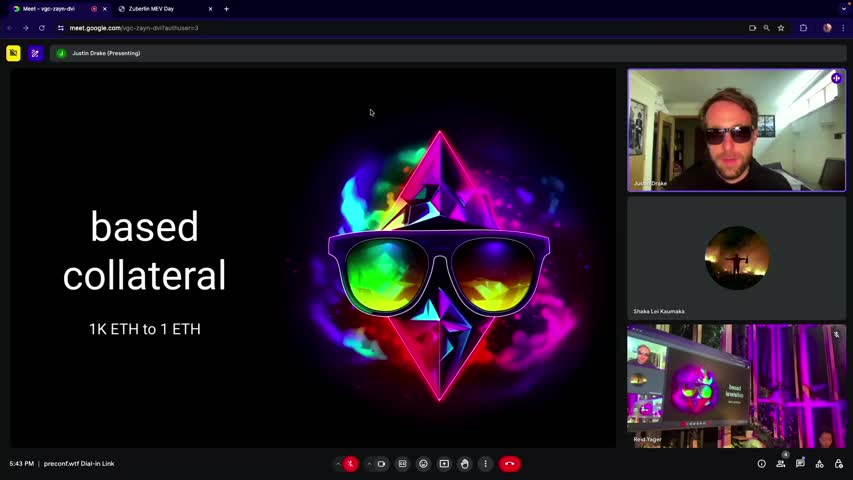
Clip The video discusses a new proposal for handling maximum extractable value (MEV) and pre-confirmations in blockchain networks post-merge. The speaker illustrates the distribution of MEV boost bids using a graph, highlighting that 99% of MEV blocks are valued under one ETH, and no blocks have exceeded 1000 ETH since the merge. They critique the old proposal that required 1000 ETH of collateral as a sequencer, noting its high barrier to entry, unnecessary risk, inefficiency, and lack of user compensation when things go wrong. The new proposal suggests only requiring one ETH of collateral to cover most pre-confirmations and using additional insurance for any larger requirements. This system would make it easier for smaller operators to participate, reduce risks for operators, and ensure users are compensated for any faults. The discussion also covers how to prevent insurance fraud using secure enclaves like SGX to track and limit insurance capital allocation. Questions from participants address concerns about sybil resistance in a permissionless setting, the potential impacts on base rollups with registry requirements, compensating hack victims from MEV proceeds, and ensuring the security and feasibility of the proposed insurance mechanism. The speaker elaborates on how secure enclaves can prevent over-allocation of insurance funds and maintain trust in the