About 16 results
 16:29
16:290G: Permissionless Blockchain for AI | Gathin T
ETHGlobalAug 9, 2026
In this workshop at ETHGlobal Lisbon 2026, Gathin T, a senior developer at 0G, introduces 0G as a permissionless blockchain for AI agents, covering what it is, how to start building, and the resources available. He frames the core value up front: 0G enables verifiable, private inferencing where model queries run inside a trusted execution environment (TEE) so the input and output are verified and not exposed to centralized entities. He then walks through the problems with centralized AI. Recent restrictions and re-enablements around Fable Fi show how access can be throttled, gated, or removed by government or corporate decisions. Subscription pricing can change unpredictably (he cites region-specific pricing). Censorship can refuse legitimate requests (like cybersecurity research) based on a model's parameters. He breaks these into specific issues: opacity and lack of trust (you cannot verify you are getting the actual model behind a black box), vendor lock-in with closed APIs and shifting policies, and no true ownership of the agents you create. Gathin explains how 0G addresses each. Inference is provable with references, running in a tamper-proof input-output channel where your data is not used for training. Rather than lock-in, 0G is a marketplace where you can switch between multiple providers for the same model, choosing cheaper or lower-latency options by region. Ownership comes via agentic IDs (the ERC-7857 standard), NFTs tied to an agent that can be transferred. He stresses the platform is permissionless with no gatekeeper, and that its modular stack lets you swap any layer without rebuilding, with incentives for compute providers and future fine-tuning contributors. He notes open source models like Kimi K2, GLM, and DeepSeek are reaching parity, and covers the architecture: an infinitely scalable chain (11,000 TPS, sub-second finality), decentralized storage (80 to 90% cheaper than AWS S3), compute, a soon-launching fine-tuning and RAG layer, a provider marketplace, and alignment nodes (around 92,000 sold) giving the community governance. He highlights products like the private compute router at pc.0g.ai (OpenAI-compatible keys) and the 0G app for building, notes 0G is well funded ($325 million) with 400+ ecosystem partners, and closes with the $15,000 in bounties across best AI product, infrastructure, and continuity tracks, plus a Telegram group for testnet tokens, followed by Q&A. 00:00 Introduction 00:33 Welcome to Lisbon 00:44 What This Workshop Covers 01:04 The Core Problem With Centralized AI 01:25 Verifiable, Private Inference in a TEE 01:49 How Centralized Models Get Restricted 02:07 Unpredictable Subscription Pricing 02:45 The Censorship Problem 03:04 Opacity and the Black Box Problem 03:45 How 0G Enables Verifiable Inference 04:13 Vendor Lock-In and Switching Providers 04:58 The Problem of No Agent Ownership 05:17 Agentic IDs as Ownership 05:37 Centralized Control and Censorship 06:18 Swapping Layers Without Rebuilding 07:01 Incentives Across the Modular Stack 07:38 Why Open Source Models Are Catching Up 08:01 Private TLS Routing and Attestation 08:58 The Modular Architecture 09:18 Decentralized Storage for Agents and Models 09:56 The Marketplace and Alignment Layer 10:25 Why Trust Is the Biggest Issue 10:53 0G Compute and GLM 11:16 Storage 80 to 90% Cheaper Than S3 11:38 Chain Throughput and Sunsetting the DA 12:00 Agentic ID and the ERC-7857 Standard 12:12 The Private Compute Router 12:42 The 0G App and Agent Launchpad 13:02 Funding, Partners, and Grants 13:26 The $15,000 in Bounty Tracks 13:47 The Infrastructure Track 14:07 The Continuity Track 14:25 Joining the Telegram for Testnet Tokens 15:02 Q&A: Track Ideas and Requirements 15:57 Closing _ _ _ _ _ _ _ _ _ _ _ _ _ _ _ _ _ _ _ _ 🇵🇹 *ETHGlobal Lisbon 2026* This workshop is specifically for ETHGlobal Lisbon 2026, a 3-day hackathon held July 24-26 at the Carlos Lopes Pavillion, bringing together the most skilled web3 developers, designers and product builders from all around the globe for a weekend-long adventure to advance the Ethereum ecosystem! Watch the full ETHGlobal Lisbon 2026 playlist here: https://www.youtube.com/playlist?list=PLWgAODGnD_is _ _ _ _ _ _ _ _ _ _ _ _ _ _ _ _ _ _ _ _ ✅ *Follow ETHGlobal* X: https://x.com/ETHGlobal Website: https://ethglobal.com YouTube: https://www.youtube.com/c/ETHGlobal _ _ _ _ _ _ _ _ _ _ _ _ _ _ _ _ _ _ _ _ _Are you interested in Ethereum development and entrepreneurship?_ 👉 Sign up for the next ETHGlobal event: https://ethglobal.com/events 🎁 Get exclusive access and perks with ETHGlobal Plus! https://ethglobal.com/plus 📣 Want us to throw an event in your city? Tell us where! https://ethglobal.com/city _ _ _ _ _ _ _ _ _ _ _ _ _ _ _ _ _ _ _ _
 27:43
27:43Fireside Chat with Declan Fox (Cosensys), Rob Dawson (Cosensys) and Jill Malandrino at ETHConf
ETHGlobalJul 9, 2026
In this fireside chat, Jill Malandrino moderates a discussion with Declan Fox and Rob Dawson from Consensys on the role of neutral governance in institutional blockchain adoption. They argue that while open source software has been foundational for technology companies, it is not sufficient on its own for enterprises making decade long bets, since the technology could be swept from under their feet without credible neutral stewardship. Declan compares open source without neutral governance to a building where you can peek in the door and inspect the code, but the house could still be demolished. The conversation positions governance not as ideology but as a practical procurement decision. Declan and Rob detail Besu's success as the institutional Ethereum client, running 15% of Ethereum mainnet but 80 to 90% of all blocks on enterprise blockchains, largely because of its Apache 2 license and Hyperledger and LFDT hosting. They explain that Consensys has now made the same bet on Layer 2 by contributing Linea technology to the Linux Foundation. The discussion covers tradeoffs in the EF's CROPS mandate (censorship resistant, open source, private, secure), how zero knowledge proofs enable confidential blockchains to interoperate without revealing sensitive information, the risk of digitizing fragmentation across chains, and atomic cross chain delivery versus payment as a recently unlocked use case. They close on the holy trinity of decentralized trust (blockchains), decentralized identity, and decentralized AI, with discussion of how ERC-7804 helps manage non human identities in a future of machine to machine blockchain interaction. 00:00 Introduction 00:29 Why Governance Is Becoming Central to Institutional Adoption 00:52 Open Source Is Not Enough: The Building Analogy 01:51 Why Technologists Should Care About Governance 02:37 Besu's Adoption Through Apache 2 and Linux Foundation 03:15 Besu as the Institutional Ethereum Client 03:41 Donating Linea Technology to the Linux Foundation 04:26 The Linux Foundation as a Trusted Brand 04:47 Does Governance Quality Match Technical Quality 05:40 Competitors Coming Together for Shared Standards 07:07 Governance as a Component of Scalability 07:26 Challenges and Friction Points in Governance 08:35 Maintaining Innovation Velocity Under Stewardship 09:55 Governance Improves Product Practices 10:00 The CROPS Mandate and Its Tradeoffs 11:40 Privacy and Security as Institutional Adoption Blockers 11:58 How Privacy Is Achieved Technically with ZK Proofs 12:50 Avoiding Digitized Fragmentation Across Chains 13:58 LFDT as a Forum for Interop Standards 14:16 No One Size Fits All Chain Solution 14:51 Interoperability as the Remaining Pillar 16:04 Cross Chain Delivery Versus Payment Now Possible 16:35 Security as a Critical Conversation 17:36 Challenges with Legacy Enterprise Blockchain Infrastructure 19:08 Ethereum's 10+ Years of Continuous Uptime 19:52 What's Next: Progressive Decentralization 21:16 Integration, Not Us Versus Them 22:22 How Rough Consensus Works in Practice 23:30 Selectivity in Onboarding Projects to Foundations 24:48 The Maturation of Governance, Security, and Privacy 25:25 Closing Thoughts on Institutional Adoption 25:44 The Holy Trinity: Decentralized Trust, Identity, and AI 26:26 Governing Non Human Identities and AI Agents 27:21 ERC-7804 and Machine to Machine Infrastructure 27:37 Closing _ _ _ _ _ _ _ _ _ _ _ _ _ _ _ _ _ _ _ _ *ETHConf 2026* ETHConf is a 3 day event for founders, industry leaders, and builders who are excited about the possibilities of building on top of Ethereum. Connect with 2,000+ top innovators in crypto, finance, technology, and policy at our inaugural three-day event packed with showcases, demos, partnerships, and conversations shaping the future of the global economy. _ _ _ _ _ _ _ _ _ _ _ _ _ _ _ _ _ _ _ _ ✅ *Follow ETHConf* X: https://x.com/ethconf Website: https://ethconf.com _ _ _ _ _ _ _ _ _ _ _ _ _ _ _ _ _ _ _ _ 🎟️ Get your early bird tickets for ETHConf 2027: https://ethconf.com/2027#tickets 🎤 View the full ETHConf 2026 Speaker Schedule: https://ethconf.com/schedule _ _ _ _ _ _ _ _ _ _ _ _ _ _ _ _ _ _ _ _
 29:57
29:57Who Owns the Intelligence? Open vs. Closed AI | Intelligence at the Frontier 2026
Funding the CommonsMay 9, 2026
Six people currently sit on OpenAI's board. Those six people make decisions about one of the most powerful technologies ever built. Is that safe? James Farrell, CTO of Funding the Commons, moderates a conversation between Ala Shaabana, co-founder of Bittensor, and Ashutosh Desai on what a more decentralized AI economy could actually look like. Bittensor recently completed a full training run for a 72 billion parameter model on decentralized infrastructure — an early proof that markets can coordinate around AI without centralizing control. The conversation covers sovereign AI development across countries like India, the difference between decentralizing across organizations versus across nations, and why a multipolar AI world is safer than one where a single government or company holds all the power. It also turns toward something harder to quantify: as AI floods the internet with generated content, human attention and authentic connection may become the scarcest resource of all. Speakers: Ashutosh Desai, Ala Shaabana (Bittensor) Moderator: James Farrell (Funding the Commons) This session was part of Intelligence at the Frontier, held March 14–15, 2026, at Frontier Tower in San Francisco. Learn more at https://www.fundingthecommons.io
 19:23
19:23Shaw Walters: Open by Default | Intelligence at the Frontier 2026
Funding the CommonsMay 9, 2026
When Shaw Walters got banned from X, he built his own AI-powered social platform with prediction markets, agent swarms and asymmetric information games. That wasn't a detour. It was research. Shaw, co-creator of ElizaOS and Eliza Labs, argues that we can't build trustworthy agents using just rules, prompts and sandboxes. The behavior needs to be in the model. To generate the training data required for that, he built Babylon, a city of agents where AI characters can trade, lie, scam each other and build reputation based on how well they play information markets. The best liar in an asymmetric information game, he argues, is demonstrating a kind of intelligence worth understanding. His broader argument is that agent infrastructure needs to stay open by default — auditable, forkable and not controlled by a handful of companies — and that games are becoming the lab conditions for how agents will operate in the real world. Speaker: Shaw Walters (Eliza Labs / ElizaOS) This session was part of Intelligence at the Frontier, held March 14–15, 2026, at Frontier Tower in San Francisco. Learn more at https://www.fundingthecommons.io
 10:49
10:49Illia Polosukhin
Illia Polosukhin: Building a Secure Agentic Future | Intelligence at the Frontier 2026
Funding the CommonsMay 9, 2026
The internet was built for humans clicking URLs. It was not built for agents coordinating with each other at scale. Illia Polosukhin thinks that needs to change now. Illia, co-founder of NEAR Protocol and co-author of the landmark "Attention Is All You Need" paper, traces the arc from AI as a backend feature to AI as the operating system through which we interface with the world. Agents are already starting to coordinate with each other, hire each other, and execute actions without human input. The infrastructure underneath them — identity, payments, privacy, policy — was not designed for this. His answer is a stack built for the agentic era: confidential execution environments, credential vaults that intercept outgoing connections, WebAssembly tool isolation, and a marketplace where agents can hire each other for tasks. The goal is security by design rather than security as an afterthought. Speaker: Illia Polosukhin (NEAR Protocol) This session was part of Intelligence at the Frontier, held March 14–15, 2026, at Frontier Tower in San Francisco. Learn more at https://www.fundingthecommons.io
 46:21
46:21Illia Polosukhin, Juan Benet
Illia Polosukhin & Juan Benet: Building the Agentic Future | Intelligence at the Frontier 2026
Funding the CommonsMay 9, 2026
What happens when AI agents don't just assist humans but start forming their own entities, entering contracts, and building toward their own goals? Illia Polosukhin and Juan Benet think we're closer to that than most people realize. Illia, co-founder of NEAR Protocol and co-author of "Attention Is All You Need," and Juan, founder of Protocol Labs, dig into the infrastructure needed for a world of autonomous AI coordination. The conversation turns on a deceptively simple problem: credit assignment. Every bottleneck in how we organize human effort, from machine learning to corporations to public goods funding, comes down to how well we can attribute contribution. Juan argues that cheap intelligence may finally let us solve this at scale, using Shapley value approximations to fairly distribute credit across AI agents working on shared goals. The first fully autonomous AI corporations may arrive within months. The question is whether we build the right foundations now or sleepwalk into it. Speakers: Illia Polosukhin (NEAR Protocol), Juan Benet (Protocol Labs) This session was part of Intelligence at the Frontier, held March 14–15, 2026, at Frontier Tower in San Francisco. Learn more at https://www.fundingthecommons.io
 02:48
02:48Intelligence at the Frontier: Funding the Commons Festival for AI & Human Flourishing (SF 2026)
Funding the CommonsApr 9, 2026
What does it look like to build for human flourishing in the age of AI? Intelligence at the Frontier was a 36-hour festival, conference, and overnight hackathon across 16 floors of Frontier Tower in San Francisco. 1,000 researchers, builders, artists, funders, and policymakers. Talks, workshops, live music, immersive art, real-time public goods funding experiments—and a lot of great conversations.This is a glimpse of what happened inside. Speakers included Juan Benet (Protocol Labs), Illia Polosukhin (NEAR Protocol), Tom Kalil (Renaissance Philanthropy), Leo Gao (OpenAI), Luke Drago (Workshop Labs), Sheila Warren (fmr. World Economic Forum), Shaw Walters (ElizaOS), and Brian Behlendorf (EFF, Mozilla Foundation), alongside 160+ more voices across AI governance, longevity, sovereign infrastructure, and the coordination systems that determine whether intelligence serves everyone. Filmed at Intelligence at the Frontier, March 14–15, 2026, Frontier Tower, San Francisco. Presented by Funding the Commons, Frontier Tower & Protocol Labs. Learn more: https://fundingthecommons.io
 19:20
19:20ASI Workshop I Rishank Jhavar
ETHGlobalNov 9, 2025
Rishank Jhavar from Fetch.ai, representing the Artificial Superintelligence Alliance (ASI), explains how ASI—formed by Fetch.ai, SingularityNET, Ocean Protocol, and Kudos—aims to decentralize the AI ecosystem by creating an open, interoperable alternative to Big Tech’s control over AI. Fetch.ai’s stack centers on building, deploying, and discovering AI agents through its tools: U-Agents (open-source Python framework for autonomous agents), Agentverse (a cloud platform for hosting agents, similar to Vercel for AI), and ASI1, a Web3-native LLM that allows users to discover and interact with agents directly. ASI1 supports “GEO” (Generative Engine Optimization), helping agents gain visibility. Singularity’s Meta language integrates with Fetch.ai to provide knowledge graph reasoning and complex logical computation for AI workflows. He demonstrates how developers can easily create and deploy agents using Agentverse, register them via the Almanac contract, and make them discoverable on ASI1 by optimizing their READMEs. The session closes with a brief from Chirag of Metalix, describing Metalix, a peer-to-peer AI agent-based decentralized exchange built with Fetch.ai’s framework, enabling cross-chain trading without liquidity pools. Rishank concludes by pointing attendees to the Innovation Lab documentation (innovationlab.fetch.ai/resources), a hackathon “cheat code” full of ready-to-build examples across frameworks like LangChain, CrewAI, and MCP, encouraging participants to experiment, integrate, and build decentralized agentic systems on the ASI stack. 00:02 Intro – What is the Artificial Superintelligence Alliance (ASI) 00:52 Overview of Fetch.ai and AI agent ecosystem 02:31 Singularity’s Meta language explained 03:42 What are U-Agents and how they work 04:25 Agentverse marketplace overview 04:44 ASI1 – the agentic LLM and discovery layer 05:38 Building and deploying with Fetch.ai 07:01 Key tools – U-Agents, chat protocol, adapters 08:24 Innovation Lab documentation overview 09:57 Demo – Creating agents on Agentverse 12:20 Discovering agents on ASI1 12:48 Metalix – P2P AI Agent-based DEX 15:24 Innovation Lab examples & hackathon resources 18:46 Closing remarks and support _ _ _ _ _ _ _ _ _ _ _ _ _ _ _ _ _ _ _ _ 🇮🇳 *ETHGlobal New Delhi* This workshop is specifically for ETHGlobal New Delhi, a 3-day hackathon held September 19-21 at the India International Convention & Expo Centre, bringing together the most skilled web3 developers, designers and product builders from all around the globe for a weekend-long adventure to advance the Ethereum ecosystem! Watch the full ETHGlobal New Delhi 2025 playlist here: https://www.youtube.com/playlist?list=PLXzKMXK2aHh7zCFW3hBqatZ18rQaYeEJL _ _ _ _ _ _ _ _ _ _ _ _ _ _ _ _ _ _ _ _ ✅ *Follow ASI* X: https://x.com/ASI_Alliance ✅ *Follow ETHGlobal* X: https://x.com/ETHGlobal Warpcast: https://warpcast.com/ethglobal Website: https://ethglobal.com YouTube: https://www.youtube.com/c/ETHGlobal _ _ _ _ _ _ _ _ _ _ _ _ _ _ _ _ _ _ _ _ _Are you interested in Ethereum development and entrepreneurship?_ 👉 Sign up for the next ETHGlobal event: https://ethglobal.com/events 🎁 Get exclusive access and perks with ETHGlobal Plus! https://ethglobal.com/plus 📣 Want us to throw an event in your city? Tell us where! https://ethglobal.com/city
 15:21
15:21Build an Onchain AI dapp with 0G's Storage and Inferencing I Gathin T
ETHGlobalNov 9, 2025
Gathin T from ZeroG introduces the project as a Layer 1 blockchain dedicated to onchain AI, powered by a decentralized AI operating system that combines storage, compute, and data availability into a verifiable, trustless architecture. He contrasts this with closed AI systems—“black boxes” that hide training data, alignment processes, and inferencing logic—arguing that ZeroG decentralizes every layer of AI: from uploading datasets, to training and inferencing with cryptographic proofs. Its modular stack includes a fast, low-cost EVM-compatible chain, a decentralized storage network (95% cheaper than AWS or Arweave), a scalable data availability layer for verifiable AI workloads, and a compute network that provides verifiable inferencing through trusted execution environments (TEE) and zero-knowledge proofs. The compute layer enables GPU providers to monetize idle capacity and users to select inference models by cost and quality, creating a service marketplace for AI models, fine-tuning, and RAG pipelines. ZeroG separates consensus and execution for scalability, achieving 11,000+ TPS and sub-100ms finality. Builders can deploy dapps for AI dev tooling, analytics, DeFi, memecoins, or NFTs using the Builder Hub’s SDKs and documentation. The project recently launched its mainnet, offering $10K in hackathon bounties for developers building early ecosystem tools. ZeroG’s vision is a transparent, verifiable AI ecosystem—fully onchain, censorship-resistant, and economically open to model creators, GPU operators, and users alike. 00:02 – Introduction to ZeroG and decentralized AI 00:44 – The problem with closed AI systems 01:12 – Overview of ZeroG’s modular stack 01:41 – Layer 1 chain and storage architecture 02:22 – Data availability and verifiability 03:13 – Compute network: verifiable inferencing explained 03:32 – Alignment nodes and decentralization governance 03:58 – AI service marketplace and future RAG/fine-tuning support 04:28 – EVM-compatible chain architecture & mainnet performance 05:27 – ZeroG Storage: 95% cheaper, instant retrieval 06:29 – Storage mechanism: chunking, VRF distribution, Merkle proofs 07:22 – Data availability issues and ZeroG’s improvements 08:48 – Security, scalability, and Ethereum-aligned standards 09:12 – Use cases for AI, ML, and modular L1/L2 integrations 09:44 – Compute network and decentralized GPU marketplace 10:56 – Example: model selection and cost flexibility 11:51 – Trustless execution vs centralized inference bias 12:44 – Workflow for users and GPU providers 13:26 – Builder Hub and testnet/mainnet resources 14:03 – Hackathon details and $10K bounty 14:36 – Ecosystem roadmap and mainnet launch 15:09 – Closing remarks and builder invitation _ _ _ _ _ _ _ _ _ _ _ _ _ _ _ _ _ _ _ _ 🇮🇳 *ETHGlobal New Delhi* This workshop is specifically for ETHGlobal New Delhi, a 3-day hackathon held September 19-21 at the India International Convention & Expo Centre, bringing together the most skilled web3 developers, designers and product builders from all around the globe for a weekend-long adventure to advance the Ethereum ecosystem! Watch the full ETHGlobal New Delhi 2025 playlist here: https://www.youtube.com/playlist?list=PLXzKMXK2aHh7zCFW3hBqatZ18rQaYeEJL _ _ _ _ _ _ _ _ _ _ _ _ _ _ _ _ _ _ _ _ ✅ *Follow 0G* X: https://x.com/0G_labs ✅ *Follow ETHGlobal* X: https://x.com/ETHGlobal Warpcast: https://warpcast.com/ethglobal Website: https://ethglobal.com YouTube: https://www.youtube.com/c/ETHGlobal _ _ _ _ _ _ _ _ _ _ _ _ _ _ _ _ _ _ _ _ _Are you interested in Ethereum development and entrepreneurship?_ 👉 Sign up for the next ETHGlobal event: https://ethglobal.com/events 🎁 Get exclusive access and perks with ETHGlobal Plus! https://ethglobal.com/plus 📣 Want us to throw an event in your city? Tell us where! https://ethglobal.com/city
 27:13
27:13Dominic Williams, Kartik Talwar
Fireside chat with Dominic Williams, DFINITY, and Kartik Talwar, ETHGlobal I Pragma Singapore 2024
ETHGlobalOct 9, 2025
Join Dominic Williams, Founder of DFINITY and Chief Scientist of the Internet Computer Protocol (ICP), in this fascinating fireside chat at Pragma Singapore 2024. This session explores the future of AI on-chain, the evolution of blockchain technology, and how smart contracts on the Internet Computer are redefining decentralization, security, and scale. Discover how ICP enables secure, scalable, and tamperproof AI models to run as smart contracts, and why traditional Web2 infrastructure falls short. Dominic breaks down key innovations like chain-key cryptography, deterministic GPU execution, and chain fusion, allowing seamless, trustless interoperability with Ethereum and Bitcoin. 00:00 Intro to Dominic Williams & Internet Computer 00:51 Origins of DFINITY and Vision for a World Computer 03:01 Smart Contracts as Next-Gen Software 04:10 Properties of Tamperproof Smart Contracts 05:25 Why AI Needs Blockchain Security 07:10 The “Hot Wallet” Problem for AI Data 08:19 Running AI Models as Smart Contracts 09:13 ICP's Execution Environment & Memory Limits 10:23 Scaling to Run LLMs on Chain 12:15 SIMD, Optimizations, and Llama 3 on ICP 13:13 Current Limits and GPU Delegation Challenges 14:47 Inference vs. Training for On-Chain AI 15:47 Vector Databases and On-Chain Prompt Engineering 16:59 Challenges of GPU Determinism for Blockchains 18:31 AI Use Cases: Smart Wallets, Law, Autonomy 19:55 AI-Generated Web Apps and Autonomous Upgrades 21:57 The Ultimate Platform for AI Agents 23:29 Chain-Key Crypto and Chain Fusion Overview 24:38 Interoperability with Ethereum and Bitcoin 26:13 Fully Autonomous DApps and Decentralized Governance 26:43 Closing Thoughts on Fully On-Chain AI & DApps _ _ _ _ _ _ _ _ _ _ _ _ _ _ _ _ _ _ _ _ 🇸🇬 *Pragma Singapore* Pragma Singapore 2024 was a special gathering of founders and builders that took place September 19, 2024 at the Fullerton Hotel in Singapore. Pragma Singapore 2024 was an opportunity discuss the future of web3 and reflect on the past. Watch the full Pragma Singapore playlist here: https://youtube.com/playlist?list=PLXzKMXK2aHh6z0saYJnVdgXWfz-vaoEYx&si=uavhkhF5Kc8XBoLv ETHGlobal's Pragma series takes place in cities around the world, and is designed to be a different kind of event. Pragma is a one-stage conference with founders-only on stage, bringing together a small group of curated attendees and speakers to discuss the future of web3 and reflect on the past. _ _ _ _ _ _ _ _ _ _ _ _ _ _ _ _ _ _ _ _ ✅ *Follow DFINITY* X: https://x.com/dfinity ✅ *Follow ETHGlobal* X: https://x.com/ETHGlobal Warpcast: https://warpcast.com/ethglobal Website: https://ethglobal.com YouTube: https://www.youtube.com/c/ETHGlobal _ _ _ _ _ _ _ _ _ _ _ _ _ _ _ _ _ _ _ _ _Are you interested in Ethereum development and entrepreneurship?_ 👉 Sign up for the next ETHGlobal event: https://ethglobal.com/events 🎁 Get exclusive access and perks with ETHGlobal Plus! https://ethglobal.com/plus 📣 Want us to throw an event in your city? Tell us where! https://ethglobal.com/city _ _ _ _ _ _ _ _ _ _ _ _ _ _ _ _ _ _ _ _
 13:23
13:23OpenLedger, The Blockchain Build For Specialized AI - Ram Kumar
ETHGlobalOct 9, 2025
Ram Kumar, co-founder of OpenLedger, presents their blockchain-based protocol designed for building specialized AI models. He highlights the limitations of current large language models (LLMs) like OpenAI and Llama, which are trained on generic internet data, resulting in generalized outputs and lack of transparency. OpenLedger addresses these issues by enabling users to contribute domain-specific datasets, build and fine-tune AI models via a no-code platform, and receive rewards through an on-chain attribution and provenance system. The protocol ensures data ownership, auditability, and verifiability, distinguishing it from centralized platforms like Hugging Face. OpenLedger supports both community developers and enterprises, with use cases ranging from Solidity code generation to customer support and tax advisory. The ecosystem includes a marketplace for models, agent frameworks, stablecoin micropayments, and a DEX for model tokenization. With over a million users in testnet, OpenLedger is set to launch its mainnet, aiming to democratize and decentralize AI model creation and monetization. 00:00 Introduction 00:38 Why AI Models Need Specialization 01:45 OpenLedger’s Background and Enterprise Experience 02:41 Problems with Current AI Models 03:33 OpenLedger’s Solution: Data, Models, and Attribution 04:38 Blockchain for Verifiable AI and Data Ownership 05:34 OpenLedger vs. Traditional AI Platforms 06:04 Product Overview: Data Nets, Model Factory, Open Models 07:24 Example: Building a Specialized Solidity Model 08:34 Model Marketplace and Access 09:22 Enterprise Use Cases and Partnerships 10:20 Auditability and Attribution for Enterprises 11:21 Community and Enterprise Ecosystem 11:56 Ecosystem Extensions: Stablecoin, DEX, Agent Frameworks 12:38 Testnet Results and Mainnet Launch 13:09 Closing Remarks _ _ _ _ _ _ _ _ _ _ _ _ _ _ _ _ _ _ _ _ 🇫🇷 *Pragma Cannes* Pragma Cannes 2025 was held on July 3rd at the Carlton Cannes in Cannes, France and was an in-person summit for builders and leaders in the web3 ecosystem. Watch the full Pragma Cannes YouTube Playlist here: https://www.youtube.com/playlist?list=PLXzKMXK2aHh6jZYPY5-YIBzvMtUT3ajjI ETHGlobal's Pragma series takes place in cities around the world, and is designed to be a different kind of event. Pragma is a one-stage conference with founders-only on stage, bringing together a small group of curated attendees and speakers to discuss the future of web3 and reflect on the past. _ _ _ _ _ _ _ _ _ _ _ _ _ _ _ _ _ _ _ _ ✅ Follow Ram Kumar X: https://x.com/Ramkumartweet ✅ Follow OpenLedger X: https://x.com/OpenledgerHQ ✅ Follow ETHGlobal X: https://x.com/ETHGlobal Warpcast: https://warpcast.com/ethglobal Website: https://ethglobal.com YouTube: https://www.youtube.com/@UCfF9ZO8Ug4xk_AJd4aeT5HA _ _ _ _ _ _ _ _ _ _ _ _ _ _ _ _ _ _ _ _ Are you interested in Ethereum development and entrepreneurship? 👉 Sign up for the next ETHGlobal event: https://ethglobal.com/events 🎁 Get exclusive access and perks with ETHGlobal Plus! https://ethglobal.com/plus 📣 Want us to throw an event in your city? Tell us where! https://ethglobal.com/city _ _ _ _ _ _ _ _ _ _ _ _ _ _ _ _ _ _ _ _
 19:51
19:51ASI Workshop I Rajashekar Vennavelli and Tanay Godse
ETHGlobalOct 9, 2025
The ASI Workshop, led by representatives from Fetch.ai, Ocean Protocol, SingularityNET, and Kudos, introduces the ASI Alliance and its collaborative AI ecosystem. The session covers each partner's role: SingularityNET for knowledge graphs, Fetch.ai for agent marketplace and discovery, Ocean Protocol for decentralized data exchange and privacy-preserving computation, and Kudos for agent infrastructure. Fetch.ai’s stack includes UAgents (a Python SDK for agent creation), an agent marketplace, and ASI—a discovery layer powered by an LLM that matches user queries to specialized agents. The workshop demonstrates how developers can build agents using popular frameworks (LangChain, CrewAI, Autogen, etc.), register them on the Fetch network, and monetize them. ASI’s LLM dynamically discovers and routes queries to the most suitable agent, enabling advanced use cases like business agents, agent-to-agent payments, and seamless integration with datasets from Ocean Protocol or knowledge graphs from SingularityNET. The session concludes with hackathon guidance, Q&A, and resources for building and deploying agents. 00:00 Introduction 00:32 Overview of ASI Alliance Partners 01:29 SingularityNET: Knowledge Graphs 01:55 Fetch.ai: Agent Marketplace & Discovery 02:04 Ocean Protocol: Data Economy & Privacy 02:41 Kudos: Infrastructure for Agents 03:06 Fetch.ai Tech Stack Overview 03:55 UAgents Framework & Agent Metadata 05:17 Agent Marketplace Features 05:38 ASI: LLM-Powered Discovery Layer 06:10 Building & Registering Agents 07:22 Agent Communication & Network 07:52 ASI1: Dynamic Agent Discovery 08:53 Demo: Specialized Agents in Action 09:42 Marketplace & ASLM Interface Demo 10:57 Developer Monetization & Business Agents 12:30 Direct Agent Tagging & Transactions 13:37 Service Appointment & Payments Demo 14:04 Agent-to-Agent Payments 14:51 Hackathon Guidance & Partner Integration 16:36 SingularityNET Meta Language & Knowledge Graphs 17:34 Building Discoverable Agents for ASI 18:01 Local Development & Security 18:29 LLM Reasoning & Query Matching 19:13 APIs & Developer Resources _ _ _ _ _ _ _ _ _ _ _ _ _ _ _ _ _ _ _ _ 🇺🇸 *ETHGlobal New York* This workshop is specifically for ETHGlobal New York, a 3-day hackathon held August 15-17, bringing together the most skilled web3 developers, designers and product builders from all around the globe for a weekend-long adventure to advance the Ethereum ecosystem! Watch the full ETHGlobal New York 2025 playlist here: https://www.youtube.com/playlist?list=PLXzKMXK2aHh4Xze0ZeSWCSGsw25clPpvZ _ _ _ _ _ _ _ _ _ _ _ _ _ _ _ _ _ _ _ _ ✅ *Follow ASI* X: https://x.com/ASI_Alliance ✅ *Follow ETHGlobal* X: https://x.com/ETHGlobal Warpcast: https://warpcast.com/ethglobal Website: https://ethglobal.com YouTube: https://www.youtube.com/c/ETHGlobal _ _ _ _ _ _ _ _ _ _ _ _ _ _ _ _ _ _ _ _ _Are you interested in Ethereum development and entrepreneurship?_ 👉 Sign up for the next ETHGlobal event: https://ethglobal.com/events 🎁 Get exclusive access and perks with ETHGlobal Plus! https://ethglobal.com/plus 📣 Want us to throw an event in your city? Tell us where! https://ethglobal.com/city _ _ _ _ _ _ _ _ _ _ _ _ _ _ _ _ _ _ _ _
 14:16
14:160G SDK Walkthrough I Udhaykumar Balakrishnan
ETHGlobalOct 9, 2025
Udhaykumar Balakrishnan presents a hands-on walkthrough of the 0G SDK, showing developers how to integrate decentralized storage and compute into their applications. This tutorial covers both the 0G Storage SDK for uploading and downloading files across a global decentralized network, and the 0G Compute SDK for running AI inference on a decentralized marketplace of models. The session begins with an introduction to 0G Storage, explaining how it provides fast, secure, horizontally scalable storage designed for AI workloads. Using the TypeScript starter kit, Udhaykumar demonstrates how to set up the SDK, configure RPCs and private keys, upload files with a root hash identifier, and download them from the network. Developers learn how the SDK handles chunking, Merkle trees, and verifiability checks seamlessly. In the second half, the workshop dives into 0G Compute, a decentralized AI marketplace where providers can list models and users can query them without API keys or subscriptions. Udhaykumar walks through the starter kit, shows how to set up a broker and ledger, list available models like Llama 3.3 and DeepSeek, and run inference queries with verifiable results. The tutorial also demonstrates balance checks, funding, and refunds directly through the SDK. With clear code examples, live demos, and references to documentation and starter kits, this walkthrough provides everything developers need to start building dApps and AI-powered projects on 0G. 00:02 Introduction to 0G SDK 00:49 What is 0G Storage? Decentralized storage overview 01:13 Developer hub & SDK options (Go & TypeScript) 01:34 Cloning and using the TypeScript starter kit 02:27 Client setup with RPCs, signer & indexer 02:52 ZGFile for uploads & indexing explained 03:41 Uploading files with root hash identifiers 04:26 Downloading & verifying files 04:47 Environment setup: RPCs, private keys & tokens 05:16 Running the server & Swagger endpoints 05:44 Upload demo with example file (panda image) 06:04 Using root hash for file retrieval 06:50 File successfully uploaded & downloaded 07:22 Transition to 0G Compute SDK 07:46 What is 0G Compute? Decentralized AI marketplace 08:07 SDK setup & starter kit walkthrough 08:49 Installing dependencies & initializing broker 09:33 Creating ledger accounts & funding 09:55 Listing available AI services (Llama 3.3, DeepSeek) 10:18 Acknowledging providers & retrieving metadata 10:41 Running inference queries with headers & endpoints 11:02 Verifying responses & fee settlement 11:42 Live demo of compute SDK & Swagger endpoints 12:30 Listing AI services & provider addresses 13:36 Running inference with DeepSeek model 13:56 Closing: links, docs & happy building _ _ _ _ _ _ _ _ _ _ _ _ _ _ _ _ _ _ _ _ 🇮🇳 *ETHGlobal New Delhi* This workshop is specifically for ETHGlobal New Delhi, a 3-day hackathon held September 19-21 at the India International Convention & Expo Centre, bringing together the most skilled web3 developers, designers and product builders from all around the globe for a weekend-long adventure to advance the Ethereum ecosystem! Watch the full ETHGlobal New Delhi 2025 playlist here: https://www.youtube.com/playlist?list=PLXzKMXK2aHh7zCFW3hBqatZ18rQaYeEJL _ _ _ _ _ _ _ _ _ _ _ _ _ _ _ _ _ _ _ _ ✅ *Follow 0g* X: https://x.com/0G_labs ✅ *Follow ETHGlobal* X: https://x.com/ETHGlobal Warpcast: https://warpcast.com/ethglobal Website: https://ethglobal.com YouTube: https://www.youtube.com/c/ETHGlobal _ _ _ _ _ _ _ _ _ _ _ _ _ _ _ _ _ _ _ _ _Are you interested in Ethereum development and entrepreneurship?_ 👉 Sign up for the next ETHGlobal event: https://ethglobal.com/events 🎁 Get exclusive access and perks with ETHGlobal Plus! https://ethglobal.com/plus 📣 Want us to throw an event in your city? Tell us where! https://ethglobal.com/city
 46:18
46:18Illia Polosukhin, Doug Petkanics
Doug Petkanics, Illia Polosukhin, Niraj Pant & Joyce Yang I Pragma Denver 2024
ETHGlobalOct 9, 2024
At Pragma Denver 2024, Joyce Yang (Global Coin Research) moderates a visionary panel with Doug Petkanics (Livepeer), Illia Polosukhin (NEAR Protocol), and Niraj Pant (Ritual) discussing the convergence of crypto and AI, open-source intelligence, and decentralized infrastructure. The discussion spans practical use cases like using GPUs from Livepeer for generative video, building decentralized LLMs, creating AI marketplaces, and redefining incentives for open-source development. They examine where the crypto x AI stack lags behind Big Tech, the regulatory hurdles affecting innovation, and how decentralized models can protect open data, improve governance, and unlock new creator economies. This is a must-watch for anyone building at the intersection of Web3 and artificial intelligence, interested in decentralized compute, open model development, or exploring the future of AI-enabled crypto apps. 00:00 Intro to open-source intelligence and crypto 00:37 Panelist intros: NEAR, Ritual, Livepeer, GCR 03:20 Why crypto is essential for AI’s future 05:18 AI model bias, training data, and global payments 07:05 Trustless AI execution and model governance 08:12 Using GPUs for generative video on Livepeer 10:39 Decentralized infra vs centralized AI platforms 12:23 Creating open-source AI development incentives 13:35 Bootstrapping global compute via cryptoeconomics 14:46 Permissionless payments and model monetization 15:52 Crypto’s strengths in privacy, governance, and UX 17:29 Hiring AI talent and learning ML 101 19:12 How to attract open-source AI builders 20:50 Creators using AI and NFTs for media production 22:37 Empowering non-coders with AI tools 23:43 Need for scarcity, identity, and markets in GenAI 24:13 Using AI to bridge mainstream users into crypto 25:17 Natural language interfaces for smart contracts 26:53 Hidden crypto layers powering consumer experiences 27:58 Why users might choose decentralized AI 29:43 Crypto-native characters and tokenized identities 30:50 What drives adoption: new value, not decentralization 32:15 Bull markets and their impact on crypto AI growth 33:53 Market cycles and developer momentum 35:02 Regulatory risk, lobbying, and open-source defense 38:19 Historical parallels to cryptography regulation 40:05 Export rules, data center KYC, and global strategy 42:21 Advice for AI x crypto builders and founders 44:08 Where crypto uniquely enables GenAI use cases 45:41 Open data sets, registries, and creator economies 46:11 Closing applause and final thoughts _ _ _ _ _ _ _ _ _ _ _ _ _ _ _ _ _ _ _ _ 🇺🇸 *Pragma Denver* Pragma Denver 2024 took place at The Arch in Denver on February 28, 2024, and was an in-person summit for builders and leaders in the web3 ecosystem. Pragma is a one-stage conference with founders-only on stage, bringing together a small group of curated attendees and speakers to discuss the future of web3 and reflect on the past. Watch the full Pragma Denver playlist here: https://youtube.com/playlist?list=PLXzKMXK2aHh4lJw0vruQ4prh8iMDUk89i&si=ayJ64Sgcqew1fdFk ETHGlobal's Pragma series takes place in cities around the world, and is designed to be a different kind of event. Ever since we first introduced our new event series, Pragma, in Tokyo in the spring of 2023, we have been fostering a curated, global community of individuals who deeply care about web3. _ _ _ _ _ _ _ _ _ _ _ _ _ _ _ _ _ _ _ _ ✅ *Follow Doug Petkanics* X: https://x.com/petkanics ✅ *Follow Livepeer* X: https://x.com/Livepeer ✅ *Follow Illia Polosukhin* X: https://x.com/ilblackdragon ✅ *Follow NEAR* X: https://x.com/NEARProtocol ✅ *Follow Ritual* X: https://x.com/ritualnet ✅ *Follow Global Coin Research* X: https://x.com/Globalcoinrsrch ✅ *Follow ETHGlobal* X: https://x.com/ETHGlobal Warpcast: https://warpcast.com/ethglobal Website: https://ethglobal.com YouTube: https://www.youtube.com/c/ETHGlobal _ _ _ _ _ _ _ _ _ _ _ _ _ _ _ _ _ _ _ _ _Are you interested in Ethereum development and entrepreneurship?_ 👉 Sign up for the next ETHGlobal event: https://ethglobal.com/events 🎁 Get exclusive access and perks with ETHGlobal Plus! https://ethglobal.com/plus 📣 Want us to throw an event in your city? Tell us where! https://ethglobal.com/city _ _ _ _ _ _ _ _ _ _ _ _ _ _ _ _ _ _ _ _
 27:10
27:10Open Models and Interoperability
New FoundationJul 18, 2024
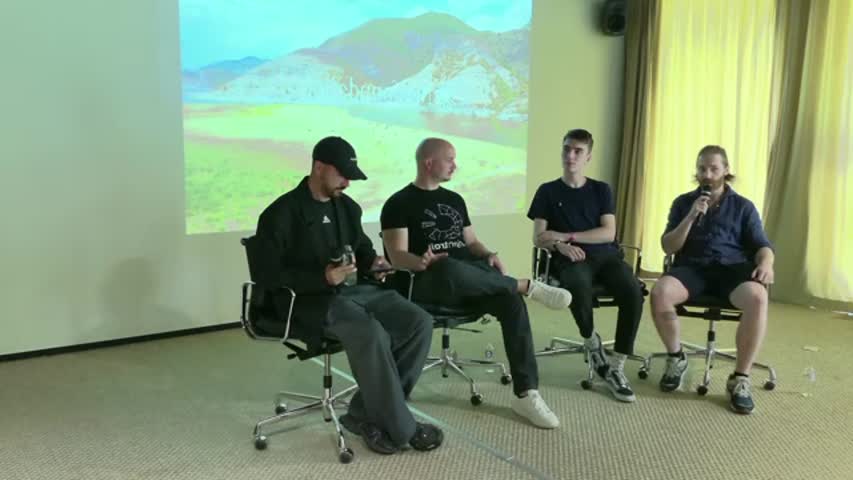
Transparent algorithms and universal standards foster innovation and cross-platform collaboration. Jiahao Sun (FLock.io), Gwen Martin (Ora), Toufi Saliba (HyperCycle), Branimir Rakic (OriginTrail), moderated by Joshua Bate (DeSciWorld) The video features a panel discussion on open models and interoperability in the Web3 space with representatives from various projects. Sophie-Anne from New Foundation discusses their work on NewCoin and IPSP, a standard for interoperability and communication. Brandon Mirajoski introduces Origin 12 Decentralized Knowledge Graph, an open-source neuro-symbolic AI system. Gwen from Aura talks about their company's focus on on-chain AI Oracle products and tokenization of open AI models to support open source foundations. The panel addresses the importance of open models, contrasting the potential risks of centralized AI systems with the benefits of decentralized, pluralistic approaches. They argue that history shows centralized coordination systems often fail, suggesting that a diverse ecosystem of AIs can lead to better performance and innovation without lock-ins or negative network effects. Concerns about model collapse and the proliferation of misinformation are discussed, highlighting the need for verifiable content and knowledge as valuable assets. The panelists express optimism for a future where decentralized knowledge and AI contribute to an open world model that empowers individuals and enhances collective intelligence. They believe this can lead to a new asset class in knowledge, similar to how Bitcoin revolutionized monetary value.
 25:14
25:14User-owned Foundation Models
ZuBerlinJun 18, 2024
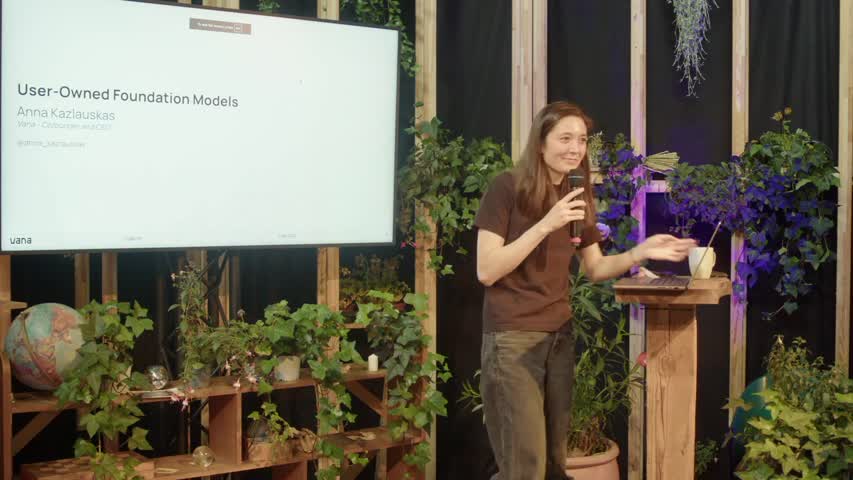
Clip The video focuses on the development of user-owned foundation models in AI, particularly in the context of the speaker's work at Vana. It begins with a discussion on why controlling AI is powerful, citing examples of AI-generated content that could shape perceptions of truth. The talk then delves into the creation of AI models using public data and highlights the challenges faced due to limited publicly available data. The speaker discusses how users legally own their data and proposes that if a large number of users pooled their data, it could be used to train competitive AI models. They provide calculations to show that user-generated data could surpass the amount used in current frontier models and suggest that decentralized compute resources, like those from cryptocurrency miners, could be mobilized for training these large-scale models. The video also touches on financial incentives for contributing high-quality data and covers various methods for ensuring data quality and authenticity. It explores governance issues around user-owned models, including how contributors might be compensated and how usage rules could be set collectively. Finally, the speaker encourages actions such as building data liquidity pools, integrating advanced privacy frameworks, running validators to check data quality, and supporting federated machine learning approaches. The overarching theme is empowering users to contribute to and control AI models as an alternative to relying on big tech companies' leftovers